








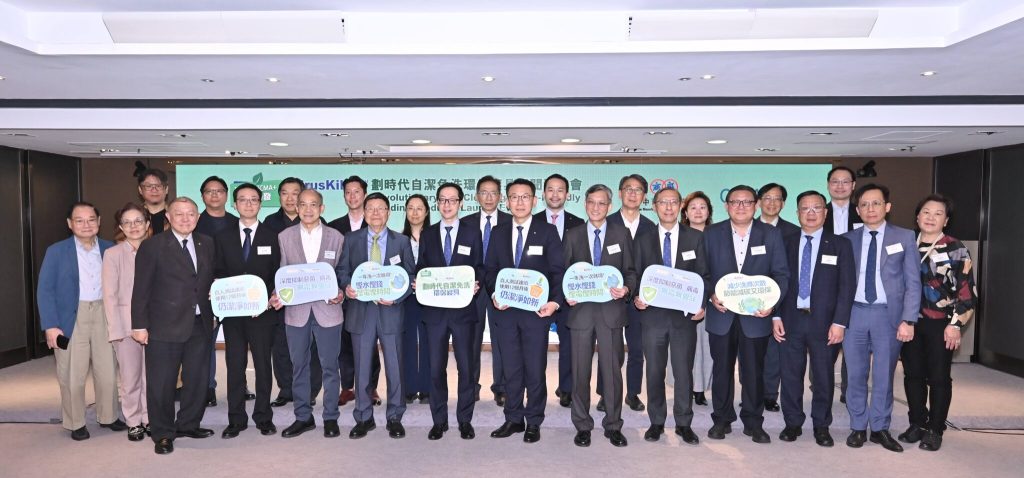
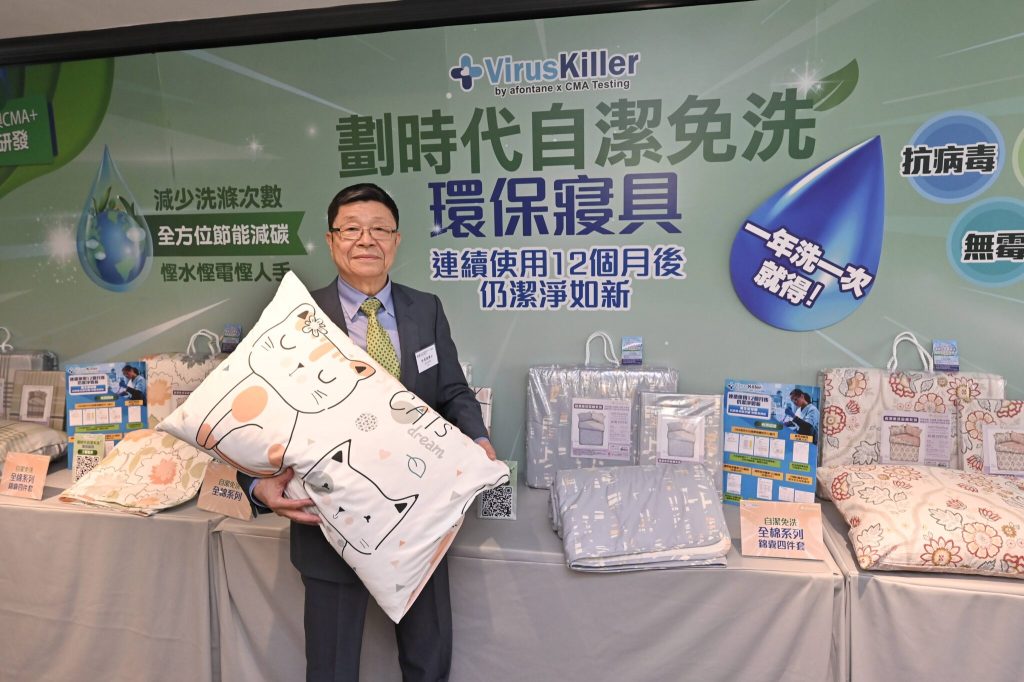
Congratulations to A-Fontane, our CMA+ partner, has accomplished a remarkable milestone with the product launching of their “VirusKiller™ revolutionary self-cleaning no-wash eco-friendly bedding products” on 10 April 2024. At CMA+, we take immense pride in providing our partners unwavering support and invaluable expertise throughout their technology commercialization journey. We believe that the success cases of our clients will motivate other traditional manufacturers to leverage our platforms, enabling them not only improve their technology product development but also empower them to efficiently meet the demands of the market.
CMA Testing has successively established the technology commercialization platform “CMA+” and the pilot manufacturing center “PMC” to assist Hong Kong enterprises in applying innovative technologies to develop new products and provide a series of pilot manufacturing supports as well as testing and certification services.
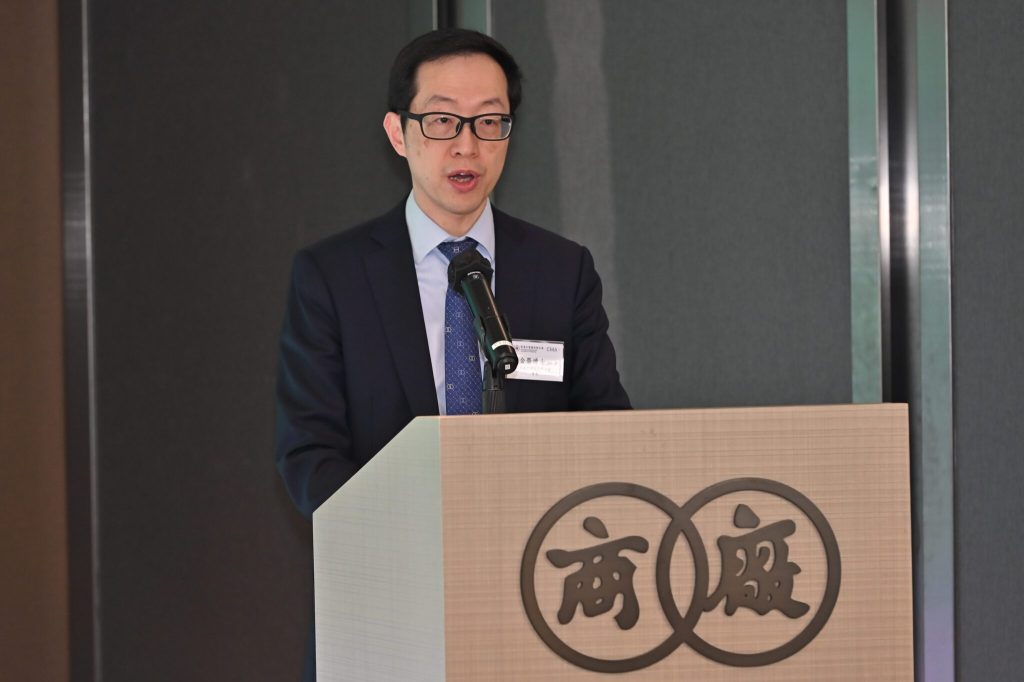
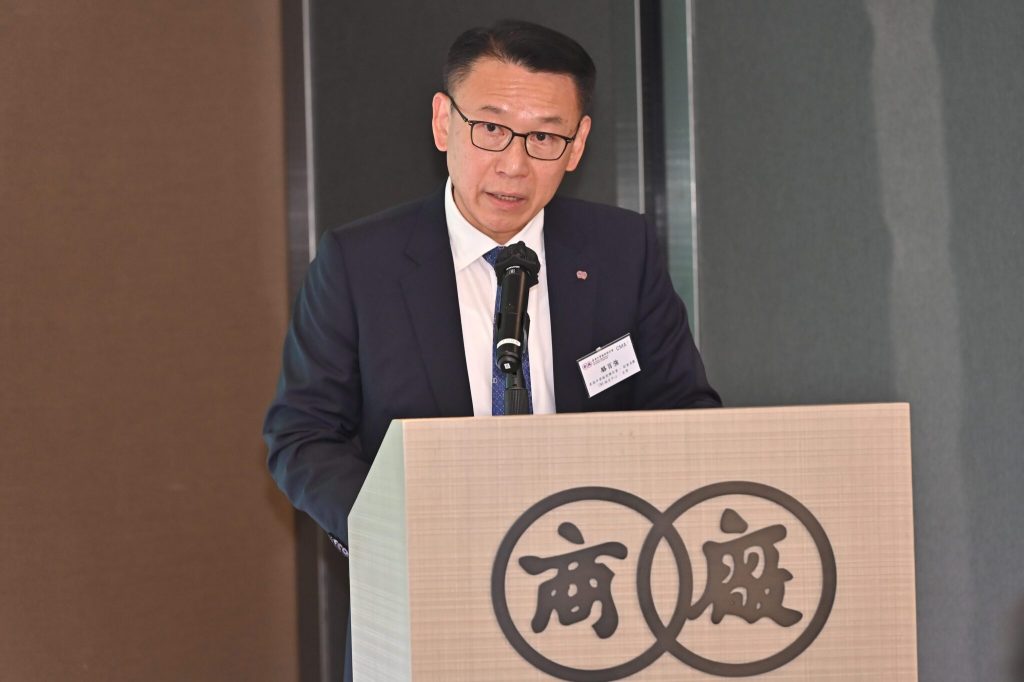

The 135th China Import and Export Fair will be held in Guangzhou from April 15 to May 5, 2024. CMA Testing will participate in the second phase of the exhibition, and welcome to visit the booth for guidance and on-site communication.
Date:
April 23-27, 2024
Place:
No.380 Yuejiang Zhong Road, Haizhu District Guangzhou
Booth:
AT0306
In front of the entrance of Hall 3.2
The regulation excluded natural polymers, degraded polymers, soluble polymers, inorganic polymers, microplastics which releases to environment are prevented during intended use, and permanently incorporated into a solid matrix during intended use.
What is Microplastic?
Microplastic was first coined by Richard Thompson in 2004. The European Union defined in REACH Annex XVII entry 78 that plastic of all dimensions under 5mm or length to diameter ration greater than 3 which is under 15mm are Microplastics.
Microplastics usually comes from microbeads in facial scrubs, abrasive particles in sandblasting, synthetic fibers, plastic pellets, plastic particles drugs vectors, and breakdown under weathering, sunlight exposure, and mechanical action.
The hazards of microplastics includes the chemical substances it carries, environmental pollutants adsoebed, biofilms growing on the surface of the microplastics, and finally eventually cause health concerns and ecological disruptions.
Other Regulations related to Microplastics
- United States Microbead-Free Waters Act
- Canada Microbeads in Toiletries Regulations (SOR/2017-111)
- Hong Kong Voluntary Scheme for Phasing Out Microbeads in Personal Care and Cosmetic Products (PCCPs)
CMA Testing Services related Microplastic
CMA Testing has offering ranges of services analyzing microplastic in products, such as Laboratory Methods for Microplastics in the Marine Envrionemnt: Recommendations for quantifying synthetic particles in waters and sediments issued by the National Oceanic and Atmospheric Administration (NOAA) Marine Debris Program. The services CMA Testing provided to help the companies to understand the products specifications and the microplastics contents, ensure the products complies with the current regulations and meet the necessary requirements around the world.

The opening ceremony of CMA+ Shanghai, the technology commercialization platform of CMA Testing, successfully held at the East Lake Hotel in Shanghai on 21 March 2024. It brought together our distinguished guests, including Council and Association members to celebrate this special moment. Officiating at the ceremony were Director of the Hong Kong and Macao Section of the Shanghai Hong Kong and Macao Affairs Office, Mr. Chen Zhi-hui; Investment Promotion Section of Shanghai Xuhui District Investment Promotion Office, Mr. Shi Hai-xiang; Shanghai Representative of the Hong Kong Trade Development Council, Ms. Eve Wang Ying-bei; Vice President of the Chinese Manufacturers’ Association of Hong Kong cum Chairman of CMA Testing, Mr. Robert Lok Pak-keung; Deputy General Manager of Shanghai Hengfu Economic Development Co., Ltd., Mr. Shi Lei; President of the Hong Kong Chamber of Commerce in Shanghai, Mr. Edward Cheung Kwok-ching; Secretary-General of Shanghai Indoor Environment Purification Industry Association, Representative of Shanghai Municipal People’s Congress, Deputy Chairman of Yangpu District Committee of the Chinese Peasants and Workers’ Party, and New President of Yangpu District, Shanghai, Ms. Wang Fang; the General Committee Member of the Chinese Manufacturers’ Association of Hong Kong, and a Board Member of CMA Testing, Mr. Spande Chang Chi-yin; and the Chief Operations Officer of the CMA Testing, Mr. Dominic Lam Chun-hong.
CMA+ also held cooperation memorandum signing ceremonies with the Shanghai Hengfu Economic Development Co., Ltd., the Hong Kong Chamber of Commerce in Shanghai, and Shanghai Indoor Environment Purification Industry Association at the same venue.
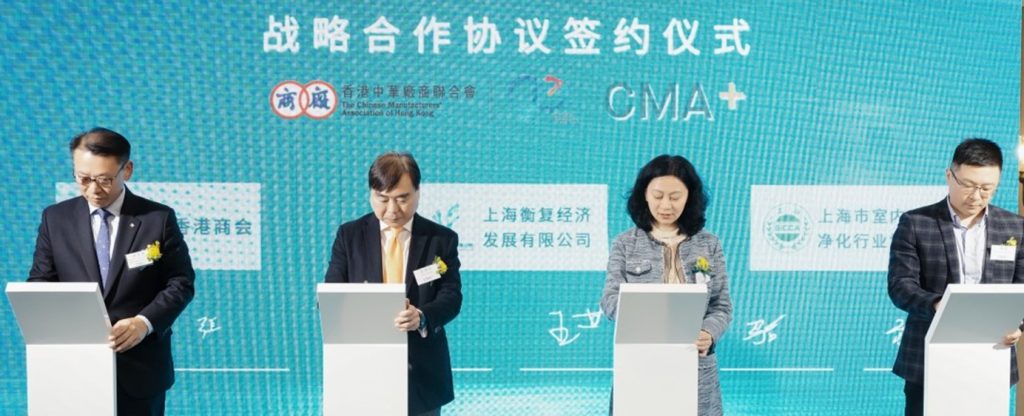
The theme forum covered a broad spectrum of topics, including corporate innovation and development, sustainable development, ESG concepts, innovative materials, and new technologies. It garnered the active involvement of numerous industry elites and experts, fostering meaningful exchanges and discussions.

The US Environmental Protection Agency (EPA) finalized its reporting and recordkeeping rule for per- and polyfluoroalkyl substances (PFAS) under the Toxic Substances Control Act (TSCA). Any person that manufactures (including imports) or has manufactured (including imported) PFAS or PFAS-containing articles in any year since 1 January 2011, must submit information via online about PFAS uses, production volumes, disposal, exposures, and hazards. Any entities that have manufactured (including imported) PFAS in any year since 2011 will have 18 months following the effective date to report PFAS data to the EPA. Small manufacturers whose reporting obligations under the rule are exclusively from article imports will have 24 months from the effective date to report PFAS. The rule has come to effective on 13 November, 2023.
There are at least 1,462 PFAS chemicals have been identified under the reporting requirements of the reporting rules. Any chemical substances or mixture that contain a PFAS, which is listed on the TSCA Chemical Substance Inventory, or on the TSCA Section 5 Low Volume Exemption List, or if it meets the “structural definition” provided in the rule, is required to report.
Perfluoroalkyl and Polyfluoroalkyl Substances (PFAS), in general, are referred to as ‘forever chemicals’. They can considered persistent, bio-accumulative and toxic (PBT), potentially causing adverse effects on wildlife and human populations. Public has already raised concern of PFAS exposure to various health issues, including risk of certain cancers, immune system disorder, and developmental problems in children.
To deal with the complexities of regulatory compliance and eliminate the chance of failing to comply with regulations, our experts can assist your business in navigating these new requirements seamlessly, ensuring that you comply with all EPA standards, meet deadlines, and stay abreast of new regulatory updates.
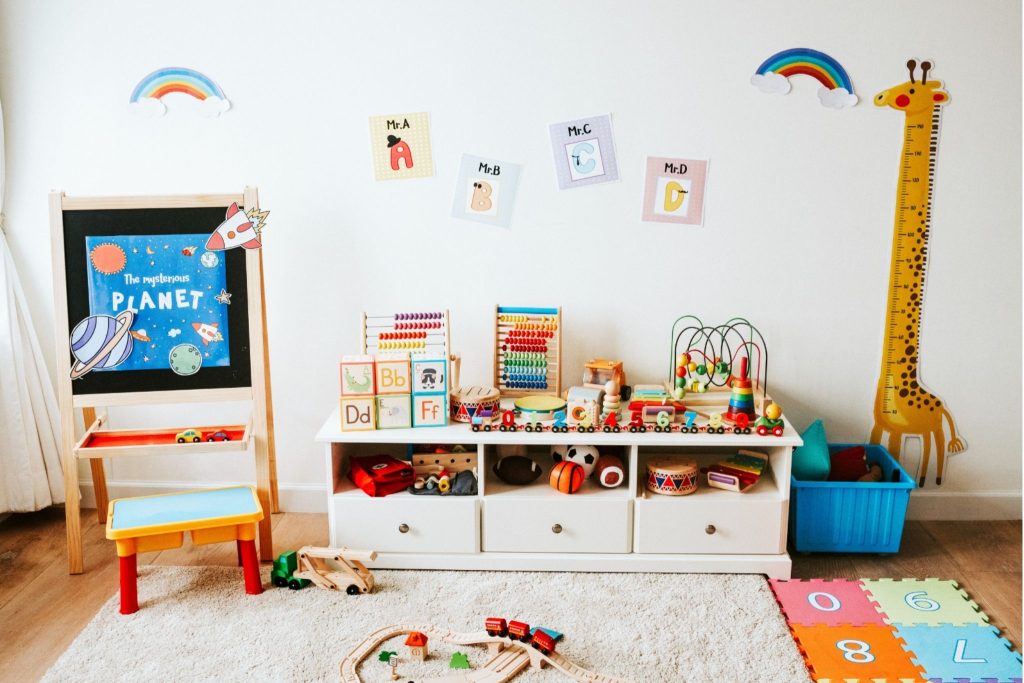
On 13 October 2023, ASTM International has published a revised ASTM F963 Standard Consumer Safety Specification for Toy Safety ASTMF963-23 which will replace ASTM F963-17.
The revisions are mainly on the sections of Acoustic, Battery Accessibility, Expanding Materials, and Projectiles. Furthermore, the revisions also include the phthalate requirements of the Federal Regulation 16 CFR 1307 on accessible plasticized components. Other revisions include tracking labels for toys with respective Federal regulations and U.S. Consumer Product Safety Commission (CPSC) policy, as well as other editorial changes.
In accordance with section 106(g) of Consumer Product Safety Improvement Act of 2008 (CPSIA), once ASTM International notifies the Consumer Product Safety Commission (CPSC) revisions to ASTM F963, CPSC has up to 90 days to review and respond to the revisions, which is to accept or reject the revisions in part or whole. If no objections are raised, the revisions will come to effective 180 days after the notification (expected in mid-April 2024).
Below shows some noticeable amendments:
| Safety Requirements | Amendments |
| Acoustics | Clause 4.5 The use and the abuse tests for sound-producing toys intended for 8 to 14 years old was added. The requirements of use and abuse appropriate to 36 to 96 months old children are also going to be applied. The statement also specifying the toy shall be tested to all applicable requirements if the toy has features that are fit into different categories. The most appropriate requirement shall be conform if the toy is not clearly fit in any categories. New categories are as follow:Close-to-ear ToysHand-Held ToysRattlesStationary or Self-propelled Tabletop, Floor, or Crib ToysUser-propelled Tabletop, Floor, or Crib ToysPush or Pull ToysToys using Explosive Action |
| Battery Accessibility | Clause 4.25.4.1 / Clause 4.25.4.2 The battery should not be accessible without using common household tools to access the battery(ies) for the toys intended for children less than 3 years old or with batteries fit completely within the specific small parts test cylinder. Clause 4.25.4.3 A new requirement of battery accessibility was added which specified that the fastener shall remain attached to the toy or battery compartment cover if it is used to secure the battery compartment, before and after the abuse tests. Clause 4.25.4.4 When use of specialty fastener (e.g. Torx, Hex) to secure the battery compartment and come with the tool should be comply with labelling in Clause 6.9 Clause 6.9 The instruction materials for toys that require specialized tools from the manufacturer or custom tool to access the batteries should advise caregivers to keep the tool for future use, store it out of reach of children, and make it clear that the tool is not a toy. |
| Expanding Materials | Clause 4.40.1.1 The toy contains small parts that are enclosed in an outer covering that is designed to be dissolved, opened, or broken by the child, revealing the inner expanding component are consider applicable. Clause 4.40.1.2 If the components is distribute in an expanded state, but they are capable to shrink in size during storage, identity as re-expandable small parts are consider applicable. |
| Tracking Label | Clause 5.1.2 New added requirement to align with CPSC requirement. Added requirement to in compliance with Section 14(a)(5) of the Consumer Product Safety Act (COSA, 15 U.S.C. §2063(a)(5)) |
| Projectiles | Clause 8.14.5 A detailed method for testing the kinetic energy of bows and arrows has been added, the test condition of the toys with the arrow with bent or stretch capable design has been added. |
| Heavy Elements | Clause 4.3.5 Materials that are the subject of exemptions listed in the most current version of 16 CFR 1500.88 are excluded from the lead-related requirements. Materials that are the subject of determinations listed in the most current revision(s) of 16 CFR 1251 (for wood), 16 CFR 1252 (for engineered wood), 16 CFR 1253 (for unfinished manufactured fibres), or 16 CFR 1500.91 (for certain materials), as exempt from testing and certification requirements, are excluded from the requirements. |
| Phthalates | Clause 4.3.8 Revised to align with CPSC requirements. Replaced the obsolete ASTM D3421 test method with the current CPSC-CH-C1001-09.4 test method. |
Until the ASTM F963-23 is approved by the CPSC becomes the mandatory Direct Final Rule, the testing and certification of the toys manufactured shall be based on the current mandatory toy safety standard ASTM F963-17.
On October 13, 2023, ASTM International published Standard Consumer Safety Specification for Toy Safety ASTM F963-23.
Currently, ASTM 963-17 is still a mandatory standard mandatory requirement under federal regulations 16 CFR 1250.
In accordance with section 106(g) of Consumer Product Safety Improvement Act of 2008 (CPSIA), once ASTM International notifies the Consumer Product Safety Commission (CPSC) revisions to ASTM F963, CPSC has up to 90 days to review and respond to the revisions, and accept or reject revisions in part or whole. If the CPSC does not respond to ASTM International within 90 days regarding the revisions to ASTM F963, 90 days later (180 days total after notification by ASTM International), the revisions become effective as a consumer product safety rule.
Following is the main technical revisions affect the requirements:
- Acoustics
- Battery accessibility
- Expanding materials
- Projectiles
In addition, updates have been made to align requirements within the standard to federal and CPSC requirements relating to the following:
- Phthalates
- Exemptions for toy substrate materials
- Tracking labels
Until the ASTM F963-23 is approved by the CPSC becomes the mandatory Direct Final Rule, the testing and certification of the toys manufactured shall be based on the current mandatory toy safety standard ASTM F963-17.

European Union has issued the Commission Regulation (EU) 2023/1442 to amend Commission Regulation (EU) No 10/2011 (on plastic materials and articles intended to come into contact with food) on 12 July, 2023.
The amendment amends table 1 (Union list of authorized monomers, other starting substances, macromolecules obtained from microbial fermentation, additives and polymer production aids) and table 2 (Group restriction of substances) of Annex I of EU No 10/2011. Below shows highlights of the amendment:
- Remove entry 96 (wood flour and fibers, untreated) and entry 121 (salicylic acid) from table 1;
- Add new substances:
- entry 1078 (tris(2-ethylhexyl) benzene-1,2,4-tricarboxylate)
- entry 1080 ((triethanolamine- perchlorate, sodium salt) dimer)
- entry 1081 (N, N-bis (2-hydroxyethyl) stearylamine partially esterified with saturated C16/C18 fatty acids)
- entry 1082 (Phosphoric acid, mixed esters with 2-hydroxyethyl methacrylate)
- entry 1083 (Benzophenone-3,3′,4,4′- tetracarboxylic dianhydride (‘BTDA’))
- Revise limits of several phthalates
| Phthalates | EU No 10/2011 | EU 2023/1442 amendment |
| Table 1 (Union list) | ||
| DBP (Entry 157) | SML < 0.3 mg/kg | SML <0.12 mg/kg |
| BBP (Entry 159) | SML <30 mg/kg | SML <6 mg/kg |
| DEHP (Entry 283) | SML <1.5 mg/kg | SML <0.6 mg/kg |
| DINP (Entry 728) | — | Not to be used in combination withfood contact material substances DBP, BBP, DEHP, or DIBP |
| Table 2 (group restriction) | ||
| Group restriction of DINPand DIDP (Entry 26) | SML <9 mg/kg | SML <1.8 mg/kg |
| Group restriction of substancesincludes phthalates (Entry 32) | 20 substances | 22 substances(Add tris(2-ethylhexyl) benzene-1,2,4-tricarboxylate and DIBP) |
| Group restriction ofDEHP equivalent (Entry 36) | — | SML of DBP*5 + DIBP*4 + BBP*0,1 + DEHP*1shall be <0.6 mg/kg |