








1. Maryland’s restrictions on lead and PFAS in playground surface materials take effect on October 1, 2024
On May 9, 2024, the governor of Maryland signed HB 1147(Chapter 488) into law to regulate lead and PFAS chemicals in playground surfacing materials. The restrictions will become effective on October 1, 2024.
The restriction requirements are as follows:
- Lead content ≤ 90ppm
- PFAS are prohibited if intentionally added
https://legiscan.com/MD/bill/HB1147/2024
2. CPSC proposes to revise the requirements for water bead toys and toys that contain water beads
On September 9, 2024, the US Consumer Product Safety Commission (CPSC) published a notice of proposed rulemaking (NPR). CPSC proposes to establish performance and labeling requirements to the existing mandatory toys safety standard ASTM F963-23 for water bead toys and toys containing water beads to minimize the risk of children ingesting, inserting, aspirating, and choking on water beads. The provisions of this part are intended to eliminate or adequately reduce the risk of injury and death to children from water bead toy hazards. The public comment period will be open until November 8, 2024.
This NPR would apply to any water bead objects and objects that contain water beads designed, manufactured, or marketed as a plaything for children under 14 years of age. The definition of water bead(s) is various shaped, water absorbent polymers, such as, but not limited to polyacrylamides and polyacrylates, which expand when soaked in water. Toys that contain water beads are toys that encompass water beads within the toy and the water beads are not intended to be accessed, such as toy experiment kits, toy sensory kits, toy squeeze/sensory balls filled with water beads, and toy water pellet guns designed to shoot water bead projectiles.
3. The U.S. Environmental Protection Agency delays the reporting period for this rule on per- and polyfluoroalkyl substances (PFAS)
On September 5, 2024, the U.S. Environmental Protection Agency (EPA) announced a direct final rule to amend the Toxic Substances Control Act (TSCA) regulation with reporting and recordkeeping requirements for perfluoroalkyl and polyfluoroalkyl substances (PFAS). This direct final rule changes the beginning of data submission period from November 12, 2024 to July 11, 2025. For article importers,the submission period shall begin on July 11, 2025, and last for 6 months: July 11, 2025, through January 11, 2026. For a small manufacturer, the submission period shall begin on July 11, 2025, and last for 12 months: July 11, 2025, through July 11, 2026.
4. Minnesota delays control of some chemicals
Recently, the governor of Minnesota signed HF 3911 (Chapter 116) into law. Section 31 to this environmental and natural resources supplemental budget bill authorizes the commissioner of the MPCA to postpone the enforcement of the 2023 law on the prohibition of PFAS and restriction of lead and cadmium in certain products to July 1, 2025.specifically for the following product categories:
| Products | Requirements |
| Pens and mechanical pencils | lead≤ 90 ppm |
| Internal electronic components of key fobs | lead≤ 90 ppm ;cadmium ≤ 75 ppm |
| Firefighting foam used in fire suppression systems installed in airport hangers | Prohibits PFAS if intentionally added |
| Electronic or other internal components of upholstered furniture | Prohibits PFAS if intentionally added |
https://legiscan.com/MN/bill/HF3911/2023
5. California bans the use of DEHP in medical devices
On September 25, 2024, the Governor of California approved Bill AB2300, which establishes strict restrictions on the use of Di-(2-ethylhexyl) phthalate (DEHP) in medical devices, particularly in intravenous solution containers and intravenous tubing. The specific requirements are as follows:
- Commencing January 1, 2030, prohibit intravenous solution containers made with intentionally added DEHP.
- Commencing January 1, 2035, prohibit intravenous tubing made with intentionally added DEHP.
- In addition to DEHP, the bill also prohibits the use of the following substances as plasticizers: BBP, DBP, DCHP, DEP, DIBP, DIDP, DINP, DnHP, DNOP, DnPP, and DIHP.
https://legiscan.com/CA/text/AB2300/id/3022639
6. California approves AB347 to strengthen PFAS restrictions on juvenile products, textiles, and food packaging
On September 25, 2024, the Governor of California approved Bill AB 347, adding comprehensive registration, certification, and enforcement provisions to California’s existing and forthcoming restrictions on the use of PFAS in covered products: juvenile products, textile articles, and food packaging. The main requirements of AB 347 are as follows:
- This bill would require the Department of Toxic Substances Control, on or before January 1, 2029, to adopt regulations for the enforcement of those prohibitions on the use of PFAS, and, on and after July 1, 2030, to enforce and ensure compliance with those provisions and regulations, as provided.
- The bill would require manufacturers of these products, on or before July 1, 2029, to register with the department, to pay a registration fee to the department, and to provide a statement of compliance certifying compliance with the applicable prohibitions on the use of PFAS to the department, as specified.
- The bill would authorize the department to test products and to rely on third-party testing to determine compliance with prohibitions on the use of PFAS, as specified. The bill would require the department to issue a notice of violation for a product in violation of the prohibitions on the use of PFAS, as provided.
The bill would authorize the department to assess an administrative penalty for a violation of these prohibitions and would authorize the department to seek an injunction to restrain a person or entity from violating these prohibitions, as specified. The bill would require the department, on or before July 1, 2033, to submit a report to the Legislature regarding its compliance and enforcement activities performed pursuant to these provisions, as specified.
https://leginfo.legislature.ca.gov/faces/billTextClient.xhtml?bill_id=202320240AB347#85CHP
7. ASTM releases a new standard consumer safety specification for soft infant and toddler carrier
On August 13, 2024, the American Society for Testing and Materials (ASTM) released a new version standard ASTM F2236-24, which establishes performance requirements, teesting methods, labeling, and usage instructions for soft infant and toddler carriers. Compared to the previous version, the biggest change in ASTM F2236-24 is the update of the labeling and instructions content, and the addition of a format requirement for warning statements. Other changes include updated definitions, flammability testing clauses, and requirements for non-toy accessories.
https://www.astm.org/f2236-24.html
8. ASTM releases a new standard consumer safety specification for infant and infant/toddler rockers
On July 31, 2024, the American Society for Testing and Materials (ASTM) released a new version standard ASTM F3084-24, which establishes performance requirements, testing methods, labeling, and usage instructions for infant and infant/toddler rockers. Compared to the previous version, the biggest change in ASTM F3084-24 is additional assessment of tethered strap or cord entrapment or entanglement for non-occupants. This assessment includes tethered strap(s) or cord(s), alone or in conjunction with the product.
https://www.astm.org/f3084-24.html
9. ECHA proposes consultations on six substances to identify substances of high concern
On August 30, 2024, the European Chemicals Agency (ECHA) conducted a public review of six potential substances of high concern (SVHC) and the deadline was on October 14, 2024. If publicly evaluated, these 6 substances will be added to the SVHC list as the 32nd batch of SVHC substances.
Substances and their hazardous properties included in the SVHC candidate list as below:
| No. | Substances | EC No. | CAS No. | Use to |
| 1 | 6-[(C10-C13)-alkyl-(branched, unsaturated)-2,5-dioxopyrrolidin-1-yl]hexanoic acid | 701-118-1 | 2156592-54-8 | Hydraulic oil, lubricating oil and grease, and metalworking fluid. |
| 2 | O,O,O-triphenyl phosphorothioate | 209-909-9 | 597-82-0 | Lubricants and greases |
| 3 | Octamethyltrisiloxane | 203-497-4 | 107-51-7 | Cosmetics and personal care products, as well as washing and cleaning products. |
| 4 | Perfluamine | 206-420-2 | 338-83-0 | Electrical, electronic, optical equipment and machinery, vehicles. |
| 5 | Reaction mass of: triphenylthiophosphate and tertiary butylated phenyl derivatives | 421-820-9 | 192268-65-8 | Hydraulic oil, lubricating oil, and grease. |
| 6 | Tris(4-nonylphenyl, branched) phosphite | 701-028-2 | / | Adhesives and sealants, coating products, and polymers. |
https://www.echa.europa.eu/substances-of-very-high-concern-identification
10. EU Regulation (EU) 2024/2462: New restrictions on PFHxA, its salts and PFHxA-related substances
On September 20, 2024, the Official Journal of the European Union published Regulation (EU) 2024/2462, amending Annex XVII of the REACH Regulation to include a new entry (79) concerning the restriction of undecafluorohexanoic acid (PFHxA), its salts and PFHxA-related substances. This regulation will automatically become law in member states 20 days after its publication and will be enforced, having universal binding force and directly applicable to all EU member states. The European Chemicals Agency (ECHA) has compiled a non-exhaustive list of PFHxA and its salts and related substances.
Main Limit Requirements: in a concentration less than 25 ppb for the sum of PFHxA and its salts, 1000 ppb for the sum of PFHxA-related substances, measured in homogeneous material.
https://eur-lex.europa.eu/legal-content/EN/ALL/?uri=OJ:L_202402462
11. EU amends POPs Regulation to lower the limit value for hexabromocyclododecane (HBCDD)
On September 27, 2024, the Official Journal of the European Union published Regulation (EU) 2024/2555, amending POPs Regulation (EU) 2019/1021, officially lowering the limit value for hexabromocyclododecane (HBCDD) from 100mg/kg to 75mg/kg. This Regulation shall enter into force on the twentieth day following that of its publication in the Official Journal of the European Union.
https://eur-lex.europa.eu/legal-content/EN/TXT/?uri=OJ:L_202402555
12. EU amends POPs Regulation to add restriction of Methoxychlor
On September 27, 2024, the Official Journal of the European Union published Regulation (EU) 2024/2570, amending POPs Regulation (EU) 2019/1021 , officially adding the restriction on methoxychlor to Annex I of the POPs Regulation.. The list of POPs Annex I prohibited substances will be increased from 29 to 30.The concentrations of methoxychlor equal to or below 0,01 mg/kg (0,000001 % by weight) where they are present in substances, mixtures or article.This Regulation shall enter into force on the twentieth day following that of its publication in the Official Journal of the European Union.
https://eur-lex.europa.eu/legal-content/EN/TXT/?uri=OJ:L_202402555
13. The German Federal Institute for Risk Assessment (BfR) updated its recommendations on food contact materials involve natural and synthetic rubber
On September 1, 2024, the German Federal Institute for Risk Assessment (BfR) updated its recommendations on food contact materials, involve natural and synthetic rubber, which is effective from the date of publication.
| Recommendations No. | Commendation Recommendations |
| XXI | Commodities based on natural and synthetic rubber |
| XXI/1 | Commodities based on natural and synthetic rubber in contact with food |
| XXI/2 | Special consumer goods made of natural and synthetic rubber and of latices made of natural and synthetic rubber (formerly special category) |
https://empfehlungen.bfr.bund.de/recommendations?locale=en
14. Canada announces new reporting rules for PFAS
In order to strengthen the regulation of PFAS (perfluorinated and polyfluoroalkyl substances) and ensure that relevant enterprises and individuals can report in detail the production, import, and use of these substances, so that the government can better assess their environmental risks and take corresponding management measures, the Canadian government has issued a new measure in accordance with Section 71 (1) (b) of the Canadian Environmental Protection Act (CEPA) of 1999. This measure requires responsible parties within Canada to submit PFAS data information produced, imported, or used as individual substances, mixtures, or items within 2023 by January 29, 2025. This requirement covers 312 known or expected PFAS for commercial use, with a list divided into three parts: Part 1 (273 items), Part 2 (26 items), and Part 3 (13 items).
https://canadagazette.gc.ca/rp-pr/p1/2024/2024-07-27/html/sup-eng.html
15. EU amends the list of harmonized standards under the General Product Safety Directive
On 13 September 2024, the Official Journal of the European Union published Decision (EU) 2024/2426, amending Annex I of Decision (EU) 2019/1698. Decision (EU) 2019/1698 is a list of harmonized safety standards developed to support the General Product Safety Directive (2001/95/EC) .The amendment mainly involves certain children’s care products, children’s furniture, gymnastic equipment, and laser products. This Decision shall enter into force on the day of its publication in the Official Journal of the European Union. Points (1), (3) and (5) of Annex I shall apply from 13 March 2026.
https://eur-lex.europa.eu/legal-content/EN/TXT/?uri=OJ:L_202402406
16. New South Wales in Australia will include E-bike, skateboards and other products in mandatory certification scope
On August 2, 2024, the New South Wales in Australia announced that E-bike, electric scooter, electric skateboards, and related batteries will be included in the mandatory certification scope.
February 1, 2025: Mandatory compliance with GAZETTE standard requirements;
August 1, 2025: Mandatory Australian safety certification;
February 1, 2026: Mandatory marking of certification number on products.
The specific products list is as follows:
| Products | Standards |
| E-bike | AS 15194 :2016;or EN 15194:2017 + A1:2023;or UL 2849 |
| Electric Scooter | AS/NZS 60335.2.114:2018 (until 30/11/2026); or AS/NZS 60335.2.114:2023; or EN 17128; or UL 2272 |
| Self-balancing Scooter | AS/NZS 60335.2.114:2018 (until 30/11/2026); or AS/NZS 60335.2.114:2023; or EN 17128; or UL 2272 |
| Electric skateboard | AS/NZS 60335.2.114:2018 (until 30/11/2026); or AS/NZS 60335.2.114:2023: or EN 17128; or UL 2272 |
| E-bike battery | EN 50604-1:2016 +A1:2021; or IEC 62133-2:2017; or UL 2271 |
| E-micromobility battery | AS/NZS 60335.2.114:2018 (until 30/11/2026); or AS/NZS 60335.2.114:2023: or UL 2271 |
17. Japan proposes to ban 138 PFOA-related compounds
On September 9, 2024, the Japanese Ministry of Health, Labor and Welfare, Ministry of Economy, Trade and Industry, and Ministry of the Environment jointly released a draft, proposing to ban 138 perfluorooctanoic acid (PFOA)-related compounds by designating them as class I specified chemical substances. This will fall under under the Order for Enforcement of the Act on the Evaluation of Chemical Substances and Regulation of their Manufacture. The government is seeking comments on the draft through Oct. 9, 2024. After public comments are considered, the final version of the ministerial order is planned to be published in November 2024, and come into effect Jan. 10, 2025.
PFOA, also known as C8, are perfluorinated compounds that are used as synthetic surfactants in a number of products including lubricants, paints, cosmetics, food packaging, nonstick pans and fire-fighting foam. PFOA has been classified as ‘carcinogenic to humans’ by the International Agency for Research on Cancer (IARC).
https://public-comment.e-gov.go.jp/pcm/download?seqNo=0000279412
18. The first national standard for pet products GB/T 43839-2024 will be officially implemented in October
On March 15, 2024, the State Administration for Market Regulation and the National Standardization
Administration issued the first national standard for pet products GB/T 43839-2024 ” Safety technical requirements for products used for companion animals (pets)”, which will be officially implemented on October 1, 2024. The standard covers a wide range of product categories and specifies requirements for physical and mechanical properties, chemical safety, electrical safety, microbiological indicators, toxicological safety, and product identification.
https://openstd.samr.gov.cn/bzgk/gb/newGbInfo?hcno=10E4B1D17788D0E7F8F24D87C7278619
19. Five national standards of the GB/T 39560 series for electrical and electronic products have been officially released
On August 23, 2024, China’s State Administration for Market Regulation (National Standardization Administration) published Announcement (No. 17 of 2024) approving release of 335 national standards. These include five national standards of the GB/T 39560 series for electrical and electronic products, namely: GB/T 39560.10-2024 “Determination of certain substances in electrical and electronic products-Part 10: Polycyclic aromatic hydrocarbons (PAHs) in polymers and electronics by gas chromatography-mass spectrometry (GC-MS) “, GB/T 39560.2-2024″ Determination of certain substances in electrical and electronic products—Part 2: Disassembly, disjointment and mechanical sample preparation” , GB/T 39560.302-2024 “Determination of certain substances in electrical and electronic products—Part 3-2: Screening fluorine, chlorine and bromine in polymer and electronics by combustion-ion chromatography (C-IC)” , GB/T 39560.303-2024 “Determination of certain substances in electrical and electronic products—Part 3-3: Screening polybrominated biphenyls, polybrominated diphenyl ethers and phthalates in polymers by gas chromatography-mass spectrometry using a pyrolyser/thermal desorption accessory (Py/TD-GC-MS) “, GB/T 39560.9-2024 “Determination of certain substances in electrical and electronic products—Part 9: Hexabromocyclododecane in polymers by gas chromatography-mass spectrometry (GC-MS) “.All five standards will be implemented on December 1, 2024.
https://std.sacinfo.org.cn/gnoc/queryInfo?id=3CC5773350EB0D026D2DC2B
Recall
EU rapid alert system for dangerous non-food products (Rapex) (Report-2024-36—Report-2024-39) :
https://ec.europa.eu/safety-gate-alerts/screen/webReport#weeklyReports
Canada Recall:https://recalls-rappels.canada.ca/en/search/site
Australian Recall:https://www.productsafety.gov.au/recalls
US CPSC Recall:https://www.cpsc.gov/Recalls
Recall case:
| Product category | Sample images | Notification submitted by | Reason for recall |
|---|---|---|---|
| High Chairs | 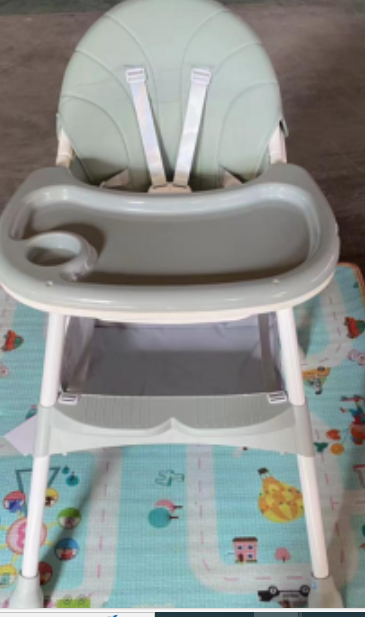 | US | The recalled high chairs violate the regulations for high chairs, as the leg openings on the high chair are too wide, posing an entrapment hazard to infants. Additionally, the high chairs pose a fall hazard because the tray can become disengaged from the product. |
| Children’s Ring Sets | 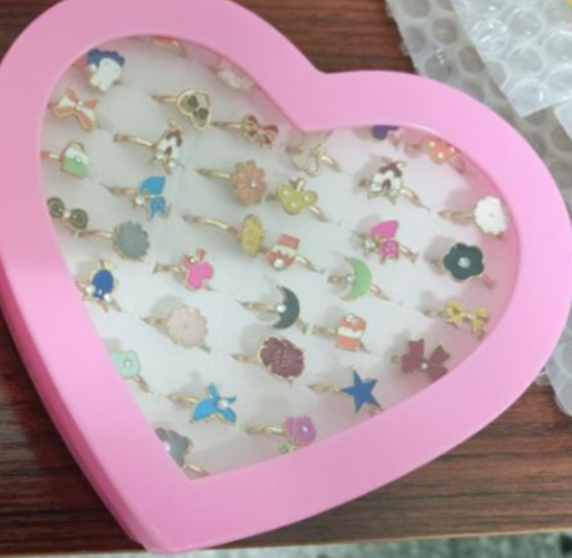 | US | The rings contain levels of lead that exceed the federal lead content ban and levels of cadmium that are prohibited in children’s products by the Federal Hazardous Substances Act. Lead and cadmium are toxic if ingested by young children and can cause adverse health effects. |
| Desk lamps | 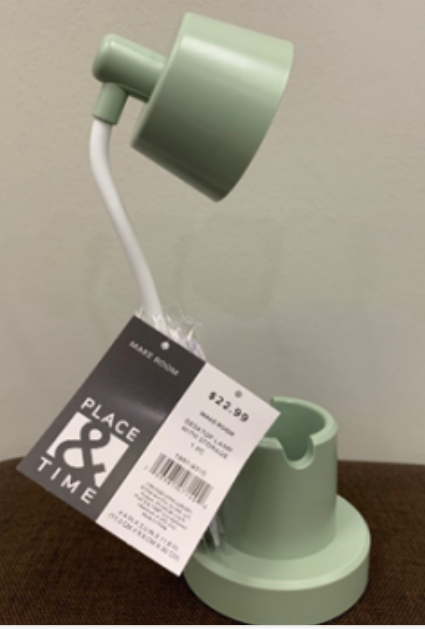 | US | The desk lamp’s battery compartment can overheat while using the USB charging cord, posing a fire hazard. |
| Climbing harnesses | 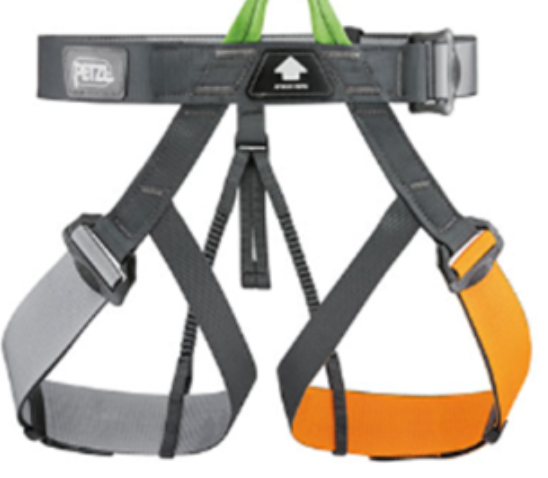 | US Canada | The recalled harness can be put on backwards and the rope or carabiner can be attached to a non-weight-bearing leg loop elastic band, placing the user at risk of falling from height and sustaining serious injury, including paraplegia or death. |
| Glow in Dark Party Supplies Toy Sets | 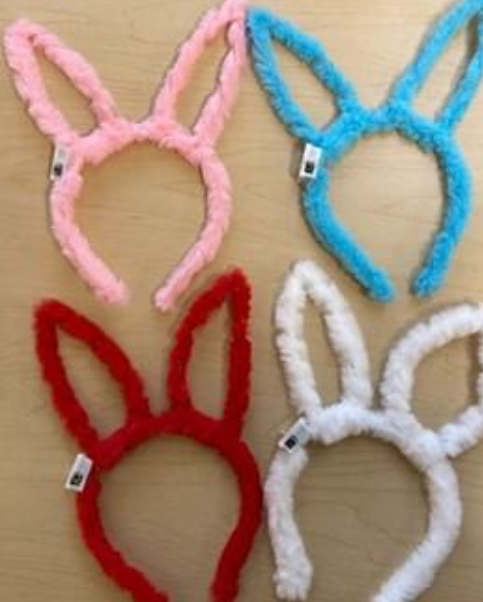 | US | The recalled Glow in Dark Supplies Toy Sets violate the mandatory federal battery-operated toy regulation because the Bunny Ears Headbands found in the sets contain button cell batteries that can be easily accessed without requiring the use of a common household tool. When button cell batteries are swallowed, the ingested batteries can cause serious injuries, internal chemical burns and death, posing an ingestion hazard to children. |
| Plastic shoes A12/02557/24 | 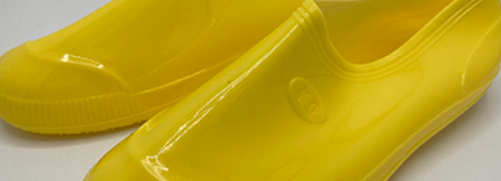 | Sweden | The plastic material of the product has an excessive concentration of dibutyl phthalate (DBP) (measured value: 29% by weight). This phthalate may harm the health by causing possible damage to the reproductive system. The product does not comply with the REACH Regulation. |
| Slippers A12/02674/24 | 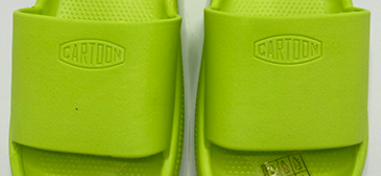 | Sweden | The plastic material of the shoes contains excessive concentrations of bis(2-ethylhexyl) phthalate (DEHP) and dibutyl phthalate (DBP) (measured values up to 1.2% and 20% by weight, respectively). These phthalates may harm the health of children by causing possible damage to their reproductive system. Moreover, it contains cadmium and lead (measured values up to 0.026% and 0.084% by weight, respectively). Lead is harmful to human health, accumulates in the body, can cause developmental neurotoxicity and may also affect breast-fed or unborn children. Cadmium is harmful to human health because it accumulates in the body, can damage the kidneys and bones, and it may cause cancer. The product does not comply with the REACH Regulation |
| Earrings A12/02554/24 | 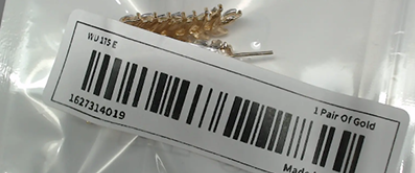 | France | The product has an excessive concentration of cadmium and lead (measured values up to: 47% and 31% by weight, respectively). Cadmium is harmful to human health because it accumulates in the body, can damage the kidneys and bones and it may cause cancer. Lead is harmful to human health, accumulates in the body, can cause developmental neurotoxicity and may affect breast-fed or unborn children. The product does not comply with the REACH Regulation |
| LED lamp box A12/02513/24 | 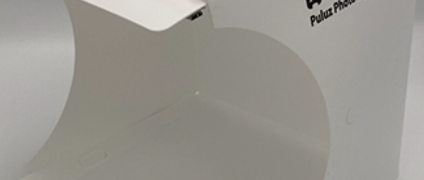 | Sweden | The solders in the product have an excessive concentration of lead in solders (measured value up to 45.6% by weight). Lead poses a risk to the environment. The product does not comply with the requirements of the Directive on the restriction of the use of certain hazardous substances in electrical and electronic equipment (RoHS 2 Directive). |
| Head lamp A12/02507/24 | 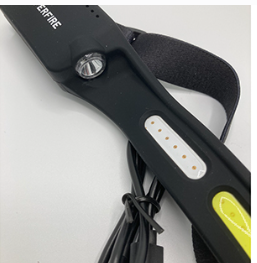 | Sweden | The solders in the product have an excessive concentration of lead (measured value up to 85%). It also contains DBP and DEHP in plastic parts (measured value up to 1,4 and 2,1% respectively). The product contains excessive concentrations of SCCP in plastic (measured value up to 3,4%). Lead poses a risk to the environment. Phthalates poses a risk to human health and the environment. SCCPs persist in the environment, are toxic to aquatic organisms at low concentrations and bio-accumulate in wildlife and humans, posing a risk to human health and the environment. Prolonged exposure to them through the skin may cause cancer. The product does not comply with the requirements of the Directive on the restriction of the use of certain hazardous substances in electrical and electronic equipment (RoHS 2 Directive) nor with the Persistent Organic Pollutants (POP) Regulation. |
| Handheld fan A12/02647/24 | 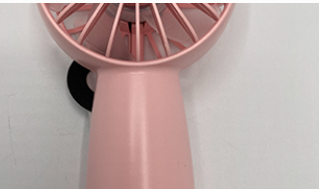 | Sweden | The solders of the product have excessive concentrations of lead (measured value up to 50.5% by weight). Lead poses a risk to the environment. The product does not comply with the requirements of the Directive on the restriction of the use of certain hazardous substances in electrical and electronic equipment (RoHS 2 Directive). |
| 软体玩具 A12/02546/24 | 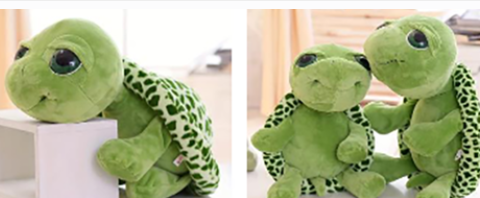 | France | The toy contains small parts (eye and suction cup) which can easily detach. A small child may put them in the mouth and choke. Moreover, the fibrous stuffing material of the toy is easily accessible due to the weakness of certain seams. A small child may put the filling material in the mouth and choke. The product does not comply with the requirements of the Toy Safety Directive nor with the European standard EN 71-1. |
| Toy gun set A12/02645/24 | 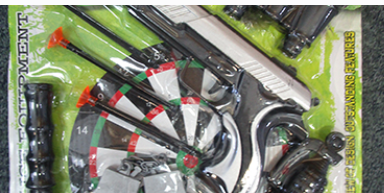 | Cyprus | The suction cups of the projectiles can easily detach. If a child puts them in the mouth, it may block the airways and the child can choke. The product does not comply with the requirements of the Toy Safety Directive nor with the European standard EN 71-1. |
| Puzzle mat A12/02642/24 | 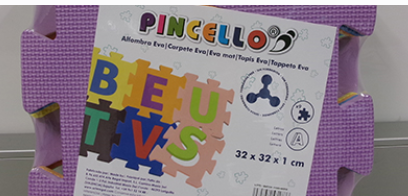 | Spain | The puzzle mat can easily break, resulting in small parts. Small children may put them in the mouth and choke. The product does not comply with the requirements of the Toy Safety Directive nor with the European standard EN 71-1. |
| Fancy-dress costume A12/02543/24 | 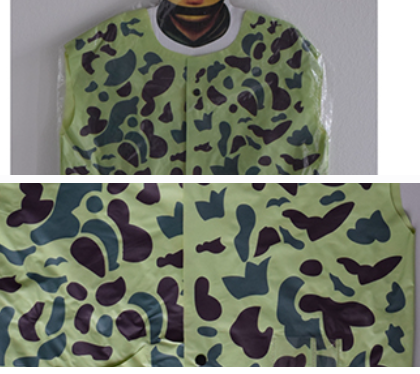 | Hungary | The product is highly flammable and may catch fire if worn close to an ignition source, resulting in burns. The product does not comply with the requirements of the Toy Safety Directive nor with the European standard EN 71-2. |
| Children’s short pants A12/02570/24 | 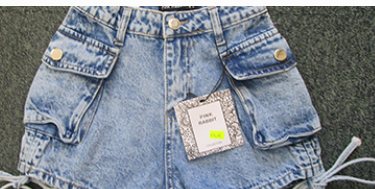 | Cyprus | The functional cords on the lower hems of the pants can become trapped during various activities of a child, leading to injuries. The product does not comply with the requirements of the General Product Safety Directive nor with the European standard EN 14682. |
| Children’s fancy dress A12/02585/24 | 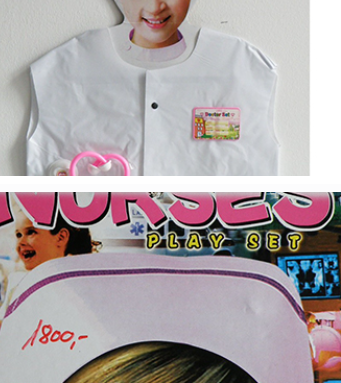 | Hungary | The vest of the costume is highly flammable and may catch fire if worn close to an ignition source, resulting in burns. The product does not comply with the requirements of the Toy Safety Directive nor with the European standard EN 71-2. |
| Children’s clothing set A12/02631/24 | 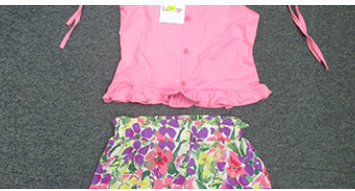 | Cyprus | The product has long functional cords with free ends in the neck area which can become trapped during various activities of a child, leading to injuries and strangulation. The product does not comply with the requirements of the General Product Safety Directive nor with the European standard EN 14682 |
| Children’s bikini A12/02633/24 | 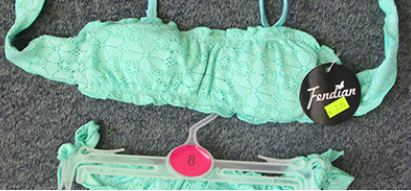 | Cyprus | The product has functional cords with free ends to be tied around the back area. The cords may become trapped during various activities of a child, leading to injuries. The product does not comply with the requirements of the General Product Safety Directive nor with the European standard EN 14682. |
| Hoodie A12/02648/24 | 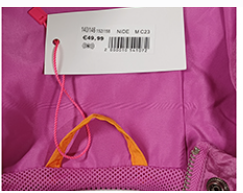 | Belgium | The product bears functional cords with free ends and toggles in the waist area. These elastic cords can become trapped during various activities of a child, leading to injuries. The product does not comply with the requirements of the General Product Safety Directive nor with the European standard EN 14682. |
| Toy slime A12/02569/24 | 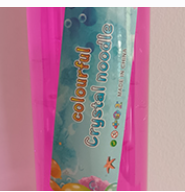 | Germany | The migration of boron from the toy slime is too high (measured value: 786 mg/kg). Ingestion or contact with an excessive quantity of boron may harm the health of children by damaging their reproductive system. The product does not comply with the requirements of the Toy Safety Directive nor with the European standard EN 71-3 |
| Toy slime A12/02566/24 | 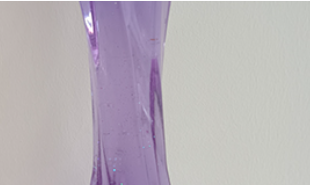 | Germany | The migration of boron from the toy slime is too high (measured value: 801 mg/kg). Ingestion or contact with an excessive quantity of boron may harm the health of children by damaging their reproductive system. The product does not comply with the requirements of the Toy Safety Directive nor with the European standard EN 71-3. |
| Toy slime A12/02565/24 | 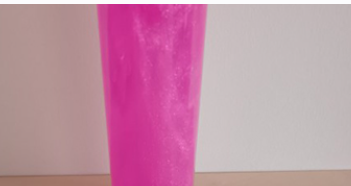 | Germany | The migration of boron from the toy slime is too high (measured value: 827 mg/kg). Ingestion or contact with an excessive quantity of boron may harm the health of children by damaging their reproductive system. The product does not comply with the requirements of the Toy Safety Directive nor with the European standard EN 71-3 |
| Toy slime A12/02590/24 | 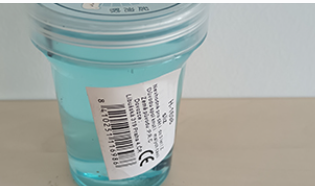 | Germany | The migration of boron from the toy slime is too high (measured value: 1350 mg/kg). Ingestion or contact with an excessive quantity of boron may harm the health of children by damaging the reproductive system. The product does not comply with the requirements of the Toy Safety Directive nor with the European standard EN 71-3 |
| Novelty lighter A12/02688/24 | 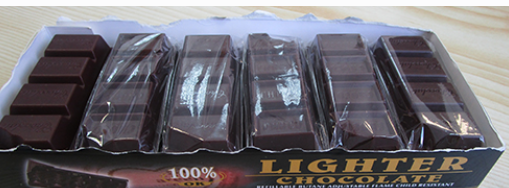 | Cyprus | The lighter is appealing to children due to its shape and colour. Children may play with it and suffer burns or cause a fire. The product does not comply with the requirements of the General Product Safety Directive nor the European standard EN 13869 |
| Tablecloth A12/02680/24 |  | Norway | The plastic material of the product has an excessive concentration of bis(2-ethylhexyl) phthalate (DEHP) (measured value up to 25.9% by weight). This phthalate may harm the health of children by causing possible damage to the reproductive system. The product does not comply with the REACH Regulation. |
| Tablecloth A12/02687/24 | 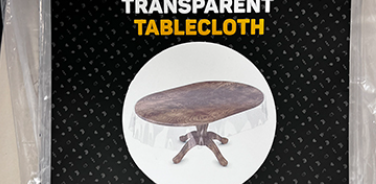 | Norway | The plastic material of the product contains an excessive amount of bis(2-ethylhexyl) phthalate (DEHP) (measured values up to 19% by weight) and cadmium (measured values up to 460 mg/kg). This phthalate may harm the health of children by causing possible damage to the reproductive system. Moreover, cadmium is harmful to human health because it accumulates in the body, can damage the kidneys and bones and it may cause cancer. The product does not comply with the REACH Regulation. |
On September 9, 2024, the Japanese Ministry of Health, Labor and Welfare, Ministry of Economy, Trade and Industry, and Ministry of the Environment jointly released a draft proposal to ban 138 perfluorooctanoic acid (PFOA)-related compounds. These compounds are proposed to be designated as class I specified chemical substances under the Order for Enforcement of the Act on the Evaluation of Chemical Substances and Regulation of their Manufacture.
- Public Comment Period: Open until October 9, 2024, allowing stakeholders to provide feedback.
- Finalization and Implementation: The final version of the ministerial order is expected to be published in November 2024 and come into effect on January 10, 2025.
- Health Risks: PFOA, also known as C8, is classified as ‘carcinogenic to humans’ by the International Agency for Research on Cancer (IARC).
- Affected Products: PFOA-related compounds are used in various products, including lubricants, paints, cosmetics, food packaging, nonstick pans, and fire-fighting foam.
Source: https://public-comment.e-gov.go.jp/pcm/download?seqNo=0000279412

The US Consumer Product Safety Commission (CPSC) has amended 16 CFR 1110 to introduce an eFiling system for importers and their trade partners. This system requires importers of regulated consumer products to electronically submit compliance data through the Automated Commercial Environment (ACE) system managed by U.S. Customs and Border Protection (CBP).
Key Points:
- eFiling Initiative: Importers must submit compliance data electronically via the ACE system.
- Benefits: Real-time data capture, streamlined processes, reduced risk scores, hold times, exams, and costs for compliant importers.
- Message Sets:
- Full PGA Message Set: For limited or non-repeated importations, requiring full product certificates and broker files.
- Reference PGA Message Set: For repeated importations, using pre-entered certificate data and identifiers.
- Compliance Requirements: Seven elements needed for a Certificate of Compliance, including Product ID, Citation Codes, and more.
- Implementation Timeline: Full rollout expected around 2025.
This amendment aims to enhance efficiency and compliance in the importation process without changing existing safety requirements.
Source: https://www.cpsc.gov/eFiling
On September 20, 2024, the Official Journal of the European Union published Regulation (EU) 2024/2462, amending Annex XVII of the REACH Regulation to include a new entry (79) concerning the restriction of undecafluorohexanoic acid (PFHxA), its salts and PFHxA-related substances. This regulation will automatically become law in member states 20 days after its publication and will be enforced, having universal binding force and directly applicable to all EU member states. The European Chemicals Agency (ECHA) has compiled a non-exhaustive list of PFHxA and its salts and related substances.
| Substances Information | |
| Undecafluorohexanoic acid (PFHxA), its salts and PFHxA-related substances | Excluded Substances |
| 1. having a linear or branched perfluoropentyl group with the formula C5F11– directly attached to another carbon atom as one of the structural elements; or 2. having a linear or branched perfluorohexyl group with the formula C6F13– | 1. C6F14 2. C6F13–C (=O) OH, C6F13–C (=O) O-X ‘or C6F13–CF2–X’ (where X ‘=any functional group, including salts) 3. any substance having a perfluoroalkyl group C6F13– directly attached to an oxygen atom at one of the non-terminal carbon atoms. |
Main Limit Requirements of Entry 79 in REACH Annex XVII: in a concentration less than 25 ppb for the sum of PFHxA and its salts, 1000 ppb for the sum of PFHxA-related substances, measured in homogeneous material. The following are the main controlled products and their effective dates:
| Controlled Products | Effective Date |
| The products for the general public, including textiles, leather, furs and hides in clothing and related accessories, footwear, mixtures; Paper and cardboard used as food contact materials; Cosmetic products. | October 10, 2026 |
| For the general public, including textiles, leather, and fur in products other than clothing and related accessories | October 10, 2027 |
| Firefighting foams and firefighting foam concentrates used for public fire services, training, and testing. | April 10, 2026 |
| Firefighting foams and firefighting foam concentrates for civil aviation (including in civilian airports) | October 10, 2029 |
Resource:https://eur-lex.europa.eu/legal-content/EN/ALL/?uri=OJ:L_202402462
Mr. Robert Lok Pak-keung, Vice President of the Chinese Manufacturers’ Association of Hong Kong cum Chairman of CMA Industrial Development Foundation Limited, accepted the invitation of Now TV and was interviewed on the program “75 Years of Inheritance”. During the interview, Mr. Lok talked about the pragmatic measures of Hong Kong’s testing industry and how CMA Testing is leveraging its advantages as a super-connector to contribute to the development of the country. The content of the program highlights how China’s foreign trade sprouted in the 1960s and 1970s, a period when it was challenging for domestically produced goods to go global. Today, China ranks among the leaders in foreign trade volume worldwide.
Source: Now TV 【75 Years of Inheritance】 Towards the World
If it cannot be played normally, please click this
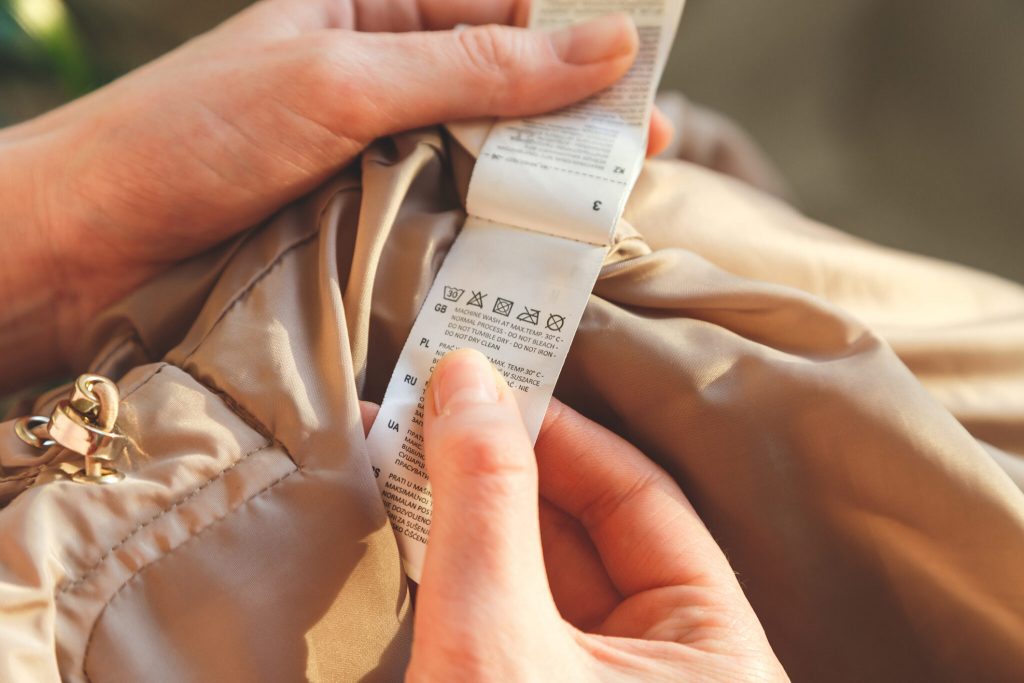
The revised Japanese Industrial standards JIS L 0001: 2024 Textiles – Care Labelling Code Using Symbols was released on 20 August 2024. This revision has been implemented to align with the care symbols and certain care treatments stated in the current ISO care labelling standard ISO 3758: 2023.
Concurrently, the Japan Household Goods Quality Labeling Act and the Textile Goods Labeling Regulation were revised to adopt this revised Japanese standard.
The key revisions are as follow:
| Revisions | Details |
| 1. Scope | Some exemptions have been introduced into the scope such as: * Non-removable covers on upholstered furniture * Non-removable mattress covers * Carpets and rugs that require specialized carpet cleaning |
| 2. Washing Symbol | A new symbol has been introduced for wash by hand at 30°C that features a single bar underneath the symbol.  |
| 3. Ironing Symbol | A new symbol has been introduced for ironing without steam, features a cross through the image of steam emanating from the underside of the ironing symbol.  |
| The ironing temperature limit has been increased by 10°C for each of the iron temperature setting such as cool iron, warm iron and hot iron. For example, the temperature for hot iron has changed from 200°C to 210°C | |
| 4. Dry-Clean | New dry-cleaning solvents dibutoxymethane or decamethylpentacyclosiloxane have been added as an alternative to the dry-cleaning treatments P and F respectively. |
Other graphical changes in the symbols:
| JIS L 0001: 2014 (Old version) | JIS L 0001: 2024 (Revised version) | Symbols Description |
 |  | Wash by hand , max temperature 40°C |
 |  | Do not wash |
 |  | Do not bleach |
 |  | Do not iron |
The enforcement date is set for 20 August 2024, accompanied by a transition period of one year.
Note: In principle, products displaying with the old JIS care symbols can continue to be sold until 19 August 2025.
On 30 August 2024, the European Chemicals Agency (ECHA) launched a public consultation of 6 potential substances of very high concern (SVHC) and the deadline for commenting is 14 October, 2024.Once the public consultation is approved, these 6 substances will be added to the list of SVHC as the 32nd batch of SVHC substances.
The 6 substances proposed to be added to the SVHC candidate list on 30 August 2024 and their hazardous properties are detailed as below:
| No. | Substances Name | EC No. | CAS No. | Reason for Proposing | Use |
| 1 | 6-[(C10-C13)-alkyl-(branched, unsaturated)-2,5-dioxopyrrolidin-1-yl]hexanoic acid | 701-118-1 | 2156592-54-8 | Toxic for reproduction (Article 57c) | Hydraulic oil, lubricating oil and grease, and metalworking fluid. |
| 2 | O,O,O-triphenyl phosphorothioate | 209-909-9 | 597-82-0 | Persistent, bioaccumulative and toxic (PBT) (Article 57d) | Lubricants and greases |
| 3 | Octamethyltrisiloxane | 203-497-4 | 107-51-7 | Very persistent and very bioaccumulative (vPvB) (Article 57e) | Cosmetics and personal care products, as well as washing and cleaning products. |
| 4 | Perfluamine | 206-420-2 | 338-83-0 | Very persistent and very bioaccumulative (vPvB) (Article 57e) | Electrical, electronic, optical equipment and machinery, and vehicles. |
| 5 | Reaction mass of: triphenylthiophosphate and tertiary butylated phenyl derivatives | 421-820-9 | 192268-65-8 | Persistent, bioaccumulative and toxic (PBT) (Article 57d) | Hydraulic oil, lubricating oil, and grease. |
| 6 | Tris(4-nonylphenyl, branched) phosphite | 701-028-2 | / | Endocrine disrupting properties (Article 57(f) – environment) | Adhesives and sealants, coating products, and polymers. |

In order to strengthen the regulation of PFAS (perfluorinated and polyfluoroalkyl substances) and ensure that relevant enterprises and individuals can report in detail the production, import, and use of these substances, so that the government can better assess their environmental risks and take corresponding management measures, the Canadian government has issued a new measure in accordance with Section 71 (1) (b) of the Canadian Environmental Protection Act (CEPA) of 1999. This measure requires responsible parties within Canada to submit PFAS data information produced, imported, or used as individual substances, mixtures, or items within 2023 by January 29, 2025. This requirement covers 312 known or expected PFAS for commercial use, with a list divided into three parts: Part 1 (273 items), Part 2 (26 items), and Part 3 (13 items).
Responsible parties and scope to be reported:
- manufactured a total quantity greater than 1000 g of any substance listed in Schedule 1;
- imported a total quantity greater than 10 g of any substance listed in Part 1 of Schedule 1, or a total quantity greater than 100 kg of any substance listed in Part 2 or Part 3 of Schedule 1, whether the substance was alone, or at a concentration equal to or above 1 ppm in a mixture, in a product or in the 12 specified categories;
- imported a total quantity greater than 100 kg of any substance listed in Schedule 1 at a concentration equal to or above 1 ppm in a manufactured item NOT listed in the 12 specified categories of manufactured items;
- used a total quantity greater than 10 g of any substance listed in Schedule 1, whether the substance was alone, or at a concentration equal to or above 1 ppm in a mixture or in a product, in the manufacture of a mixture, a product or a manufactured item.
Scope of 12 specific items:
| 1. that is intended to be used by or for children under the age of 14 years. | 2. that is intended to come into contact with the mucosa of an individual. | 3. that is used as intended in a manner such that the substance may be inhaled, or come into dermal or oral contact with an individual. |
| 4. that is cookware, or a cooking or serving utensil that is intended to come into direct contact with heated food or beverage. | 5. that is food packaging material, including single-serve/disposable bowls, plates, cups, other serving-ware, as well as food cans and lid liners, that are intended to or may come into direct contact with food or beverage. | 6. that is a reusable food or beverage container. |
| 7. that is food processing equipment, including conveyor belts, trays, vats, nozzles, moulds, and cutters that come into contact with food or beverage prior to packaging and distribution. | 8. that is clothing or footwear, including life jackets, personal flotation devices, and other safety apparel. | 9. that is bedding, sleeping bags, or towels. |
| 10. that is furniture, mattresses, cushions or pillows intended to be used by an individual, where the substance is contained in foam or leather or in a textile fibre, yarn or fabric. | 11. that is carpet, vinyl or laminate flooring, or foam underlay for flooring, intended to be used by an individual. | 12. such that the substance is intended to be released from the manufactured item. |
Conditions for exemption report:
This notice does not apply to a substance, whether alone, in a mixture, in a product or in a manufactured item that
| 1. is only in transit through Canada | 2. is for personal use | 3. is intended for use in a laboratory for analysis, in scientific research or as a laboratory standard |
| 4. is, or is contained in, a hazardous waste or hazardous recyclable material within the meaning of the Cross-border Movement of Hazardous Waste and Hazardous Recyclable Material Regulations and was exported or imported pursuant to a permit issued under these Regulations | 5. is, or is contained in, a pest control product registered under the Pest Control Products Act | 6. is, or is contained in a fertilizer or supplement registered under the Fertilizers Act |
| 7. is, or is contained in, a feed registered under the Feeds Act | 8. is mixed with, or attached to, a seed registered under the Seeds Act | 9. This notice does not apply to any person or class of persons who meet the definition of a micro-business(Less than five employees or annual revenue less than $30000) |
Information required:
The company name, address, business number, contact information of the person in charge, and detailed information on the production, use, and import volume of each chemical substance of an individual or enterprise.
Precautions for submitting reports:
Information can be submitted in response to notifications through the Single Window online sumbission system of Environment and Climate Change Canada. If you need to apply for an extension of the report, you must submit the application at least 5 working days before the deadline (January 29, 2025) and provide a suggested new submission date. Please indicate ‘PFAS Notification Extension Request’ in the subject line of the email. Extension requests submitted after the deadline of January 29, 2025 will not be approved.
Source: https://canadagazette.gc.ca/rp-pr/p1/2024/2024-07-27/html/sup-eng.html
1. New Hampshire issues a bill restricts the use of PFAS in certain consumer products
On August 6, 2024, the Governor of New Hampshire approved Bill HB 1649, the Bill relative to prohibiting certain products with intentionally added PFAS. The specific requirements are as follows:
| Product Scope | Substances | Requirements | Effective date | Exemption |
|---|---|---|---|---|
| rugs treatments hygiene products and containers products furniture furnishings | PFAS | Prohibited if intentionally added | July 1, 2027 | (1) Products made with at least 85 percent recycled content. (2) Products manufactured prior to the ban imposed by this section. (3) Replacement parts for products manufactured prior to the ban imposed by this section |
2. CPSC proposes to revise the requirements for toys containing button cell or coin cell batteries
On August 13, 2024, the US Consumer Product Safety Commission (CPSC) published a notice of proposed rulemaking (NPR). CPSC proposes to address the risk of injury and death associated with children ingesting button cell or coin cell batteries obtained from toys by adding performance and labeling requirements for battery-operated toys containing such batteries. The proposed requirements would provide the highest level of safety feasible, and are consistent with the Commission’s recent Reese’s Law rulemaking and international standards for electronic toys. The Commission also proposes to amend CPSC’s list of notice of requirements (NORs) to include toys containing button cell or coin cell batteries. The public comment period will be open until October 15, 2024.
3. Pennsylvania updates ‘Stuffed Toy Manufacturing Act’
On June 28, 2024, the Governor of Pennsylvania approved Bill HB1333, amending the ‘Stuffed Toy Manufacturing Act’ originally passed in 1961, which did did not previously consider the use of recycled materials in stuffed toys. The amendment brings Pennsylvania in line with global stuffed toy requirements, allowing manufacturers and retailers to produce and sell stuffed toys with recycled materials within the state, as they do in the rest of the country.
https://legiscan.com/PA/bill/HB1333/2023
4. EPA proposes to list five chemicals as TSCA High-Priority Substances for risk evaluation
On July 25, 2024, the Environmental Protection Agency (EPA or Agency) published a notice ,under the Toxic Substances Control Act (TSCA) and related implementing regulations, the EPA is proposing to designate acetaldehyde (CASRN 75-07-0), acrylonitrile (CASRN 107-13-1), benzenamine (CASRN 62-53-3), vinyl chloride (CASRN 75-01-4), and 4,4-methylene bis(2-chloroaniline) (MBOCA) (CASRN 101-14-4) as High-Priority Substances for risk evaluation. EPA is providing a 90-day comment period, during which interested persons may submit comments on the proposed designations of these chemicals as High-Priority Substances for risk evaluation.
5. EU officially confirmed to revise POPs regulation to add restriction of Methoxychlor
On July 22, 2024, the European Commission announced the revised draft of the POPs Regulation (EU) 2019/1021 has been adopted, that determined the restrictions on Methoxychlor will be added to Annex I of the POPs Regulation. The EU Official Journal is expected to publish the revised regulation shortly. The list of POPs Annex I prohibited substances will also be increased from 29 to 30.The concentrations of methoxychlor equal to or below 0,01 mg/kg (0,000001 % by weight) where they are present in substances, mixtures or article.
6. EU proposes to revise POPs regulation to add restriction of UV-328
On July 30, 2024, the European Union released a revised draft act of the POPs Regulation (EU) 2019/1021. This draft act amends Annex I to the Regulation to include 2-(2H-benzotriazol-2-yl)-4,6
ditertpentylphenol (UV-328) plus as a substance subject to certain restrictions. This draft act is open for feedback from Juiy 30 2024 to August 27, 2024. The restriction requirement is: The concentrations of dechlorane plus equal to or below 1 mg/kg (0, 0001 % by weight) where they are present in substances, mixtures or articles.
7. REACH SVHC adds one new intended substances
On August 6, 2024, ECHA added Barium chromate to the SVHC intended substances list. ECHA plans to initiate a public review of these substances in February 2025. If approved, these substances are expected to be officially added to SVHC in June 2025. At present, there are 12 SVHC intended substances.
https://echa.europa.eu/registry-of-svhc-intentions
8. EU Releases Second Edition of the Technical Guide on Metals and Alloys Used in Food ContactMaterials and Articles for manufacturers and regulators
On August 1, 2024, the European Medicines Agency released the new version of the “Technical Guide on Metals and Alloys Used in Food Contact Materials and Articles” (EDQM), replacing the old version CM/Res (2013) 9. This guide has been widely recognized and is considered a reference standard for the safety and quality of metal materials and products.
This revision is based on Resolution CM/Res (2020)9 and takes into account the scientific opinions issued by the European Food Safety Authority (EFSA) since 2013 and the research results of relevant national risk assessment agencies (such as BfR, ANSES). The main updates include:
- Updated element release limits (SRL)
| Substance Name | Previous Limit (SRL) mg/kg | New Limit (SRL) mg/kg |
|---|---|---|
| Chromium | 0.250 | 1 |
| Manganese | 1.8 | 0.55 |
| Thallium | 0.0001 | 0.001 |
| Zirconium | / | 2 |
2. Updated test conditions referring to the JRC guidelines, aligning with the “Test Conditions for Kitchen Utensils in Contact with Food: Plastics, Metals, Silicone Rubbers, and Rubbers, Paperboard” 4th edition 2023.
3. Removed the declaration of conformity section from the first edition to comply with the guidelines specified in Section 8.2 of Resolution CM/Res(2020)9.
4. Clarified the requirements for determining disposable metal and alloy products: the first migration amount ≤ SRL.
https://freepub.edqm.eu/publications/PUBSD-128/detail?_refluxos=a10
9. New requirements for EU battery and waste battery regulations have come into effect
The batteries and waste batteries regulation (EU) 2023/1542 was published on July 28, 2023. The new regulation provides more comprehensive supervision of the entire battery industry chain, regulates the entire life cycle of batteries from production to reuse and recycling, and has a great impact on battery related enterprises. The new battery regulation stipulates that new requirements such as harmful substances and CE labeling for batteries will come into effect on August 18, 2024.
https://eur-lex.europa.eu/legal-content/EN/TXT/?uri=CELEX%3A32023R1542
10. EU proposes to revise Annex XVII of REACH regulation to add restrictions on N, N dimethylacetamide (DMAC) and N-ethylpyrrolidone (NEP)
On 30 July 30, 2024, the EU submitted to the WTO Circular G/TBT/N/EU/1079 proposing amendments to Annex XVII of REACH Regulation (EC) No 1907/2006 to add restrictions on N,N-dimethylacetamine (DMAC) and N-ethylpyrrolidone (NEP). Specific proposed revisions are as follows:
| Substances Name | CAS No | EC No | Update details |
|---|---|---|---|
| N,N- dimethylacetamide | 127-19-5 | 204-826-4 | 1. Shall not be placed on the market as a substance on its own, as a constituent of other substances, or in mixtures in a concentration equal to or greater than 0,3 % after …[OP, please insert the date: 18 months after the entry into force of this Regulation] unless manufacturers, importers and downstream users have included in the relevant chemical safety reports and safety data sheets, derived no-effect levels (DNELs) relating to exposure of workers of 13 mg/m3 for long-term exposure by inhalation and 1,8 mg/kg bw/day for long-term dermal exposure. 2. Shall not be manufactured, or used, as a substance on its own, as a constituent of other substances, or in mixtures in a concentration equal to or greater than 0,3 % after… [OP, please insert the date: 18 months after the entry into force of this Regulation] unless manufacturers and downstream users take the appropriate risk management measures and provide the appropriate operational conditions to ensure that exposure of workers is below the DNELs specified in paragraph 1. 3. By way of derogation from paragraphs 1 and 2, the obligations laid down therein shall apply from …[OP, please insert the date: 48 months after the entry into force of this Regulation] in relation to placing on the market for use, or use, as a solvent in the production of man-made fibres. |
| 1-ethylpyrrolidin-2-one | 2687-91-4 | 220-250-6 | 1. Shall not be placed on the market as a substance on its own, as a constituent of other substances, or in mixtures in a concentration equal to or greater than 0,3 % after …[OP, please insert the date: 18 months after the entry into force of this Regulation] unless manufacturers, importers and downstream users have included in the relevant chemical safety reports and safety data sheets, derived no-effect levels (DNELs) relating to exposure of workers of 4,0 mg/m3 for long-term exposure by inhalation and 2,4 mg/kg bw/day for long-term dermal exposure.、 2. Shall not be manufactured, or used, as a substance on its own, as a constituent of other substances, or in mixtures in a concentration equal to or greater than 0,3 % after [OP, please insert the date: 18 months after the entry into force of this Regulation] unless manufacturers and downstream users take the appropriate risk management measures and provide the appropriate operational conditions to ensure that exposure of workers is below the DNELs specified in paragraph 1 |
11. Japan – Approved to Expand the Restriction on PFOA, its isomer or their salts and PFOA- related compounds
On July 10, 2024 the Ministries of Japan has published Cabinet Order no. 244 of 2024 to expand the restriction on perfluorooctanoic acid (PFOA) and its salts to PFOA, its isomer or their salts and PFOA-related compounds under the Act on the Evaluation of Chemical Substances and Regulation of their Manufacturer etc.
- Designated the following substances as Class 1 Specified Chemical Substances:
- Perfluoro alkanoic acid (limited to those with a branched structure and eight carbon atoms) (PFOA isomers) or their salts.
- PFOA-related substances (perfluorooctyl iodide (PFOI), 8:2 fluorotelomer alcohol (8:2 FTOH), and substances that degrade to PFOA specified by the Ministry of Health, Labor and Welfare (MHLW), the Ministry of Economy, Trade and Industry (METI), and the Ministry of the Environment.)
- Expanded the restriction for “PFOA or its salts” to “PFOA, its isomers, or their salts” under the Entry 34.
- Added a new restriction on PFOA-related substances with certain transition period for certain products in Entry 35.
- Updated the Entry number for PFHxS to Entry 36.
https://www.meti.go.jp/english/press/2024/0705_002.html
12. The German Federal Institute for Risk Assessment (BfR) updated its recommendations on food contact materials , involve silicone, paper and paperboard, and temperature resistant polymer coating.
On August 1, 2024, the German Federal Institute for Risk Assessment (BfR) 11.updated its recommendations on food contact materials, involve silicone, paper and paperboard and temperature resistant polymer coating, which is effective from the date of publication.
| Recommendations No. | Commendation Recommendations |
|---|---|
| XV | Silicones |
| XXXVI | Paper and Board for Food Contact |
| XXXVI/1 | Cooking Papers, Hot Filter Papers and Filter Layers |
| XXXVI/2 | Paper and Paperboard for Baking Purposes |
| LI | Temperature Resistant Polymer Coating Systems for Frying, Cooking and Baking Utensils |
13. China mandatory national standard for electric toys have been officially released
On July 24, 2024, China’s State Administration for Market Regulation (National Standardization Administration) published Announcement (No. 15 of 2024) approving release of 218 national standards and 1 national standard amendment form, including the mandatory standard GB 19865-2024 “Safety of Electric Toys” for electric toys, which will be officially implemented on August 1, 2026.
https://std.sacinfo.org.cn/gnoc/queryInfo?id=238F00654BFECAEC2EA26A1EE83134C0
14. Hong Kong Revises Standards for Toys and Children’s Products!
February 16, 2024, the Hong Kong government published in the Gazette the Toys and Children’s Products Safety Ordinance (Amendment of Schedules 1 and 2) Notice 2024. The Notice seeks to update the safety standards for toys and six classes of children’s products listed in Schedule 2 (Schedule 2 products) under the Toys and Children’s Products Safety Ordinance (Cap. 424).
The six classes of Schedule 2 products are (i) baby walking frames; (ii) bunk beds for domestic use; (iii) child safety barriers for domestic use; (iv) children’s paints; (v) playpens for domestic use; and (vi) wheeled child conveyances.
The Notice will take effect on August 1, 2024.
https://www.legco.gov.hk/yr2024/english/brief/cedbcr08183_20240215-e.pdf
https://www.elegislation.gov.hk/hk/2024/ln17!en
Recall
EU rapid alert system for dangerous non-food products (Rapex)(Report-2024-27- Report-2024-34):
https://ec.europa.eu/safety-gate-alerts/screen/webReport#weeklyReports
Canada Recall:https://recalls-rappels.canada.ca/en/search/site
Australian Recall:https://www.productsafety.gov.au/recalls
US CPSC Recall:https://www.cpsc.gov/Recalls
Recall case:
| Product category | Sample images | Notification submitted by | Reason for recall |
|---|---|---|---|
| Children’s Two-Piece Pajama Sets |  | US | The children’s pajama sets violate the federal flammability standards for children’s sleepwear, posing a burn hazard to children. |
| Children’s Long-Sleeve/Pants Two-Piece Pajama Sets |  | US | The recalled children’s pajama sets violate the flammability standards for children’s sleepwear, posing a risk of burn injuries to children. |
| Children’s Lace Nightgowns |  | US | The children’s nightgowns violate the federal flammability standards for children’s sleepwear, posing a risk of burn injuries to children. |
| Children’s Button-up Short-Sleeve/Shorts Two-Piece Pajama Sets |  | US | The recalled children’s pajama sets violate the flammability standards for children’s sleepwear, posing a risk of burn injuries to children. |
| Halloween Witch Hats |  | US Canada | The hats violate federal flammability requirements, posing a risk of burn injuries to consumers. |
| Victor Electric Folding Soft Bullet Toy Guns |  | US | The recalled toy guns fail to meet federal safety standards, as they do not have a blaze orange tip that is required by the mandatory toy standard to differentiate toy guns from real guns, and the projectiles pose an eye injury hazard to children because they do not meet the requirements in the mandatory toy standard for projectile toys. |
| LED Light-up Jelly Ring Toys |  | US | The recalled light-up jelly ring toys violate the mandatory federal battery-operated toy regulation because the rings contain button cell batteries that fit within CPSC’s small parts cylinder, and can be easily accessed without requiring the use of a common household tool. When button cell batteries are swallowed, the ingested batteries can cause serious injuries, internal chemical burns and death, posing an ingestion hazard to children. |
| Brilliant Bee Rattles |  | US | The wooden base can detach from the wooden rod and release the three plastic rings, posing a choking hazard to young children. |
| Puzzle mat A12/01713/24 |  | Slovakia | The toy has small parts that can easily detach (window of the plane with propeller, rear part of horizontal tail surface and front part from sport plane). A small child may put them in the mouth and choke. The product does not comply with the requirements of the Toy Safety Directive nor with the European standard EN 71-1. |
| Children’s clothing set A12/01838/24 |  | Hungary | Children’ clothing set consisting of a long-sleeve white T-shirt, a long-sleeved pink T-shirt and blue trousers. The product is decorated with swans, beads and sequins. The product does not comply with the requirements of the General Product Safety |
| Children’s dress A12/01835/24 |  | Hungary | The small decorative elements (beads) can easily be detached from the product. Small children may put them in the mouth and choke. The product does not comply with the requirements of the General Product Safety Directive. |
| Children’s shoes A12/01877/24 |  | Hungary | The small decorative elements (four-leaf clovers) can easily be detached from the product. A small child may put them in the mouth and choke. The product does not comply with the requirements of the General Product Safety Directive. |
| Toy rattle A12/01828/24 |  | Germany | The small wooden balls of the rattle can easily detach. A child may put them in the mouth and choke. The product does not comply with the requirements of the Toy Safety Directive nor with the European standard EN 71-1. |
| Plastic toy set A12/01813/24 |  | Romania | Due to their characteristic appearance, form, colour and size, the product may be mistaken for foodstuff. This may lead children to put them in the mouth and ingest them. The product does not comply with the requirements of the Food Imitating Directive and the Toy Safety Directive, nor with the European standard EN 71-1. |
| Modelling clay A12/01800/24 |  | Latvia | The migration of boron from the modelling clay is too high (measured value: up to 1793 mg/kg). Ingestion or contact with an excessive quantity of boron may harm the health of children by damaging their reproductive system. The product does not comply with the requirements of the Toy Safety Directive nor with the European standard EN 71-3. |
| Toy slime A12/01947/24 |  | Germany | The migration of boron from the toy slime is too high (measured value: 1450 mg/kg). Ingestion or contact with an excessive quantity of boron may harm the health of children by damaging their reproductive system. The product does not comply with the requirements of the Toy Safety Directive nor with the European standard EN 71-3. |
| Toy slime A12/01943/24 |  | Germany | The migration of boron from the toy slime is too high (measured value: 1710 mg/kg). Ingestion or contact with an excessive quantity of boron may harm the health of children by damaging their reproductive system. The product does not comply with the requirements of the Toy Safety Directive nor with the European standard EN 71-3. |
| Toy slime A12/01944/24 |  | Germany | The migration of boron from the toy slime is too high (measured value: 960 mg/kg). Ingestion or contact with an excessive quantity of boron may harm the health of children by damaging their reproductive system. The product does not comply with the requirements of the Toy Safety Directive nor with the European standard EN 71-3. |
| Toy slime A12/01946/24 |  | Germany | The migration of boron from the toy slime is too high (measured value: 997 mg/kg). Ingestion or contact with an excessive quantity of boron may harm the health of children by damaging their reproductive system. The product does not comply with the requirements of the Toy Safety Directive nor with the European standard EN 71-3 |
| Bath toy A12/01951/24 |  | France | The toy releases an excessive amount of bisphenol A (measured value: 0.051 mg/l). Bisphenol A has endocrine disrupting properties and affects the mammary glands, reproductive and immune systems and may impair brain’s development and the behaviour. The product does not comply with the requirements of the Toy Safety Directive. |
| Soft toy A12/01958/24 |  | France | The eyes of the toy pig have an excessive concentration of bis(2-ethylhexyl) phthalate (DEHP) (measured values up to 20.6% by weight. These phthalates may harm the health of children, causing possible damage to their reproductive system. The product does not comply with the REACH Regulation. |
| Soft toy A11/00083/24 |  | Poland | The fibrous stuffing material of the toy is easily accessible due to the zipper. A small child may put the filling material in the mouth and choke. The product does not comply with the requirements of the Toy Safety Directive nor with the European standard EN 71-1. |
| 手指颜料材料包A12/01959/24 |  | France | The painting kit has small parts (the foam parts of the inkers) than can easily detach. Small children may put them in the mouth and choke. Moreover, the product has an excessive concentration of a mixture of the preservatives methylchloroisothiazolinone and methylisothiazolinone (MCI/MI) (measured values: 0.00008 % and 0.00011%). MCI and MI cause severe skin burns. Additionally, the plastic bag of the packaging is too thin. If a child plays with it, the plastic can cover the mouth and nose, causing the child to suffocate. The product does not comply with the requirements of the Toy Safety Directive nor with the European standards EN 71-1 and EN 71-7. |
| Flip flops A12/01876/24 |  | Finland | The plastic material of the straps contains an excessive amount of dibutyl phthalate (DBP) (measured value: 35% by weight). DBP may harm the health by causing possible damage to the reproductive system. The product does not comply with the REACH Regulation. |
| Slippers A12/01948/24 |  | France | The plastic material of the product has an excessive concentration dibutyl phthalate (DBP) (measured value: 2,9 % by weight). This phthalate may harm the health by causing possible damage to the reproductive system. The product does not comply with the REACH Regulation. |