











HKSAR government announced 30 measures to be implemented by the Working Group on Promoting Silver Economy. As an advocate and practitioner of the Silver Economy, CMA Testing supports the new measures and has already started to respond to the increasing market demand for the Silver Economy as early as 2024. Includes :
- Cooperate with The Hong Kong Council of Social Service to prepare the first Hong Kong industry initiated “Greater Bay Area standard” for care food ;
- CMA+ Pilot Manufacturing Center cooperates with Haier Care to establish a joint silver care product research and experience center, display the high-quality gerontechnology products, including smart home, innovative medicine, health monitoring and accessible travel, and develop Hong Kong gerontechnology and health care, facilitate the exchange and cooperation of Mainland China and Hong Kong ;
- CMA and CMA Testing regularly hold workshops to promote the connection between gerontechnology and the market, and introduce the latest gerontechnology research and development results from local universities and research institutions.
We welcome your participation to work with CMA Testing to promote the development of the Silver Economy and create a better world for all stakeholders in our society. If you need any assistance, please contact us.
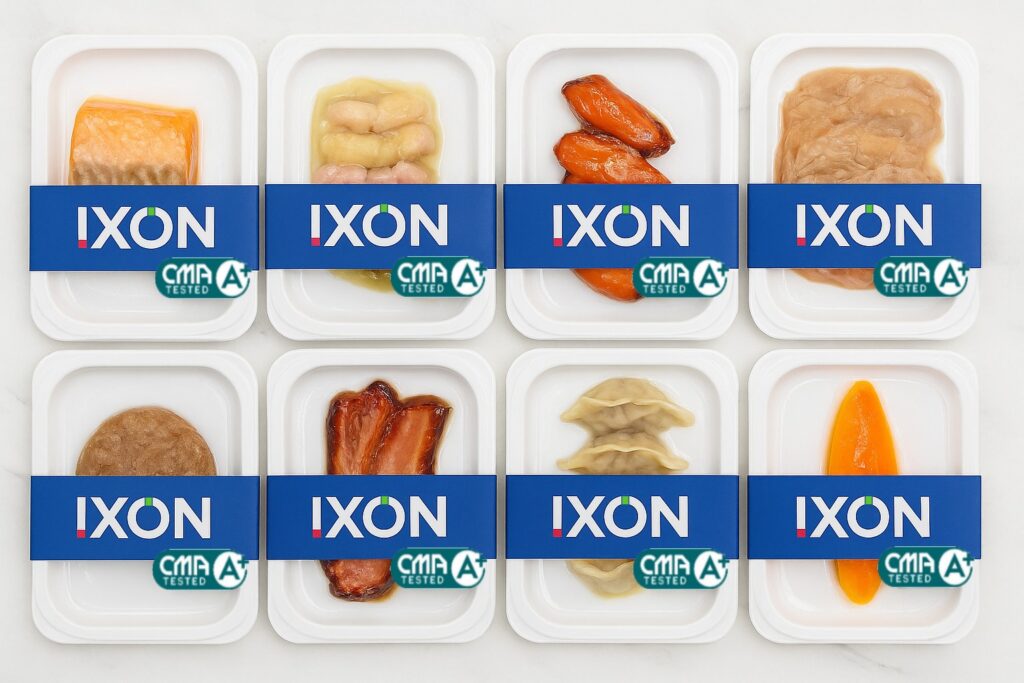
HONG KONG, June 03, 2025 — Hong Kong-based foodtech startup IXON Food Technology and CMA+, the technology commercialization platform of CMA Testing, today announced a strategic collaboration to fast-track IXON’s innovative food preservation solutions to market. IXON, which has developed advanced sous-vide aseptic packaging (ASAP), a process that sterilizes foods at gentle temperatures (60–80 °C), joined the CMA+ InnoLIFE program in April 2025. This membership grants IXON access to CMA+’s extensive industry–academia network designed to turn cutting-edge research into commercial products.
Since joining, CMA+ has actively supported IXON’s efforts to commercialize its technology in the pet food and senior soft food segments. In return, IXON will conduct all of its food safety and quality analyses at CMA Testing’s accredited laboratories, leveraging CMA Testing’s decades of expertise in food and consumer-product testing.
CMA+ has provided IXON with hands-on guidance and resources to adapt its ASAP technology for new market niches. The collaboration now includes plans for IXON to replicate its production facility at CMA+’s Pilot Manufacturing Center (PMC). The PMC is a dedicated pilot-production hub that provides production sites and supporting facilities for enterprises engaged in experimental production. In practical terms, this means IXON can develop prototypes, integrate automation, and conduct low-volume pilot runs under one roof.
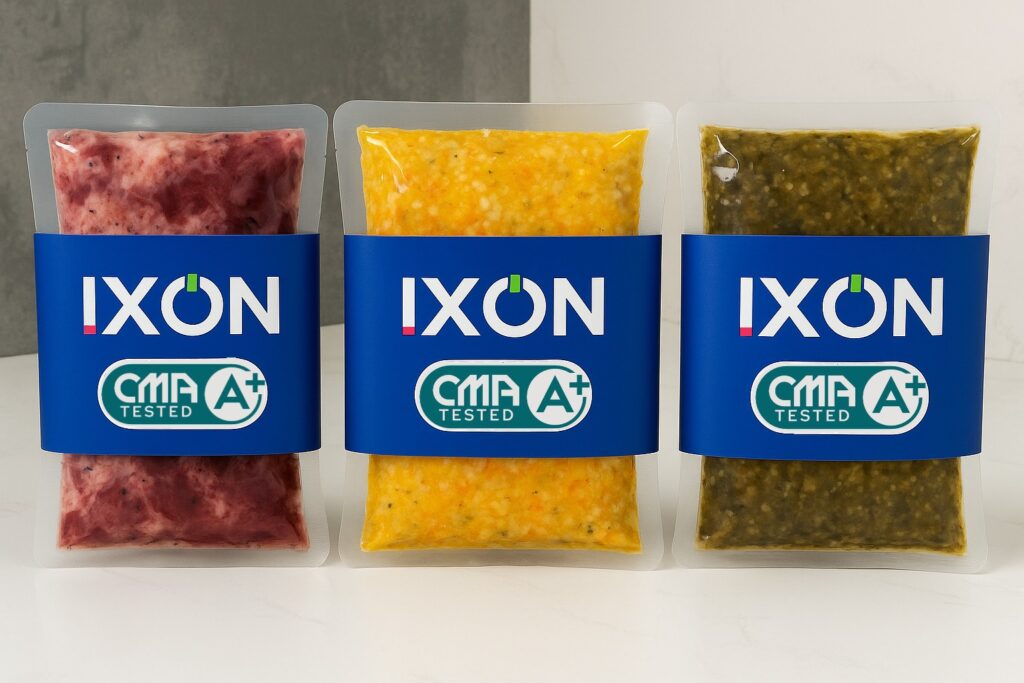
“Access to the PMC will help us accelerate product development and reduce technical risk on the path to scale-up,” said Felix Cheung, CEO of IXON. “Combining CMA+’s incubation support with our ASAP technology, we aim to bring high-quality, shelf-stable foods to market more quickly.”
Mr. Robert LOK, Vice President of CMA and Chairman of CMA Testing, explained that the platform was named “CMA+” to highlight its mission of expanding beyond testing services into technology commercialization. It aims to support the transformation of scientific research into real-world products across government, industry, academia, and research sectors. In addition to providing innovative laboratory facilities, CMA+ offers four key services tailored to the needs of early-stage technology companies: technical and certification support, access to manufacturers and supply chains, financing and legal guidance, and marketing support. By connecting startups with essential resources and partners, CMA+ helps accelerate the path from innovation to market.
About IXON
IXON is a Hong Kong-based company that specializes in food sterilization and preservation. A FoodTech 500 company, IXON is recognized for their proprietary advanced sous-vide aseptic packaging (ASAP) technology that enables the storage and shipment of food products at room temperature. By eliminating the need for cold chain and greatly extending shelf life, ASAP makes food consumption more equitable, convenient, and sustainable. For more information, visit https://www.ixon.com.hk.
About CMA Testing and CMA+
CMA Testing is a third-party quality assurance organization established in 1979, offering testing, inspection and certification services worldwide. It is accredited by HOKLAS and other international bodies, serving industries from consumer electronics to food and personal care. CMA+ is CMA Testing’s newly established Technology Commercialisation Platform, dedicated to bridging industry and academia. CMA+ provides technology and certification support, manufacturing and supply-chain assistance, financing and legal guidance, as well as sales and marketing channels. Its Pilot Manufacturing Center (PMC) offers on-site prototyping and small-scale production facilities to help innovators validate and scale their products. For more information, visit https://www.thecmaplus.org.

We are excited to announce that CMA Testing has partnered with Green Point to launch a comprehensive ESG (Environmental, Social, and Governance) data platform designed specifically for small and medium-sized enterprises (SMEs). This platform aims to simplify ESG data collection, generate evaluation report, and provide detailed ESG scorecards.
Key features include:
✔ Optimal character recognition technology for data collection
✔ Automatic generation of evaluation report
✔ Access to ESG training materials
✔ Support for Traditional Chinese, Simplified Chinese, and English
✔ Net-zero roadmap planning based on Hong Kong’s 2050 targets
✔ Visualization of greenhouse gas data and integration with Spark Chain Network
✔ Gap Analysis for identifying areas for excelling improvement
✔ Provide actionable recommendations ESG performance improvement
Through this platform, we are committed to helping SMEs effectively manage their ESG responsibilities and promote sustainable development.
1. ASTM publishes a standard guide ASTM F3700-25 for selecting and applying analytical methods to evaluate PFAS in consumer and related products
On February 5, 2025, the American Society for Testing and Materials (ASTM) released the standard guide ASTM F3700-25 for selecting and applying analytical methods to evaluate per- and polyfluoroalkyl substances (PFAS), in consumer and related products, providing recommendations to select, apply, and interpret available preparatory and analytical methods and techniques to identify and quantify PFAS in different types of products, including consumer products and related products. This guide provides a flexible, defensible framework applicable to a wide range of product disclosures and restrictions. This framework can be considered when creating regulations and standards to address PFAS in consumer and related products. However, this guide does not set criteria for acceptable concentration limits.
https://store.astm.org/f3700-25.html
2. CPSC releases a final rule for stationary activity center
On March 27, 2025, the Consumer Product Safety Commission (CPSC) published the final rule 16 CFR 1238 for stationary activity centers in the Federal Register, which cites the latest voluntary standard ASTM F2012-24 as a mandatory. The rule is effective on July 5, 2025, unless the Commission receives a significant adverse comment by April 28, 2025. If the Commission receives such a comment, it will publish a document in the Federal Register, withdrawing this direct final rule before its effective date. A stationary activity center as “a freestanding product intended to remain stationary that enables a sitting or standing occupant whose torso is completely surrounded by the product to walk, rock, play, spin or bounce, or all of these, within a limited range of motion”.
3. New Mexico, USA, enacts the “Per- and Polyfluoroalkyl Substances (PFAS) Protection Act”
On April 8, 2025, the governor of New Mexico, US, signed House Bill 212, formally titled the “Per- and Polyfluoroalkyl Substances Protection Act”. This legislation prohibits the manufacture, sale, or distribution of certain products containing intentionally added perfluoroalkyl or polyfluoroalkyl substances. The primary regulatory requirements are outlined as follows:
| Product Scope | Substances | Requirements | Implementation Date |
| Products | PFAS | Manufacturer must notify the Department of Environment (DOE) if intentionally added | On or before January 1, 2027 |
| Cookware Food packaging Dental floss Juvenile products Firefighting foam. | PFAS | Prohibited if intentionally added | Beginning January 1, 2027 |
| Carpets or rugs Cleaning products Cosmetics Fabric treatments Feminine hygiene products Textiles Textile furnishings Ski wax Upholstered furniture. | PFAS | Prohibited if intentionally added | Beginning January 1, 2028 |
| Products | PFAS | Prohibited if intentionally added, except for exemption. | Beginning January 1, 2032 |
https://legiscan.com/NM/bill/HB212/2025
4. The EU amends REACH Regulation Annex XVII to expand the scope of restrictions on polycyclic aromatic hydrocarbons (PAHs)
On April 2, 2025, the EU published Regulation (EU) 2025/660 in its Official Journal, amending entry 50 of REACH Regulation Annex XVII and adding entry 50a to restrict 18 polycyclic aromatic hydrocarbons (PAHs) in clay targets. The specific requirements are as follows: Shall not be placed on the market or used, on their own or as constituents of other substances, in clay targets for shooting from 22 April 2026 if they contain more than 50 mg/kg (0,005 % by weight of dry mass of the clay target) of the sum of all listed PAHs. This revised regulation shall enter into force on the twentieth day following that of its publication in the Official Journal of the European Union.
https://eur-lex.europa.eu/eli/reg/2025/660/oj/eng
5. EU approve to revise POPs Regulation to lower the limit for perfluroctane sulfonic acid (PFOS)
On April 14, 2025, the European Commission announced the revised draft of the POPs Regulation (EU) 2019/1021 has been adopted, that revised determined restrictions on perfluroctane sulfonic acid (PFOS) in Annex I of the POPs Regulation. It is expected that the revised regulation will be published in the Official Journal of the European Union shortly. The main revisions include:
- The name change from perfluroctane sulfonic acid and its derivatives to perfluroctane sulfonic acid (PFOS), its salts and PFOS-related compounds.
- The concentration of PFOS or any of its salts equal to or below 0,025 mg/kg (0,0000025 % by weight) where it is present in substances, mixtures or in articles, the concentration of all PFOS-related compounds equal to or below 1 mg/kg (0,0001 % by weight) where they are present in substances, mixtures or articles.
- Remove certain specific exemptions.
6. CEN releases updated standard EN 71-4:2020 + A1:2025 for experimental sets for chemistry and related activities
On April 2, 2025, the European Committee for Standardization (CEN) officially published the updated version of toy safety standard EN 71-4:2020+A1:2025 “Safety of toys, Part 4: Experimental sets for chemistry and related activities”. This standard specifies requirements for the maximum amount, and in some cases, the maximum concentration of certain substances and mixtures used in experimental sets for chemistry and related activities. This standard applies to experimental sets for chemistry and related activities including crystal growing sets, carbon dioxide generating experimental sets and supplementary sets. It is expected to be harmonized under Toy Safety Directive (TSD) 2009/48/EC, upon official acceptance by the European Commission (EC) and by publication in the Official Journal of the European Union (OJEU). Other standards of conflict will be withdrawn by October 31, 2025 at the latest.
7. CEN releases updated standard EN 12586:2025 for soother holder
On April 2, 2025, the European Committee for Standardization (CEN) officially published the updated version of toy safety standard EN 12586:2025 “Child care articles, Soother holder, Safety requirements and test methods”. The updated standard will be officially implemented on October 31, 2025, replacing the previous version EN 12586:2007+A1:2011. This standard specifies safety requirements relating to materials, construction, performance, packaging and labelling of soother holders. It includes test methods for the mechanical and chemical requirements specified. This document covers products for children from birth to 36 months of age, alike the soothers to which these items are connected to. This standard is intended to provide safety requirements for soother holders. All products that allow the attachment of a soother intended for babies and young children to any other object are included in the scope.
8. CEN approve the standard EN 17826:2025 for chemical hazard requirements in child care articles
On April 14, 2025, the European Committee for Standardization (CEN) approved EN 17826:2025 “Child care articles, Chemical Hazards, Requirements”. The standard text will be released soon. This standard restricts 7 types of chemical substances in 14 categories of child care products.
- 14 categories of children’s care products: Safety barriers, Bedguards, Baby carriers and child carriers, Pushchairs and prams, Carry cots, baby nests and carry cot stands, Bath tubs and bathing aids, Reclined cradles and infant swings, Chair mounted seats, Table mounted chairs, Childs seats for bicycle, Baby bouncers, Children’s harnesses and reins, Baby walking frames, Changing units.
- 7 categories of chemical substances:19 element migration, 3 phosphorus based flame retardant contents (TCEP, TCPP, TDCP), aniline, 129 allergenic spice contents, formaldehyde content, 7 polycyclic aromatic hydrocarbons (PAHs), and formamide content and releaseolycyclic aromatic hydrocarbons (PAHs), as well as amide content and release amount.
9. Latest updates on the EU’s PFAS restrictions proposal
On March 19, 2025, in their first meetings of 2025, RAC and SEAC continued evaluating the EU-wide proposal to restrict per- and polyfluoroalkyl substances (PFAS). Both committees reached provisional conclusions for applications of fluorinated gases. Additionally, RAC reached provisional conclusions for transport and energy applications, while SEAC will continue discussing these areas in its June meeting.
https://echa.europa.eu/-/highlights-from-march-2025-rac-and-seac-meetings
10. The EU intends to impose restrictions on (PBDDFs) in the POPs Regulations
On March 25, 2025, the European Chemicals Agency (ECHA) announced its intention to initiate a public consultation regarding the proposal to include polybrominated dibenzo-p-dioxins and dibenzofurans and mixed polybrominated/chlorinated dibenzo-p-dioxins and dibenzofurans, in the list of persistent organic pollutants (POPs) under the Stockholm Convention. Interested parties have eight weeks from the date of publication to submit comments, with the deadline set for May 20, 2025. Polybrominated dibenzodioxins (PBDDs) and polybrominated dibenzofurans (PBDFs), collectively known as PBDDFs, have persistent, bioaccumulation characteristics and long-distance migration capabilities, which may pose significant risks to the global environment and health.
https://echa.europa.eu/proposals-for-new-pop-s
11. European Union officially releases a guideline document on the restrictions of microplastics in Annex XVII of the REACH Regulation
Recently, the European Commission released an explanatory guide for the new entry No. 78 in Annex XVII of the REACH Regulation, which restricts synthetic polymer microparticles (also known as microplastics). This guide aims to assist stakeholders and EU countries in correctly understanding and implementing the new rules. This Guide consists of:
a narrative part (Part I) which describes in simple terms the provisions and the intended implementation of the restriction;
a set of “questions and answers” (Part II) which compiles replies provided to EU countries’ and stakeholders’ questions;
Annexes (Part III) with decision trees and examples of borderline cases.
This Guide emphasizes that polymers must fulfil two conditions to be considered as synthetic polymer microparticles (SPM):
As a first condition, to be regarded as SPM, the polymers have to be, at the same time:
- solid
- either synthetic polymers, or natural polymers that have been chemically modified
- organic (i.e. contain carbon atoms anywhere in their structure)
- not degradable, when tested in accordance with Appendix 15 of Annex XVII of REACH
- “insoluble”, i.e. they do not have a solubility higher than 2g/L when tested in accordance with Appendix 16 of Annex XVII of REACH.
As a second condition, to be regarded as SPM, the solid polymers must be either:
- contained in particles in concentration equal or greater than 1% w/w, i.e. the weight of the polymer(s) is between 1% and 100% of the total weight of the particle containing the polymer(s); or
- build a continuous coating around particles (including particles with a liquid core, such as vesicles); no concentration limit applies in this case; the coating needs to be “continuous”
12. EU updates the test method for PFAS in textiles and textile products
On April 30, 2025, the European Committee for Standardization (CEN) published a new version standard EN 17681-1:2025 ” Textiles and textile products – Per- and polyfluoroalkyl substances (PFAS) – Part 1: Analysis of an alkaline extract using liquid chromatography and tandem mass spectrometry “. The updated standard will come into effect on October 31, 2025. This standard specifies a test method, including the degradation of certain side-chain fluorinated polymers during the extraction with simultaneous alkaline hydrolysis, and using liquid chromatography (LC) and tandem mass spectrometry (MS/MS) for identification and quantification of certain per- and polyfluoroalkyl substances (PFAS). The document is applicable to all materials of textile products.
13. UK amends POPs Regulations to add restriction on dechlorane plus (DP), methoxychlor and UV-328
On March 11, 2025, the UK Secretary of State issued Statutory Instruments S.I. 2025 No. 296 and S.I. 2025 No. 297, amending the UK Persistent Organic Pollutants Regulations (POPs Regulations). These amendments incorporate restrictions on Dechlorane Plus (DP), Methoxychlor, and UV-328 into Annex I of the POPs Regulations. The specific restrictions are as follows:: the concentration of Dechlorane plus (DP) in substances, mixtures, or articles shall not exceed 10 mg/kg (0.001% by weight); the concentration of Methoxychlor in substances, mixtures, or articles shall not exceed 0.01 mg/kg (0.000001% by weight); and the concentration of UV-328 in substances, mixtures, or articles shall not exceed 10 mg/kg (0.001% by weight). Furthermore, the amendment establishes limits for Pentachlorophenol (PCP) and Hexachlorobenzene (HCB) at 5 mg/kg (0.0005% by weight) and 10 mg/kg (0.001% by weight), respectively. The new requirements will come into force on April 1, 2025.
https://www.legislation.gov.uk/uksi/2025/296/contents/made
https://www.legislation.gov.uk/uksi/2025/297/contents/made
14. UK amends the “ Furniture and Furnishings (Fire) (Safety) Regulations ”
On April 30, 2025, the UK Secretary of State issued Statutory Instruments S.I. 2025 No. 531, titled “Furniture and Furnishings (Fire) (Safety) (Amendment) Regulations 2025”. The instruments are intended to amend the “Furniture and Furnishings (Fire) (Safety) Regulations 1988” (FFR Regulations) and shall come into force on October 30, 2025. The primary amendments are outlined as follows:
- Remove certain baby and young children’s products from scope of the regulations
- Remove the requirement for manufacturers to affix a display label to new products
- Extend the time frame for instituting legal proceedings from 6 – 12 months
https://www.legislation.gov.uk/uksi/2025/531/made
15. China’s mandatory standard “Requirements for restricted use of hazardous substances in electrical and electronic products” (draft for approval) is publicly soliciting opinions
On April 14, 2025, the Ministry of Industry and Information Technology of China announced that it had completed the drafting of three mandatory national standards, including the “Requirements for the Restriction of Hazardous Substances in Electrical and Electronic Products” (Draft for Approval). To further solicit opinions from all sectors of society, the standard approval draft and preparation instructions will be publicly announced, with a deadline of April 21, 2025. The “Requirements for restricted use of hazardous substances in electrical and electronic products” stipulate the limit requirements, labeling requirements, and conformity assessment requirements. It applies to electrical and electronic products produced, sold, and imported domestically.
https://www.miit.gov.cn/jgsj/kjs/jscx/bzgf/art/2025/art_0627b5725b8a4974ab1327f568e312b4.html
Recall
EU rapid alert system for dangerous non-food products (Rapex):
https://ec.europa.eu/safety-gate-alerts/screen/search?resetSearch=true
Canada Recall:https://recalls-rappels.canada.ca/en/search/site
Australian Recall:https://www.productsafety.gov.au/recalls
US CPSC Recall:https://www.cpsc.gov/Recalls
Recall case:
| Product category | Sample images | Notification submitted by | Reason for recall |
| Foldable Travel Hair Dryers |  | US | The handheld hair dryers lack an immersion protection device that can cause death or serious injury due to electrocution or shock hazards if it falls into water when plugged in. The hair dryers are in violation of the federal regulations and present a substantial product hazard. |
| Mini Travel Hair Dryers |  | US | The handheld hair dryers lack an immersion protection device and can cause death or serious injury due to electrocution or shock if the hair dryers fall into water when plugged in. The hair dryers are in violation of the federal regulations and present a substantial product hazard. |
| Hair Dryers |  | US | The handheld hair dryers lack an immersion protection device and can cause death or serious injury due to electrocution or shock if they fall into water when plugged in. The hair dryers are in violation of the federal regulations and present a substantial product hazard. |
| LED Iridescent Bear Lights |  | US | The power switch on the USB cord can overheat and melt, posing fire and burn hazards. |
| Tissue Box Toy sold with Fisher- Price 3-in-1 SnugaPuppy Activity Centers |  | US Canada | The detachable tissue box toy can come apart, exposing the small support brackets, posing a choking hazard to young children. |
| Multifunctional Puzzle Crab Toys |  | US | The recalled magnetic Multifunctional Puzzle Crab Toy set violates the mandatory federal regulation for magnet toys, posing an ingestion hazard. When high-powered magnets are swallowed, the ingested magnets can attract each other, or another metal object, and become lodged in the digestive system. This can result in perforations, twisting and/or blockage of the intestines, infection, blood poisoning and death. |
| Baby bath seats |  | US | The recalled bath seats violate the federal safety regulation for infant bath seats because the bath seat is unstable and can tip over while in use, and the leg openings are too wide, allowing a baby to slip out of the seat, posing a risk of serious injury or death to babies from drowning. |
| Baby Bath Seats |  | US | The recalled bath seats violate the federal safety regulation for infant bath seats, including requirements for stability and leg openings, and can tip over while in use, posing a risk of serious injury or death to babies due to drowning hazard. |
| Convertible 6-in- 1 High Chair Activity Centers |  | US | The recalled high chair activity centers violate the federal regulations for high chairs and stationary activity centers. The high chair activity centers pose a deadly entrapment hazard because the leg openings in the seat of the stationary activity center are too wide and a child can become entrapped in it, which is a violation of the federal regulation for stationary activity centers. In addition, the tray can disengage and a child can fall, which is a violation of the federal regulation for high chairs, posing a serious injury hazard. |
| Convertible and Foldable High Chairs |  | US | The recalled high chairs pose a suffocation risk because they were marketed for infant sleep and have an incline angle greater than 10 degrees, in violation of the CPSC’ s Infant Sleep Products Rule and the Safe Sleep for Babies Act. |
| Infant Swings |  | US | The swings pose a suffocation risk because they were marketed for infant sleep, and they have an incline angle greater than 10 degrees in violation of the Safe Sleep for Babies Act. In addition, the swings fail to meet mandatory warning requirements under the swing standard and are missing the required warnings and instructions for consumer products containing button cell and coin batteries under Reese’s Law. |
| Glow Sticks and Glasses Party Pack Toys |  | US | The glow sticks and glasses violate the mandatory federal battery-operated toy regulation because the button cell batteries are in a compartment that can be opened easily without requiring the use of a common household tool. When button cell and coin batteries are swallowed, the ingested batteries can cause serious injuries, internal chemical burns or death, posing an ingestion hazard to children. |
| Wireless Portable Power Banks |  | US | TThe lithium-ion battery in the recalled power banks can overheat and ignite, posing fire and burn hazards to consumers. |
| Roller Window Shades |  | US | The recalled roller shades have long operating cords that can cause death or serious injury to children, due to strangulation and entanglement hazards. The window coverings are in violation of the federal regulations for window coverings and present a substantial product hazard. The shades also violate labeling requirements for window coverings. |
| Tip-over Restraint Kits |  | US | The plastic zip tie used with the recalled furniture tip kits can become brittle or break, which can allow a clothing storage unit that is anchored to the wall to detach during a furniture tip-over event, posing a tip-over and entrapment hazard that can result in death or serious injuries to children. |
| Blender Bottles |  | US | The blender’s blades can continue to operate when the bottle is not attached to the blender, posing a laceration hazard. |
| Kids Thrill Shape Sorter Car Toys |  | US | The recalled shape sorter car toys contain balls that violate regulations banning small parts in toys intended for children under three years of age because they are a choking hazard, and can cause serious injury or death. |
| LED Strip Lights |  | US | The recalled lights violate the mandatory federal regulations for consumer products designed to use button cell or coin batteries because the strip lights allow easy access by children to the lithium coin batteries, posing an ingestion hazard. In addition, the recalled products do not have the required warnings. When button cell or coin batteries are swallowed, the ingested batteries can cause serious injuries, internal chemical burns and death. |
| 12-Volt Children’s Ride-On Tonka Dump Trucks |  | US | The controller on the recalled ride-on dump trucks can overheat, posing fire and burn hazards. |
| Magnetic toy set SR/01237/25 |  | Poland | The toy contains small magnets with a high magnetic flux. If a child swallows the small magnets, they could attract one another causing intestinal blockage or perforation. The product does not comply with the requirements of the Toy Safety Directive nor with the European standard EN 71-1. |
| Fancy-dress costume SR/01241/25 |  | France | The migration of chromium VI from the toy is too high (measured value: 0.57 mg/kg). Moreover, the migration of lead from the surface material is too high (measured value: 116 mg/kg). The product does not comply with the requirements of the Toy Safety Directive nor with the REACH Regulation. |
| Fancy-dress costume SR/01421/25 |  | France | The product has functional cords close to the neck area. The cords may become trapped during various activities of a child, leading to strangulation. The product does not comply with the requirements of the Toy Safety Directive nor with the European standard EN 71-1. |
| Fancy-dress costume SR/01436/25 |  | France | The battery compartment can be easily opened, leaving the button batteries accessible. A child may put them in the mouth and swallow them, which could cause damage to the child ’ s gastrointestinal tract and/or choking. Moreover, the tulle skirt is highly flammable and the flame propagation too high. The costume may catch fire if worn close to an ignition source, resulting in burns. The product does not comply with the requirements of the Toy Safety Directive nor with European standards EN 62115 and EN 71-2. |
| Fancy-dress costume SR/01518/25 |  | France | The product has long functional cords with free ends in the neck area. The cords may become trapped during various activities of a child, leading to strangulation. The product does not comply with the requirements of the Toy Safety Directive nor with the European standards EN 71-1 and EN 14682. |
| Children’s rake SR/01250/25 |  | France | The toy has unprotected protruding parts (teeth of the rake). A child could be injured by falling onto the teeth of the metal rake. The product does not comply with the requirements of the Toy Safety Directive nor with the European standard EN 71-1. |
| Toy chicken SR/01235/25 |  | France | The toy has small parts (wings) that can easily detach. A small child may put them in the mouth and choke. The product does not comply with the requirements of the Toy Safety Directive nor with the European standard EN 71-1. |
| Balloons SR/01263/25 |  | Germany | The rubber of the balloons releases nitrosamines (measured total value: 1.61 mg/ kg). Moreover, the product releases an excessive amount of nitrosatable substances (measured total value: 9.13 mg/kg), which generate nitrosamines. The product does not comply with the requirements of the Toy Safety Directive nor with the European standard EN 71-12. |
| Soft toy SR/01271/25 |  | Finland | Finland The plastic of the packaging is too thin. If a child plays with it, the plastic can cover the mouth and nose, causing the child to suffocate. Furthermore, the toy’s electrical wires are too long and can become trapped during various activities of a child, leading to strangulation. Furthermore the fibrous stuffing material of the toy is easily accessible due to the weakness of certain seams. A small child may put the filling material in the mouth and choke. The product does not comply with the requirements of the Toy Safety Directive nor with the European standard EN 71-1. |
| Keyring with soft toy SR/01354/25 |  | France | Small parts can easily detach (white plastic ring with metal fastener; plastic eyes and nose). As a result, a small child may put them in their mouth and choke on them. The product does not comply with the requirements of the Toy Safety Directive nor with the European standard EN 71-1. |
| Soap bubble toy SR/01229/25 |  | Italy | The soap-bubble solution of the toy is microbiologically contaminated (measured value up to 72.000 CFU/ml). There is a risk of contracting infection as the solution may come in contact with the mouth, hands and eyes. The product does not comply with the requirements of the Toy Safety Directive. |
| Soap bubble toy SR/01298/25 |  | Italy | The soap-bubble solution of the toy is microbiologically contaminated (measured value up to 290,000 CFU/ml). There is a risk of contracting infection as the solution may come in contact with the mouth, hands and eyes. The product does not comply with the requirements of the Toy Safety Directive. |
| Wooden puzzle SR/01516/25 |  | Australia | The puzzle has small parts (the squirrel and bird pieces) that can easily detach from the toy. Small children may put them in the mouth and choke. The product does not comply with the requirements of the Toy Safety Directive nor with the European standard EN 71-1. |
| Toy torch SR/01482/25 |  | France | The LED light is too strong and not properly labelled. Direct viewing could cause damage to sight. The product does not comply with the requirements of the Toy Safety Directive nor with the European standard EN 62115. |
| Pen SR/01519/25 |  | France | The battery compartment can be easily opened, leaving the button batteries accessible. A child may put them in the mouth and swallow them, which could cause damage to the child’s gastrointestinal tract and/or choking. The product does not comply with the requirements of the Toy Safety Directive nor with European standard EN 62115. |
| Toy car SR/01520/25 |  | United Kingdom in respect of Northern Ireland | According to the product markings, the product has batteries containing cadmium. Cadmium bio-accumulates and poses a risk to the environment. The product does not comply with the requirements of the Batteries and Accumulators Directive. |
| Card holder SR/01372/25 |  | Italy | The product has an excessive concentration of cadmium (measured value up to 0.86% by weight). Cadmium is harmful to human health because it accumulates in the body, can damage the kidneys and bones and it may cause cancer. The product does not comply with the REACH Regulation. |
| Baby pillow SR/01208/25 |  | France | The pillow is not firm enough, leading to a risk of suffocation for the baby if their face is turned towards or leaning against the cushion for a long period. The product does not comply with the General Product Safety Regulation nor with the European standards EN 16890 and EN 1466. |
| Soother holder SR/01284/25 |  | Norway | The cord of the soother holder is too long. It can become trapped during various activities of a child, leading to strangulation. The product does not comply with the General Product Safety Regulation nor with the European standard EN 12586. |
| Children’s flip- flops SR/01435/25 |  | Norway | The plastic material of the product has an excessive concentration of bis(2-ethylhexyl) phthalate (DEHP), dibutyl phthalate (DBP) and di-‘isononyl’ phthalate (DINP)(measured values: 3.6% and 20.7% and 0.04% by weight, respectively). Additionally, the product has an excessive concentration of cadmium (measured value: 0.014% by weight). Moreover, the product has an excessive concentration of lead (measured value: 0.12% by weight). The product does not comply with the REACH Regulation. |
| Children’s sandals SR/01434/25 |  | Norway | The plastic material of the product has an excessive concentration of bis(2-ethylhexyl) phthalate (DEHP) and dibutyl phthalate (DBP) (measured values: 0.4% and 25.9% by weight, respectively). Moreover, the product has an excessive concentration of lead (measured value: 0.17% by weight). The product does not comply with the REACH Regulation. |
| Children’s coat OR/00056/25 |  | Ireland | The hood may cover the nose and mouth of a child under six months of age, which could result in suffocation. The product does not comply with the General Product Safety Regulation. |
| Pencil case SR/01585/25 |  | Norway | The plastic material of the product has an excessive concentration of bis(2-ethylhexyl) phthalate (DEHP) (measured values: 14.66% by weight).. Additionally, the product contains cadmium (measured value: 0.034% by weight). Moreover, the product has an excessive concentration of short chain chlorinated paraffins (SCCPs) (measured value: 0.27% by weight). The product does not comply with the REACH Regulation nor with the Regulation on persistent organic pollutants (POP Regulation). |
| Backpack with USB SR/01359/25 |  | France | The plastic material of the product has an excessive concentration of bis(2-ethylhexyl) phthalate (DEHP), benzyl butyl phthalate (BBP), diisobutyl phthalate (DIBP) and dibutyl phthalate (DBP) (sum of measured values: 2300 mg/kg). The product does not comply with the REACH Regulation. |
| Magnetic buttons SR/01361/25 |  | Italy | The rate of nickel release is too high (measured value up to 5.7 µg/cm²/week). The product does not comply with the REACH Regulation. |
| Gasket SR/01570/25 |  | The Netherlands | The gasket contains and may release asbestos fibres (measured value up to 30%) which may lead to cancer. The product does not comply with the REACH Regulation. |
| Jumping rope SR/01431/25 |  | Norway | The plastic material of the product has an excessive concentration of diisobutyl phthalate (DIBP) and dibutyl phthalate (DBP) (measured values: 1.03% and 14.69% by weight, respectively). The product does not comply with the REACH Regulation. |
| High-strength glue SR/01443/25 |  | France | The product does not have the required tactile warning of danger, indicating that the product is a skin corrosive and is not equipped with a child-resistant fastening, which will give easy access to the product. The product does not comply with the Regulation on the classification, labelling and packaging of substances and mixtures (CLP). |
| Glue OR/00058/25 |  | France | The product contains cyanoacrylates. which causes eye and skin irritation, but does not display the required warnings and hazard labels. Users are not properly informed about the dangers incurred when the product comes into contact with the skin and eyes or if it is ingested. The product does not comply with the Regulation on the classification, labelling and packaging of substances and mixtures (CLP). |
| Hand tools SR/01631/25 |  | Finland | The plastic material of the red handgrip contains an excessive amount of bis(2-ethylhexyl) phthalate (DEHP) (measured value: 50% by weight). The product does not comply with the REACH Regulation. |
| Smartwatch OR/00055/25 |  | France | This watch falsely claims to measure blood-glucose levels. An incorrect measurement can lead to poor management of diabetes, which can pose health risks to people with that condition. The product does not comply with the General Product Safety Regulation. |
| Smartwatch OR/00061/25 |  | France | This watch falsely claims to measure blood-glucose levels. An incorrect measurement can lead to poor management of diabetes, which can pose health risks to people with that condition. The product does not comply with the General Product Safety Regulation. |
| Slap bracelet set SR/01433/25 |  | Norway | The plastic material of the product has an excessive concentration of bis(2-ethylhexyl) phthalate (DEHP) and di- ‘ isononyl ’ phthalate (DINP) (measured value: 3.6% and 0.5% by weight respectively. Additionally, the product has an excessive concentration of cadmium (measured value: 0.03% by weight). Moreover, the product has an excessive concentration of lead (measured value: 0.07% by weight). The product does not comply with the REACH Regulation. |
| Necklace SR/01432/25 |  | Norway | The product has an excessive concentration of cadmium (measured value: 88% by weight). The product does not comply with the REACH Regulation. |
| Charger SR/01595/25 |  | Sweden | The solders in the product have an excessive concentration of lead (measured value up to 50% by weight). The product does not comply with the requirements of RoHS 2 Directive. |
| USB charger SR/01596/25 |  | Sweden | The solders in the product have an excessive concentration of lead (measured value up to 25% by weight). The product does not comply with the requirements of RoHS 2 Directive. |

The official CMA Testing account is now liveIVE on RedNote! Discover the forefront of the testing and certification industry by following CMA Testing on RedNote!
Here’s what awaits you:
- Stay Informed: Get the latest industry insights and updates
- Go Behind the Scenes: Explore highlights from our laboratories
- Share Your Voice: Address inquiries with great attention
In addition, you’ll unlock:
- Expert insights
- Exclusive guides
- Surprise perks
Don’t wait! Click the link or scan the QR code provided below to join this thrilling journey today!

1. ASTM releases a new standard consumer safety specification for recreational powered scooters and pocket bikes
On December 18, 2024, the American Society for Testing and Materials (ASTM) released a new version standard ASTM F2641-24, which establishes performance requirements, testing methods and marking for recreational powered scooters and pocket bikes intended for use by children age eight to twelve years, and adolescents age thirteen and above. This standard is intended to minimize the risk of injury to an occupant from the normal use and reasonably foreseeable misuse of these e-mobility products.
https://www.astm.org/f2641-24.html
2. OEHHA adds vinyl acetate to the California Proposition 65 list
Recently, the Office of Environmental Health Hazard Assessment (OEHHA) has added vinyl acetate to the Proposition 65 list as a carcinogen. The warning requirement for significant exposures to vinyl acetate will take effect on January 3, 2026.
https://oehha.ca.gov/proposition-65/crnr/vinyl-acetate-added-proposition-65-list-cancer
3. ECHA proposes consultations on three substances to for the identification of substances of very high concern
On February 28, 2025, the European Chemicals Agency (ECHA) conducted a public review of three potential substances of very high concern (SVHC) and the deadline was on April 14, 2025. If the consultation is approved, these three substances will be added to the SVHC list.
These three substances and their hazardous properties as below:
| No. | Substances | EC No. | CAS No. | Reason for proposal | Use to |
| 1 | 1,1,1,3,5,5,5-heptamethyl-3-[(trimethylsilyl)oxy]trisiloxane | 241-867-7 | 17928-28-8 | vPvB (Article 57e) | For washing and cleaning products, automotive care products, paints and coatings, adhesives, cosmetics and personal care products. |
| 2 | Decamethyltetrasiloxane | 205-491-7 | 141-62-8 | vPvB (Article 57e) | For use in washing and cleaning products, polishing and waxing, as well as cosmetics and personal care products. |
| 3 | tetra(sodium/potassium)7-[(E)-{2-acetamido-4-[(E)-(4-{[4-chloro-6-({2-[(4-fluoro-6-{[4-(vinylsulfonyl)phenyl]amino}-1,3,5-triazine-2-yl)amino]propyl}amino)-1,3,5-triazine-2-yl]amino}-5-sulfonato-1-naphthyl)diazenyl]-5-methoxyphenyl}diazenyl]-1,3,6-naphthalenetrisulfonate(Reactive Brown 51) | 466-490-7 | – | Toxic for reproduction (Article 57c) | Textile processing products and dyes |
https://echa.europa.eu/es/substances-of-very-high-concern-identification
4. New York State plans to regulate toxic substances in pet products
On January 14, 2025, New York State introduced Bill A1976, which aims to regulate toxic chemicals in pet products and establish a chemical disclosure program for pet products. This act shall take effect on the one hundred twentieth day after it shall have become a law. “Pet product” means a product primarily intended for, made for or marketed for use by a pet, such as toys, car seats, bedding, personalcare products, a product designed or intended by the manufacturer to be chewed by the pet, and pet apparel. “Pet product” does not include a food or beverage or an additive to a food or beverage regulated by the United States Food and Drug Administration.
5. CEN releases the test methods for formamide, chlorinated phosphorus flame retardants and isothiazolinones in toy materials
On February 26, 2025, the European Committee for Standardization (CEN) released three standards: EN 71-15:2025 for the determination of formamide content in foam toy materials, EN 71-16:2025 for the determination Certain chlorinated phosphorus flame retardants (TCEP, TCPP, TDCP) in toy materials, and EN 71-17:2025 for the determination of Certain isothiazolinones (MIT, CIT, BIT) in aqueous toy materials. These three standards aim to verify whether the in toy materials comply with the limit requirements stipulated in Appendix C of Annex II of the Toy Safety Directive 2009/48/EC. Additionally, these standards are planned to be given the status of national standards in CEN member states and will replace all conflicting current standards by August 31, 2025.
6. CEN releases a new version of toy safety standard EN 71-13:2021 +A2:2024
On November 20, 2024, the European Committee for Standardization (CEN) released a new version of toy safety standard EN 71-13:2021+A2:2024 “Safety of toys – Part 13: Olfactory board games, cosmetic kits and gustative games”. This standard specifies requirements on the use of substances and mixtures and in some cases on their amount and concentration in olfactory board games, cosmetic kits, gustative games and supplementary sets to such games or kits. It is expected to be harmonized under Toy Safety Directive (TSD) 2009/48/EC, upon official acceptance by the European Commission (EC) and by publication in the Official Journal of the European Union (OJEU). Other standards of conflict will be withdrawn by June 30, 2025 at the latest.
7. The EU announces draft Toy Safety Regulation (TSR)
On February 7, 2025, the EU issued a notice numbered C/2025/1032 regarding draft Toy Safety Regulation (TSR). This notice aims to improve the functioning of the internal market while providing for a high level of consumer protection and a high level of protection of health and safety of children and other persons by establishing a new Toy Safety Regulation to replace the current Toy Safety Directive 2009/48/EC. If the Regulation is approved, shall enter into force on the twentieth day following that of its publication in the Official Journal of the European Union.
The main revisions of the TSR draft to the TSD include:
- Clearly defining two specific types of products as not falling within the scope of toys: skateboards and scooters intended for children with a body mass of more than 20 kg and books intended for children older than 36 months that are made entirely of paper or cardboard, without additional materials or component.
- Replacing the current EU Declaration of Conformity (DoC) with the Digital Product Passport (DPP).
- Adding new requirements related to mental health and cognitive development.
- Providers of online marketplaces shall comply with the requirements set out in Article 22 of General Product Safety Regulation (GPSR, (EU) 2023/988).
- Further improving the chemical safety assessment mechanism.
- Expanding the categories of carcinogenic, mutagenic or reprotoxic substances (CMRs) prohibited in toys.
- Adding specific prohibited substances: The use in toys, components of toys or micro-structurally distinct parts of toys, of per- and polyfluoroalkyl substances (PFAS) and of bisphenols is prohibited. Toys intended for use by children under 36 months or other toys intended to be placed in the mouth shall not contain any fragrances.
- Updating the requirements for the migration of specific elements: the number of specific elements subject to migration has been reduced from 19 to 15, with chromium (VI), cadmium, mercury, and lead being singled out, and their total content must not exceed the detection limit.
- Adjusting the scope of restricted substances in Appendix C and the specific requirements for some substances.
- Updating the relevant regulations on sensitizing fragrances.
- Allowing the use of a generic pictogram instead of the word “warning”.
https://eur-lex.europa.eu/eli/C/2025/1032/oj/eng
8. The EU issues Regulation (EU) 2025/351 to revise the regulations related to food contact materials
On 24 February 2025, the Official Journal of the European Union published Regulation (EU) 2025/351, which amends three key regulations concerning food contact materials and articles: Regulation (EU) No 10/2011 on plastic materials and articles intended to come into contact with food, Regulation (EU) 2022/1616 on recycled plastic materials and articles intended to come into contact with foods Regulation (EC) No 2023/2006 on good manufacturing practice for materials and articles intended to come into contact with food. This regulation comes into effect on March 16, 2025.
The main revisions to Regulation (EU) No. 10/2011 on plastic materials and articles intended to come into contact with food include: :
- A new Article 3a is added, setting out high degree of purity requirements.
- Article 4 specifies that only food contact recycled plastics that comply with the Recycled Plastics Regulation (EU) 2022/1616 can be placed on the market.
- Article 8 General requirements on substance: Substances used in the manufacture of plastic materials and articles that may be present in the final plastic material, including those manufactured from waste, shall be of a high degree of purity and shall be of a technical quality suitable for the intended and foreseeable use of the materials or articles.
- A new Article 14a is added, setting labelling requirements.
A final plastic food contact article intended for repeated use, shall provide to its users, including the following:
Appropriate instructions designed to slow down deterioration of the article;
A description of observable changes of the article that may indicate the deterioration of the article or material;
A warning in case specific damages or foreseeable misuse would cause increased migration or would cause the article to become otherwise unsuitable for further use in contact with food.
Plastic materials and articles intended to be brought into contact with food but which are not yet in contact with it shall be accompanied at the moment of their sale or supply to consumers at retail stage with instructions of use, including the following:
Specific foods or groups of foods,
Contact time and/or temperature, and/or
Heating conditions such as oven and microwave use.
https://eur-lex.europa.eu/eli/reg/2025/351/oj/eng
9. ECHA withdraws hexamethyldisilane from the SVHC intended substances list
On February 28, 2025, the European Chemicals Agency (ECHA) removed hexamethyldisiloxane from the Substances of Very High Concern (SVHC) intended substances list. As of the latest update, the SVHC list now contains 247 entries, the SVHC identification substances list contains 3 entries, the SVHC intended substances list contains 2 entries.
https://www.echa.europa.eu/registry-of-svhc-intentions
10. France issues Act No. 2025-188: Prohibition of PFAS in cosmetics, textiles and footwear
On February 28, 2025, France issued Act No. 2025-188,”Tthe protection of the population from the risks associated with perfluoroalkyl and polyfluoroalkyl substances “.This act specifies that from January 1, 2026, the production, import, export and sale of cosmetics, waxes, textile clothing, footwear and waterproofing agents for consumers’ use in textile clothing and footwear products containing PFAS shall be prohibited; from January 1, 2030, the production, import, export and sale of all textiles containing PFAS shall be prohibited, except for textiles necessary for essential purposes, textiles that contribute to the exercise of national sovereignty and have no alternative solutions, and technical textiles for industrial use.
https://www.legifrance.gouv.fr/jorf/id/JORFTEXT000051260902
https://www.legifrance.gouv.fr/download/pdf?id=z1qB8sWbalojVtx8AaeSDvW-c5JqEb-SEAz0MfCl1vU=
11. Canada publishes Certain Products Containing Toxic Substances Regulations: SOR/2025-36
On March 12, 2025, Canada published the SOR/2025-36 “Certain Products Containing Toxic Substances Regulations” in the Canada Gazette. The Regulations prohibit the manufacture and import of sealant products containing coal tars and PAH levels over 1000 parts per million (ppm) by October 1, 2025, with a prohibition on sales by December 31, 2025. Certain exemptions apply, including for products manufactured for export or in transit through Canada. Temporary exemptions are provided for specific industrial uses of coal tar-based sealants until July 1, 2028. The Regulations repeal and replace the 2-Butoxyethanol Regulations.
https://gazette.gc.ca/rp-pr/p2/2025/2025-03-12/html/sor-dors36-eng.html
12. Multiple national standards for food contact materials have been approved for release
On March 27, 2025, the National Health Commission of China issued Announcement No. 2 of 2025, approving the release of 50 new national food standards. Among them, there are five testing standards for food contact materials in the GB 31604 series and one amendment to the additive standard GB 9685-2016, which is the 1st amendment. The GB 31604 series testing standards will all come into effect on September 16, 2025. The amendment to the additive standard GB 9685-2016 took effect from its approval date of March 16, 2025.
https://sppt.cfsa.net.cn:8086/db?type=1&guid=0E99F438-65C1-4622-B720-C5F8309ABE5E
13. New national standards for prepackaged food labels and prepackaged food nutrition labels have been released
On March 27, 2025, the National Health Commission of China released the new versions of GB 7718-2025 “General Rules for Food Safety National Standards – Prepackaged Food Labels” and GB 28050-2025 “General Rules for Food Safety National Standards – Nutrition Labeling of Prepackaged Food”. GB 7718-2025 applies to the labels of prepackaged food provided directly to consumers and those not provided directly to consumers. It does not apply to the labels of food storage and transportation packaging that provide protection for food, the labels of bulk food and the labels of ready-made and on-site-prepared food. GB 28050-2025 applies to the nutrition labels of prepackaged food provided directly to consumers. Labels for non-directly provided prepackaged food and food storage and transportation packaging, if they indicate nutrition labels, should also be implemented in accordance with this standard. Both standards will be officially implemented on March 16, 2027, with a 2-year transition period.
https://sppt.cfsa.net.cn:8086/db?type=1&guid=0E99F438-65C1-4622-B720-C5F8309ABE5E
14. The new version of the national mandatory standard GB 15979-2024 “Hygienic requirements for disposable sanitary products” is about to be implemented
On June 25, 2024, the State Administration for Market Regulation (State Administration for Market Regulation) issued the mandatory national standard GB 15979-2024 “Hygienic requirements for disposable sanitary products”, which will come into effect officially on July 1, 2025. The standard specifies the hygiene requirements for raw materials, production process, product, packaging, transportation and storage, as well as labeling of disposable hygiene products. It describes the corresponding testing methods and is applicable to disposable hygiene products for sale and use.
https://std.samr.gov.cn/gb/search/gbDetailed?id=1BD5B9878E692FCEE06397BE0A0A10CC
15. The mandatory national standard GB 44702-2024 “Specification for the limitation of harmful substances found in watch casings contacting directly with skin” is about to be implemented
On September 29, 2024, China’s State Administration for Market Regulation (National Standardization Administration) released the mandatory standard GB 44702-2024 “Specification for the limitation of harmful substances found in watch casings contacting directly with skin”, which will come into effect on October 1, 2025. This standard applies to watch appearance components made of metal, metal ceramics, leather, plastic, rubber, synthetic sapphire, inorganic glass, and fiber composite materials that come into direct contact with human skin.
https://std.samr.gov.cn/gb/search/gbDetailed?id=23EE8C718E30E8A3E06397BE0A0AC332
Recall
EU rapid alert system for dangerous non-food products (Rapex):
https://ec.europa.eu/safety-gate-alerts/screen/search?resetSearch=true
Canada Recall:https://recalls-rappels.canada.ca/en/search/site
Australian Recall:https://www.productsafety.gov.au/recalls
US CPSC Recall:https://www.cpsc.gov/Recalls
Recall case:
| Product category | Sample images | Notification submitted by | Reason for recall |
|---|---|---|---|
| Stroller Fans |  | US | The stroller fan’s housing allows consumers’ fingers to contact the fan’s blade, posing a laceration injury hazard to small children. |
| Auto World Unassembled Deluxe Pit Kit Slot Cars |  | US | The recalled unassembled Deluxe Pit Kit slot cars violate the mandatory federal regulation for magnets because the magnets used to power the car are loose prior to assembly, posing an ingestion hazard to children. Assembled models do not pose this risk and are therefore not subject to this recall. |
| Braided Crib Bumpers |  | US | The recalled crib bumpers violate the federal crib bumper ban, posing a deadly suffocation hazard to infants. Padded crib bumpers are banned by the federal Safe Sleep for Babies Act. |
| Children’s Bathrobes |  | US | The recalled children’s bathrobes violate federal flammability regulations for children’s sleepwear, posing a risk of burn injuries and death to children. |
| Underwater scooters and replacement batteries (black batteries only) |  | US | The lithium-ion batteries can overheat and ignite, posing a fire hazard to consumers. |
| Desktop Heaters |  | US | The heater’s fan can fail to turn on and cause the unit to overheat and ignite, posing fire and burn hazards. |
| Toddler Tower Stools |  | US | The stools can collapse or tip over while in use, posing serious fall and injury hazards to children. |
| Retractable Safety Gates |  | US | The recalled gates violate the federal safety regulations for expansion gates and expandable enclosures because a child’s torso can fit through the opening between the gate and the floor, posing a risk of serious injury or death due to entrapment hazard. |
| 10 Drawer Dressers |  | US | The recalled dressers are unstable if they are not anchored to the wall, posing serious tip-over and entrapment hazards that can result in injuries or death to children. The dressers violate performance and labeling requirements of the STURDY Act. |
| Dressers |  | US | The recalled dressers are unstable if they are not properly anchored to the wall, posing serious tip-over and entrapment hazards, and the two additional metal support legs also present tripping hazards. The dressers violate performance and warning label requirements of the STURDY Act. |
| Jewelry Kits |  | US | The recalled jewelry-making kits contain a resin that, when liquid, can cause skin, eye and respiratory irritation or sensitization when inhaled, touched or ingested. The resin contains an acrylate (hydroxyethylmethacrylate “HEMA”) in amounts prohibited in children’s products by the Federal Hazardous Substances Act. Already created jewelry should be inspected to confirm it is fully cured. If there is liquid or any liquid residue present, the jewelry should not be worn and should be stored away from children. Once cured, the resin no longer presents the hazard. |
| Steam Espresso machines |  | US | The brew cup handle can forcefully eject during use, shattering the glass carafe and posing a burn and laceration hazard. |
| Blackout Roller Window Shades |  | US | The recalled window shades have long operating cords that can cause death or serious injury to children, due to strangulation and entanglement hazards. The window shades are in violation of the federal regulations for window coverings and present a substantial product hazard. The window shades also violate federal regulations for labeling of window coverings. |
| Baby book SR/00871/25 |  | Germany | The book has small parts (clothes pegs and wobbling eyes) which can easily detach. A small child could put them in the mouth and choke. The product does not comply with the requirements of the Toy Safety Directive nor with the European standard EN 71-1. |
| Party-themed toys SR/00861/25 |  | United Kingdom in respect of Northern Ireland | The plastic material of the product has an excessive concentration of bis(2-ethylhexyl) phthalate (DEHP) and dibutyl phthalate (DBP) (measured values up to 0.28% and 0.011% by weight, respectively). The plastic bag of the packaging is too thin. If a child plays with the packaging, the plastic could cover the mouth and nose, causing a risk of suffocation. The product does not comply with the requirements of the Toy Safety Directive nor with the REACH Regulation. |
| Veterinarian play set SR/00895/25 |  | United Kingdom in respect of Northern Ireland | The plastic material of the product has an excessive concentration of di-‘isononyl’ phthalate (DINP), (measured value up to: 4.9 % by weight). DINP may harm the health of children, causing possible damage to their reproductive system and liver. Moreover, the plush toy dog has small parts (eyes and nose) which can easily detach. A small child may put them in the mouth and choke. Additionally, the plastic of the packaging is too thin. If a child plays with the packaging, the plastic can cover the mouth and nose, causing the child to suffocate The product does not comply with the requirements of the Toy Safety Directive, with the REACH Regulation, nor with the European standard EN 71-1. |
| Children’s fancy-dress costume SR/01018/25 |  | France | The migration of chromium VI from the toy is too high (measured value up to 0,204 mg/kg). The product does not comply with the requirements of the Toy Safety Directive nor with the European standard EN 71-3. |
| Magnet toy SR/00840/25 |  | Germany | The toy contains small magnets with a high magnetic flux (measured value up to: 398 kG²mm²). If a child swallows the small magnets, they could attract one another causing intestinal blockage or perforation. The product does not comply with the requirements of the Toy Safety Directive nor with the European standard EN 71-1. |
| Bouncing balls SR/01028/25 |  | France | The LED light is too strong. Direct viewing of the light could cause damage to sight. The product does not comply with the requirements of the Toy Safety Directive nor with the European standard EN 62115. |
| Tricycle SR/01041/25 |  | Poland | The sharp edges at the saddle stem can cause cuts. Moreover, inadequate distances between the moving parts of the wheels and frame can cause injuries in case of feet entrapment between moving parts. In addition, the plastic of the packaging is too thin. If a child plays with it, the plastic can cover the mouth and nose, causing the child to suffocate. The product does not comply with the requirements of the Toy Safety Directive nor with the European standard EN 71-1. |
| Plastic ball SR/01002/25 |  | Sweden | The migration of lead from the toy is too high (measured value: 0.35 % by weight). Moreover, the plastic material of the plastic balls has an excessive concentration of bis(2-ethylhexyl) phthalate (DEHP)(measured values: 7.6 % by weight). The product does not comply with the requirements of the Toy Safety Directive nor with the REACH Regulation and the European standard EN 71-3. |
| Drone SR/00916/25 | 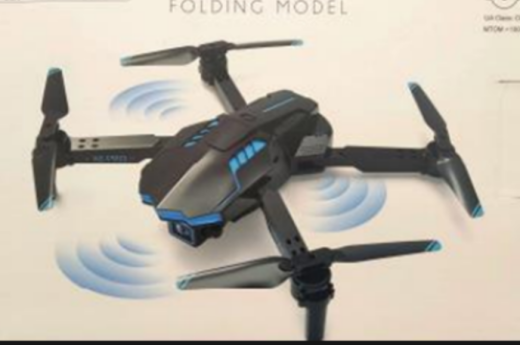 | United Kingdom in respect of Northern Ireland | The plastic material of the USB cable has an excessive concentration of bis(2-ethylhexyl) phthalate (DEHP), diisobutyl phthalate (DIBP), dibutyl phthalate (DBP) and di-‘isononyl’ phthalate (DINP) (measured values: 1.9%, 0.013%, 0.34% and 0.89% by weight, respectively). The product does not comply with the requirements of the Toy Safety Directive nor with the REACH Regulation. |
| Chopsticks SR/00806/25 |  | France | The toy has small parts (the figure’s hands) that can easily detach. A small child may put it in the mouth and choke. The product does not comply with the requirements of the Toy Safety Directive nor with the European standard EN 71-1. |
| Children’s shoes SR/00859/25 |  | France | The tassel and the textile/rhinestone element of the tassel can easily detach. A small child may put them in the mouth and choke. The product does not comply with the requirements of the General Product Safety Directive. |
| Baby walker SR/00875/25 |  | United Kingdom in respect of Northern Ireland | The product can easily collapse if heavy weight is placed on the tray. This could cause injuries to the child and users. The product does not comply with the General Product Safety Regulation |
| Baby carrier SR/00879/25 |  | United Kingdom in respect of Northern Ireland | The product’s retention function is not adequate. Moreover, the indications for the suitable age range are not correct. In case of a small child, which can’t hold the head up, the head may drop forward while they face outward, and this can cause that the child is not able to breathe, causing the child to suffocate. The product does not comply with the General Product Safety Regulation |
| Soother holder SR/01072/25 |  | Luxembourg | The beads of the soother holder do not have the required ventilation holes and the garment fastener easily breaks. Small children can put them in the mouth and choke. The product does not comply with the General Product Safety Regulation nor with the European standard EN 12586. |
| Soother holder SR/00844/25 |  | Germany | The cord of the soother holder is too long. It can become trapped during various activities of a child, leading to strangulation. The product does not comply with the General Product Safety Regulation nor with the European standard EN 12586. |
| Soother holder SR/00843/25 |  | Germany | The product bears a too long cord that can become trapped during various activities of a child, leading to strangulation. The product does not comply with the General Product Safety Regulation nor with the European standard EN 12586. |
| Soother SR/00901/25 |  | Luxembourg | The product has small parts (the teat) which may easily detach. A child may put it into the mouth and choke. The product does not comply with the General Product Safety Regulation nor with the European standard EN 1400. |
| Soother SR/00922/25 |   | Luxembourg | The soother shield may easily break, creating small parts. A young child may choke. The product does not comply with the General Product Safety Regulation nor with the European standards EN 1400 and EN 12586. |
| Earrings SR/00941/25 | 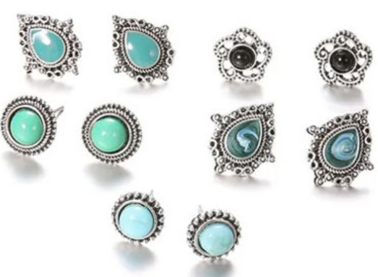 | Sweden | The product has an excessive concentration of cadmium (measured value up to 38% by weight). The product does not comply with the REACH Regulation. |
| Ring SR/00935/25 |  | Sweden | The product has an excessive concentration of cadmium (measured value up to 79% by weight). The product does not comply with the REACH Regulation. |
| Jewellery set SR/01102/25 |  | United Kingdom in respect of Northern Ireland | The product has an excessive concentration of cadmium (measured value up to 80.8% by weight). This product does not comply with the REACH Regulation. |
| Children’s coat SR/01020/25 | 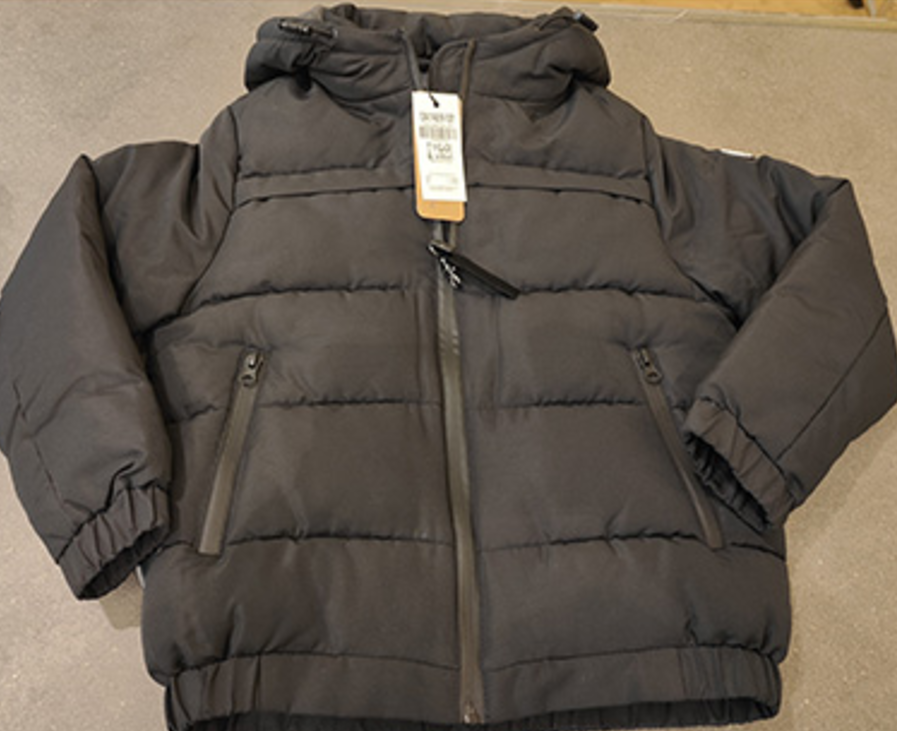 | Belgium | The coat bears elastic functional cords with free ends and toggles in the head and neck area. These cords can become trapped during various activities of a child, leading to injuries. The product does not comply with the General Product Safety Regulation nor with the European standard EN 14682. |
| Children’s dress SR/01027/25 |  | Belgium | The product bears functional cords with free ends and toggles in the waist area. These cords can become trapped during various activities of a child, leading to injuries. The product does not comply with the General Product Safety Regulation nor with the European standard EN 14682. |
| Children’s flip flops SR/00920/25 |  | Ireland | The plastic material of the product has an excessive concentration of bis(2-ethylhexyl) phthalate (DEHP) and dibutyl phthalate (DBP) (measured values up to: 0.04% and 11% by weight, respectively). The product does not comply with the General Product Safety Regulation and nor with the REACH Regulation. |
| Jumping rope SR/01099/25 |  | Poland | The toy contains an excessive amount of diisobutyl phthalate (DIBP) (measured value up to 18.4% by weight). The product does not comply with the REACH Regulation. |
| Lighter OR/00041/25 |  | Lithuania | The product’s flame extinguishing time can be too long. Furthermore, it lacks the safety warning regarding burning time. The product can therefore ignite a fire, causing burns to the use. The product does not comply with the General Product Safety Regulation. |
| Pilates ball SR/00816/25 |  | Estonia | The plastic material of the product has an excessive concentration of diisobutyl phthalate (DIBP) (measured values up to 53% by weight). The product does not comply with the REACH Regulation. |
| Tattoo ink – Permanent makeup SR/00896/25 |  | Germany | The product contains formaldehyde (measured value up to 0.0012%). The product does not comply with the REACH Regulation. |
| Safety harness SR/00849/25 |  | Italy | The thigh straps of the harness are not resistant enough as they break under a load of 12.63 kN. In the event of a user’s fall, the harness breaking creates a risk of injuries. The product does not comply with the Personal Protective Equipment Regulation nor with the European standard EN 361. |
| Car floor mats SR/01008/25 |  | Cyprus | The plastic of the product has an excessive concentration of polycyclic aromatic hydrocarbons (PAHs), notably Benzo (a)pyrene (BaP), Benzo (e)pyrene (BeP), Dibenz(a,h)anthracen (DBAhA), Benzo (k)fluoranthene (BkFA) and Benzo (b)fluoranthene (BbFA) (measured values: 19.7 mg/kg, 145.0 mg/kg, 8.4 mg/kg, 9.7 mg/kg, 18.5 mg/kg by weight respectively). The product does not comply with the REACH Regulation. |
| Steering wheel cover SR/01109/25 |  | Cyprus | The plastic of the product has an excessive concentration of polycyclic aromatic hydrocarbons (PAHs), notably Benzo(a)pyrene (BaP) and Benzo(e)pyrene (BeP) (measured values: 3.5 mg/kg and 2.7 mg/kg by weight respectively). The product does not comply with the REACH Regulation. |
| Neoprene suit SR/01039/25 |  | Germany | The black rubber foam of the product has an excessive concentration of polycyclic aromatic hydrocarbons (PAHs), notably Chrysen (CHR) (measured values up to 1.90 mg/kg). The product does not comply with the REACH Regulation. |
| Cosmetic bag SR/01030/25 |  | Sweden | The plastic material of the product’s handle has an excessive concentration of bis(2-ethylhexyl) phthalate (DEHP) (measured value up to: 4.54 % by weight). The product does not comply with the REACH Regulation. |
| Head lamp SR/00925/25 |  | Sweden | The solders in the product have an excessive concentration of lead (measured value up to 69.8% by weight). The product does not comply with the requirements of RoHS 2 Directive. |
| Air conditioner SR/00926/25 |  | Sweden | The solders of the product have an excessive concentration of lead (measured value up to 42% by weight). The product does not comply with the requirements of RoHS 2 Directive. |
| Mini air cooler SR/00928/25 |  | Sweden | The solders of the product have an excessive concentration of lead (measured value up to 44% by weight). The plastic in the product has an excessive concentration of Polybrominated Diphenyl Ethers (PBDEs) (measured value up to 0.145% by weight). The product does not comply with the requirements of RoHS 2 Directive. |
| Headband OR/00043/25 |  | Sweden | The solders in the product have an excessive concentration of lead (measured value: up to 55% by weight). Lead poses a risk to the environment. The product does not comply with the requirements of RoHS 2 Directive. |
| Night lamp SR/00985/25 |  | Sweden | The solders in the product have an excessive concentration of lead (measured value up to 4.90% by weight). The product does not comply with the requirements of RoHS 2 Directive. |
| Surveillance camera SR/01095/25 |  | Sweden | The solders in the product have an excessive concentration of lead (measured value up to 52% by weight). The product does not comply with the requirements of RoHS 2 Directive. |
| Karaoke microphone INFO/00021/25 |  | Sweden | The solders in the product have an excessive concentration of cadmium (measured value: up to 0.23% by weight). The plastic material of the cable has excessive concentrations of bis(2-ethylhexyl) phthalate (DEHP), dibutyl phthalate (DBP) and short chain chlorinated paraffins (SCCPs) (measured values: up to 1.7%, 1.2% and 4.0% by weight, respectively). The product does not comply with the requirements of RoHS 2 Directive nor with POP Regulation. |
| Wireless microphone SR/01080/25 |  | Sweden | The solders in the product have an excessive concentration of lead (measured value up to 48% by weight). The plastic material of the cable has an excessive concentration of bis(2-ethylhexyl) phthalate (DEHP), dibutyl phthalate (DBP), short chain chlorinated paraffins (SCCPs) and lead (measured values up to: 1.0%, 0.2%, 0.97% and 0.25% by weight, respectively). Lead poses a risk to the environment. The product does not comply with the requirements of RoHS 2 Directive nor with POP Regulation. |
| Children’s camera SR/01073/25 |  | Ssweden | The plastic material of the cable has excessive concentrations of bis(2-ethylhexyl) phthalate (DEHP), dibutyl phthalate (DBP), lead and short chain chlorinated paraffins (SCCPs) (measured values up to 0.42%, 1.6%, 0.34% and 1.7% by weight, respectively). The product does not comply with the requirements of RoHS 2 Directive nor with POP Regulation |
| Electric toothbrush SR/01083/25 |  | Sweden | The solders in the product have an excessive concentration of lead (measured value: up to 73% by weight). The product does not comply with the requirements of RoHS 2 Directive. |
We are thrilled to announce that the brand-new corporate video for the CMA Testing is finally live! The video showcases our unwavering commitment to excellence in testing, certification, and inspection. From rigorous and meticulous testing processes to cutting-edge solutions for advanced industries, the team’s dedication to excellence remains steadfast! CMA Testing takes pride in helping clients enhance their performance and achieve compliance. Looking ahead, as an industry leader, we not only uphold consumer trust but also provide a one-stop solution for technology commercialisation through CMA+, helping innovative companies transform groundbreaking ideas into market-ready products.
Watch now and witness our 45-year journey as we stride towards an even brighter future!

In December 2024, the Ministry of Economy, Trade and Industry (METI) of Japan announced a revision to the Consumer Product Safety Act, introducing an important update to Japan’s Toy Safety Regulation, which will take effect on December 25, 2025. The Japan Toy Association (JTA) has worked with METI to update the Japan ST Standard.
The revised ST Standard (ST-2025) has been published and will become effective on April 1, 2025. During the transition period, testing applications under the current standard (ST-2016, 4th edition) will still be accepted until December 24, 2025. The major updates are listed as follows:
Product Scope Adjustments:
Certain products have been clarified as exempted items, including:
- Holiday decorations
- Toys placed in public areas
- Pacifiers
- Toy scooters
- Models of aircraft, rockets, boats, and land vehicles powered by internal combustion engines
- Products containing heat generating feature intended for use in an educational context and under adult supervision
Technical requirement :
- ST Part 1: Physical and mechanical requirements, and Part 2: Flammability requirements are now aligned with ISO8124-1:2022 and ISO8124-2:2023.
- The requirements and test methods for rubber pacifiers have been removed from ST Part 3: Chemical properties.
Labeling and Warnings:
Updated guidelines for warning labels have been introduced to ensure clarity regarding age-appropriate toys, including those related to small parts, small balls, flying toys, etc.
With the introduction of the ST Mark and the PSC Mark, it will be easier for retailers and consumers to identify the safety levels of toys and children’s products, while also helping to eliminate counterfeit marks in the market.
Introduction of ST mark and PSC Mark as below :
| ST mark (Issued by Japan Toy Association (JTA)) | PSC Mark (Issued by Ministry of Economy, Trade and Industry (METI)) |
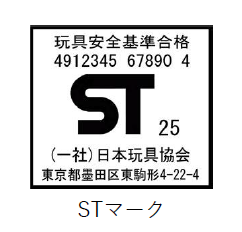 | 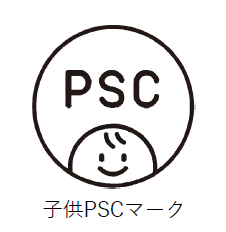 |
| Purpose: Indicates compliance with the ST Standard, which focuses on the safety of toys and children’s products. Scope: Toys intended for children under 14 years old. Verification: The ST Mark is linked to a rigorous testing and certification process, which helps to prevent counterfeit marks. Renewal: ST Mark products undergo re-evaluation every two years to ensure ongoing compliance with the standards. | Purpose: Stands for “Product Safety of Children’s Products” and is part of the Consumer Product Safety Act (CPSA). Scope: Specifically targets children’s products, especially those designed for children under 6 years old. Verification: The PSC Mark also requires compliance with safety standards but is generally associated with a broader range of consumer safety regulations. Usage: Only businesses that have registered and demonstrated compliance can use the PSC Mark. |
Timeline for ST2025 implementation :
 | |||
Toys tested with ST2025 | ST mark is displayed (PSC mark cannot be shown) | PSC mark can be displayed for products notified and tested | – For products manufactured or imported after 25 Dec, PSC mark must be displayed – Stocked items may be sold as they are. (No need to have PSC mark) |
| Toys tested with ST2016 | ST application possible | – ST application cannot be made after 25 Dec – Manufactured or imported will not be permitted – Stocked items may be sold as they are | |
Source:
1. CPSC Releases a Final Rule for Play Yards
On 29 January 2025, the Consumer Product Safety Commission (CPSC) published the final rule 16 CFR 1221 for play yards in the Federal Register, which cites the latest voluntary standard ASTM F406-24 as a mandatory. The rule is effective on 5 April 2025, unless the Commission receives a significant adverse comment by 28 February 2025. If the Commission receives such a comment, it will publish a document in the Federal Register, withdrawing this direct final rule before its effective date.
https://www.federalregister.gov/documents/2025/01/29/2025-01658/safety-standard-for-play-yards
2. CPSC Releases a Final Rule for Non-full-size Baby Cribs
On 31 January 2025, the Consumer Product Safety Commission (CPSC) published the final rule 16 CFR 1220 for non-full-size baby cribs in the Federal Register, which cites the latest voluntary standard ASTM F406-24 as a mandatory. The rule is effective on 5 April 2025, unless the Commission receives a significant adverse comment by 3 March 2025. If the Commission receives such a comment, it will publish a document in the Federal Register, withdrawing this direct final rule before its effective date.
3. EPA Releases a Final Rule for The Control of Carbon Tetrachloride
On 18 December 2024, the U.S. Environmental Protection Agency (EPA) published the final rule under the Toxic Substances Control Act (TSCA) to ban some uses of carbon tetrachloride (CTC) that have already ceased and establish robust workplace protections, including a Workplace Chemical Protection Program and prescriptive controls, for uses not prohibited to address the unreasonable risk to human health. This final rule is effective on 17 January 2025.
https://www.govinfo.gov/content/pkg/FR-2024-12-18/pdf/2024-29517.pdf
4. FDA Announces a Final Guidance for Animal Food Ingredient Consultation (AFIC)
On 6 January 2025, the U.S. Food and Drug Administration (FDA) announced the availability of a final guidance for industry #294 entitled “Animal Food Ingredient Consultation (AFIC).”The announcement of the guidance is published in the Federal Register on 7 January 2025. This guidance describes FDA’s interim AFIC process and explains one way FDA will work with firms that are developing animal food ingredients now that the Memorandum of Understanding (MOU) with the Association of American Feed Control Officials (AAFCO) expired on 1 October 2024, and while FDA evaluates the animal Food Additive Petition and Generally Recognized as Safe (GRAS) Notification programs. The AFIC process provides an additional way for engagement with FDA regarding ingredients for which firms may otherwise have used the AAFCO ingredient definition process. AFIC will help FDA identify any potential safety concerns associated with such ingredients. The AFIC process also allows for public awareness of and input on such ingredients. In addition, this guidance describes FDA’s enforcement policy for certain ingredients assessed using the AFIC process.
5. FDA Issues Warning Letter to Retailers and Distributors of Cookware
On 12 December 2024, the U.S. Food and Drug Administration (FDA) issued warning letter to inform that some imported cookware products made from aluminum, brass, and aluminum alloys demonstrated the potential to leach lead when tested under conditions designed to mimic their use in contact with food. The FDA is concerned that food cooked in these products could be served to small children, people of child-bearing age, and those who may be breastfeeding. For cookware products, the FDA proposes to update the test conditions from “24-hour extraction at 22°C ± 2°C, the extraction conditions” to “2-hour boil followed by cooling and holding at room temperature for a total of 24 hours”.
6. U.S. New York State Proposes to Ban The Use of Polytetrafluoroethylene (PTFE) in Cookware
On January 13, 2025, the state of New York in the U.S. proposed the SB 1767 bill, aiming to amend the environmental conservation law by adding a new Article 12 to Article 37 of the law, which would prohibit the manufacture, sale and use of cookware containing polytetrafluoroethylene. “Cookware” shall mean supplies used for cooking that interact with food, including those supplies used for preparing, serving, and storing food. “Cookware” shall include, but shall not be limited to, pots, pans, killets, grills, cooking utensils, and cooking appliances. “Polytetrafluoroethylene” shall mean the compound used as a coating in non-stick cookware.
7. U.S. Oregon State Releases an Amendment to Toxic-Free Kids Act
The Oregon Health Authority (OHA) released an amendment to the “Toxic-Free Kids Act” in December 2024, expanding the list of high-priority chemicals of concern for children’s health (HPCCCH) from 73 substances to 83 substances. The amendment also incorporates changes to Bill HB 30432 and take effect on 1 January 2025.
8. Maine Proposes Rule Regarding Products Containing Intentionally Added PFAS
On 20 December 2024, the Maine Department of Environmental Protection (MDEP) published a proposed rule regarding products containing intentionally added per- and polyfluoroalkyl substances (PFAS). The rule would establish criteria for currently unavoidable uses (CUU) of intentionally added PFAS in products and implement sales prohibitions and notification requirements for products containing intentionally added PFAS but determined to be a CUU. Comments are due 28 January 2025.
https://www.maine.gov/dep/rules/index.html#13139124
9. The Candidate List of SVHC is Updated to 247 Entries
On 21 January 2025, the European Chemicals Agency (ECHA) has added 6-[(C10-C13)-alkyl
(branched, unsaturated)-2,5dioxopyrrolidin-1yl] hexanoic acid, O,O,O-triphenyl phosphorothioate, Octamethyltrisiloxane, Perfluamine, Reaction mass of: triphenylthiophosphate and tertiary butylated phenyl derivatives to the candidate list of substances of very high concern (SVHC). In August 2024, ECHA released another substance for consultation, “Tris (4-nonylphenyl, branched) phosphite”. Regardless of the substance itself or when it contains ≥ 0.1% w/w of “4-nonylphenol, branched and linear (4-NP) “, it has endocrine disrupting properties affecting the environment. Therefore, ECHA updated the “Tris (4-nonylphenyl, branched and linear) phosphite (TNPP) with ≥ 0.1% w/w of 4-nonylphenol, branched and linear (4-NP)” that added in the 21st batch SVHC to “Tris (nonylphenyl, branched and linear) phosphite (TNPP)”. The candidate list of SVHC now contains 247 entries for chemicals.
10. EU Publishes the Packaging and Packaging Waste Regulation (EU) 2025/40
On 16 December 2024, the European Council officially adopted the Packaging and Packaging Waste Regulation (EU) 2025/40 (Packaging and Packaging Waste Regulation, PPWR), and it was officially signed by the European Parliament and Council on 19 December. On 22 January 2025, the EU officially published PPWR in its Official Journal, repealing Packaging and Waste Directive 94/62/EC. The PPWR will enter into force on 11 February 2025, and be implemented starting from 12 August 2026 (unless otherwise specified). The regulation applies to all packaging and packaging waste, regardless of whether the packaging is used for industrial, other manufacturing, retail, distribution, office, service, or household purposes.
Key Provisions of PPWR:
- Requirements for the entire lifecycle of packaging, focusing on environmental sustainability and labeling
- Extended producer responsibility
- Prevention requirements for packaging waste
https://eur-lex.europa.eu/eli/reg/2025/40/oj/eng
11. EU Released Draft Directives Amending RoHS Directive Concerning Exemptions for Lead
On 6 January 2025, the European Union submitted three notifications to the WTO’s TBT Committee, namely G/TBT/N/EU/1102, G/TBT/N/EU/1103, and G/TBT/N/EU/1104. These notifications concern the extension or update of lead exemption provisions in Annex III of the RoHS Directive 2011/65/EU, specifically 6(a), 6(a)-I, 6(b), 6(b)-I, 6(b)-II, 6(c), and 7(a), 7(c)-I, 7(c)-II, which pertain to steel alloys, aluminum alloys, copper alloys, high-temperature soldering materials, and glass ceramics for electrical and electronic components. The draft revision enters a 60-day public comment period from the date of publication and is scheduled to be adopted in March 2025.
https://technical-barriers-trade.ec.europa.eu/en/notification/35422
https://technical-barriers-trade.ec.europa.eu/en/notification/35421
https://technical-barriers-trade.ec.europa.eu/en/notification/35420
12. ECHA Withdraws Formaldehyde from The SVHC Intended Substances List and Adds a New Intended Substance
On 6 February 2025, the European Chemicals Agency (ECHA) removed formaldehyde from the SVHC intended substances list. On 18 February 2024, ECHA added n-hexane to the SVHC intended substances list. As of now, a total of 6 substances have been listed as SVHC intended substances.
https://www.echa.europa.eu/registry-of-svhc-intentions
13. The European Commission Plans to Revise the POPs Regulation to Lower the Limits of Polybrominated Diphenyl Ethers (PBDEs) and Polychlorinated Biphenyls (PCBs)
On 18 February 2025, the European Union released a draft amendment to the POPs Regulation (EU) 2019/1021, proposing to lower the limits for polybrominated diphenyl ethers (PBDEs) and polychlorinated biphenyls (PCBs).This draft act is open for feedback from 18 February 2025 – 18 March 2025.
14. Three Persistent Organic Pollutant (POP) Chemicals have been Added to Japan’s Class I Specific Chemical Substances List
On 18 December 2024, the Japan issued Cabinet Order No. 328 of 2024, amending the Chemical Substances Evaluation and Manufacturing Control Act to officially classify UV-328, decabromodiphenyl ether (Declone), and methoxychlor as Class I specific chemical substances.
https://kanpou.npb.go.jp/20241218/20241218g00293/20241218g002930004f.html
15. AFIRM Released The 2025 AFIRM RSL
Recently, the Apparel and Footwear International Restricted Substances List (AFIRM) Working Group released the 2025 version of the Restricted Substances List (RSL). This is the tenth update since 2015, with a focus on updating bisphenol substances and per- and polyfluoroalkyl substances (PFAS). The AFIRM Working Group was established in 2004 and is dedicated to reducing the use of harmful substances in the apparel and footwear supply chain and minimizing their impact on the supply chain.
https://afirm-group.com/wp-content/uploads/2025/02/2025_AFIRM_RSL_2025_0205b.pdf
16. OEKO-TEX® New Regulations 2025
OEKO-TEX® Association has released the updated testing criteria, limit values and guidelines for its certifications, based on the latest scientific research and legal developments. Key changes include enhanced organic cotton certification through OEKO-TEX® ORGANIC COTTON, with inclusion in OEKO-TEX® MADE IN GREEN, stricter BPA limits under OEKO-TEX® STANDARD 100 and rigorous transparency requirements for leather supply chains under OEKO-TEX® LEATHER STANDARD. The expanded OEKO-TEX® ECO PASSPORT will include commodity chemicals and biodegradability verification. The revised standards will take effect on 1st April 2025, following the transition period.
https://www.oeko-tex.com/en/news/press-releases/oeko-tex-new-regulations-2025-press-release
17. The Mandatory Standard GB 4806.15-2024 for Adhesives Used in Food Contact Materials and Articles Came into Effect on February 8, 2025
On 12 March 2024, the National Health Commission of China officially released the mandatory standard GB 4806.15-2024, “National Food Safety Standard – Adhesives for Food Contact Materials and Articles”. GB 4806.15-2024 is China’s first product standard for adhesives used in food contact materials and articles, and came into effect on 8 February 2025.
http://www.nhc.gov.cn/sps/s7891/202403/a51bf4bd1c1545d4bada095735603b6f.shtml
18. The First Amendment to China’s RoHS Restricted Substances Standard and the New Marking Requirements Standard will be Implemented in Coordination
On 13 January 2025, the Working Group on Pollution Prevention Standards for Electrical and Electronic Products issued a notice on the coordinated implementation of the two standards, namely “Marking for the restriction of the use of hazardous substances in electrical and electronic product” (SJ/T 11364-2024) and the first amendment to “Requirements of concentration limits for certain restricted substances in electrical and electronic products” (GB/T 26572-2011). The notice stated that the recommended industry standard “Marking for the restriction of the use of hazardous substances in electrical and electronic product” (SJ/T 11364-2024) was released on 25 December 2024 and will come into effect on 1 April 2025; the first amendment to the recommended national standard “Requirements of concentration limits for certain restricted substances in electrical and electronic products” (GB/T 26572-2011) was released on 29 June 2024 and will come into effect on 1 January 2026. It is recommended that enterprises make full preparations and implement both standards simultaneously starting from 1 January 2026 at the latest.
https://www.cesi.cn/rohs/202501/10826.html
https://www.cesi.cn/images/editor/20250114/20250114090020827.pdf
Recall
EU rapid alert system for dangerous non-food products (Rapex):
https://ec.europa.eu/safety-gate-alerts/screen/search?resetSearch=true
Canada Recall: https://recalls-rappels.canada.ca/en/search/site
Australian Recall: https://www.productsafety.gov.au/recalls
US CPSC Recall: https://www.cpsc.gov/Recalls
Recall Case:
| Product Category | Sample Images | Notification Submitted By | Reason for Recall |
| Children’s Jewelry Sets |  | US | The recalled jewelry sets contain levels of lead that exceed the federal lead content ban and levels of cadmium that are prohibited in children’s products by the Federal Hazardous Substances Act. Lead and cadmium are toxic if ingested by young children and can cause adverse health effects. |
| Red Dot Sights |  | US | The recalled firearm sights contain a button cell battery that violates the mandatory federal regulations for consumer products containing button cell batteries because the button cell batteries can be easily accessed, posing an ingestion hazard. The products include a button cell battery which is not in child-resistant packaging as required by Reese’s Law. In addition, the products do not bear the required warnings. When button cell batteries are swallowed, the ingested batteries can cause serious injuries, internal chemical burns and death, posing an ingestion hazard to children. |
| Digital Kitchen Scales |  | US | The recalled digital kitchen scales violate the mandatory federal regulations for consumer products containing button cell or coin batteries, because the scale has a lithium coin battery that can be easily accessed by children, and a spare coin battery provided with the product not in child resistant packaging, as required by Reese’s Law. These violations pose an ingestion hazard. The recalled scales also do not have the required warnings. When button cell or coin batteries are swallowed, the ingested batteries can cause serious injuries, internal chemical burns, and death. |
| Children’s Multi-Purpose Bike Helmets |  | US | The helmets do not comply with the positional stability, impact labeling and certification requirements in violation of the CPSC federal safety regulation for bicycle helmets. The helmets can fail to protect in the event of a crash, posing a risk of head injury. |
| Multi-Purpose Helmets |  | US | The helmets do not comply with the positional stability, impact, labeling and certification requirements of the mandatory federal safety regulation for bicycle helmets. The helmets can fail to protect the wearer in the event of a crash, posing a risk of head injury. |
| Drawer Dressers |  | US | The recalled dressers are unstable if they are not anchored to the wall, posing serious tip-over and entrapment hazards that can result in injuries or death to children. The dressers do not comply with the performance requirements of the STURDY Act. |
| Drawer Dressers |  | US | The recalled dressers are unstable if they are not properly anchored to the wall, posing serious tip-over and entrapment hazards that can result in injuries or death to children. The dressers violate performance and warning label requirements of the STURDY Act. |
| Pajamas |  | US | These mug’s lid threads can shrink when exposed to heat and torque, causing the lid to detach during use, posing a burn hazard. |
| Pajamas |  | US | The recalled pajama sets violate federal flammability regulations for children’s sleepwear, posing a risk of burn injuries to children. |
| Pajama Sets |  | US | The recalled children’s pajamas violate the federal flammability regulations for children’s sleepwear, posing a risk of burn injuries to children. |
| Jackets |  | US | The drawstring in the hood of the recalled jackets can get caught on objects and cause death or serious injury to children due to the strangulation hazard. The jackets are in violation of the federal regulations for children’s upper outerwear and present a substantial product hazard. |
| 6-in-1 Multi Styler and 5-in-1 Multi Styler Hair Dryers |  | US | The handheld hair dryers lack an immersion protection device, posing an electrocution or shock hazard to consumers, if the hair dryers fall into water when plugged in. The CPSC has determined that hair dryers not equipped with the integral immersion protection present a substantial product hazard. |
| Hair Dryer Brushes |  | US | The handheld hair dryer brushes lack an immersion protection device, posing an electrocution or shock hazard to consumers if the hair dryer brushes fall into water when plugged in. The CPSC has determined that hair dryers not equipped with the integral immersion protection present a substantial product hazard. |
| 6-in-1 Pounding Games |  | US | The recalled 6-in-1 Pounding Game violates the mandatory federal regulation for magnets because it contains a magnet that can become loose, posing an ingestion hazard to children. When high-powered magnets are swallowed, the ingested magnets can attract each other, or another metal object, and become lodged in the digestive system. This can result in perforations, twisting and/or blockage of the intestines, infection, blood poisoning and death. |
| Infant Learning Toy Sets |  | US | Due to its size and shape, the wooden egg-shaped rattle in the recalled learning sets can get lodged in a child’s throat, posing a choking hazard. This violates the federal regulations for infant rattles. |
| Sling Carriers |  | US | The recalled sling carriers violate the federal safety regulations for sling carriers, including requirements for structural integrity and occupant retention, posing a fall hazard to babies. |
| Toy Train SR/03812/24 |  | Slovenia | The product can easily break, resulting in small parts (train roof). A small child may put them in the mouth and choke. The product does not comply with the requirements of the Toy Safety Directive nor with the European standard EN 71-1. |
| Doll SR/03828/24 |  | Slovenia | The plastic material of the doll contains an excessive amount of bis(2-ethylhexyl) phthalate (DEHP) (measured value up to 22% by weight). This phthalate may harm the health of children by causing possible damage to their reproductive system. The product does not comply with the requirements of the Toy Safety Directive and REACH Regulation. |
| Toy Gun Set SR/03782/24 |  | Lithuania | The toy gun set has small parts. Small children may put them in the mouth and choke. The product does not comply with the requirements of the Toy Safety Directive nor with the European standard EN 71-1. |
| Plastic Doll SR/03830/24 |  | Czechia | The product contains an excessive amount of di-2-ethylhexyl phthalate (DEHP) (measured value: 24% by weight) and Dibutyl phthalate (DBP): (measured value: 0.22% by weight). These phthalates may harm the health of children, causing possible damage to their reproductive system. The product does not comply with the REACH Regulation. |
| Plastic Doll SR/00200/25 |  | Germany | The charging cable plug cover and the charging cable cover have an excessive concentration of bis(2-ethylhexyl) phthalate (DEHP) and di-‘isononyl’ phthalate (DINP)(measured values up to 11.1 % and 2.9 % by weight, respectively). The product does not comply with the REACH Regulation. |
| Plastic Doll SR/00239/25 |  | Hungary | The toy duck has an excessive concentrations of bis(2-ethylhexyl) phthalate (DEHP) and dibutyl phthalate (DBP) (measured values: 9.9% and 0.13% by weight, respectively). The product does not comply with the REACH Regulation. |
| Plastic Toy Set SR/00023/25 |  | Poland | The toy fork may break easily generating small plastic parts. A child may put them into mouth and choke. The product does not comply with the requirements of the Toy Safety Directive nor with the European standard EN 71-1. |
| Plastic Toy SR/00193/25 |  | Estonia | The product has small parts (the sound-producing elements) that can be easily detach from the toy. A small child may put it in the mouth and choke. The product does not comply with the requirements of the Toy Safety Directive nor with the European standard EN 71-1. |
| Toy Scooter SR/00025/25 |  | Poland | The steering tubes are not resistant to load and can easily collapse during use, causing a child to fall off the scooter and suffer injuries. Moreover, the scooter is not equipped with a braking system., causing a problematic speed reduction, which may lead to accidents. Furthermore, the diameter of the front wheels of the scooter is too small (measured value: 110 mm), which can lead the scooter’s wheel to become stuck on an uneven surface and the child falling, suffering injuries. Additionally, the plastic of the packaging is too thin. If a child plays with the packaging, the plastic can cover the mouth and nose, causing the child to suffocate. The product does not comply with the requirements of the Toy Safety Directive and the relevant European standard EN 71-1. |
| Toy Slime SR/00039/25 |  | Czechia | The migration of boron from the toy slime is too high (measured value: 700 mg/kg). Ingestion or contact with an excessive quantity of boron may harm the health of children by damaging the reproductive system. The product does not comply with the requirements of the Toy Safety Directive nor with the European standard 71-3. |
| Toy Slime SR/00245/25 |  | Italy | The migration of boron from the toy slime is too high (measured value: 780 mg/kg). Ingestion or contact with an excessive quantity of boron may harm the health of children by damaging their reproductive system. The product does not comply with the requirements of the Toy Safety Directive nor with the European standard 71-3. |
| Toy Slime SR/00194/25 |  | Italy | The migration of boron from the toy slime is too high (measured value: 2100 mg/kg). Ingestion or contact with an excessive quantity of boron may harm the health of children by damaging the reproductive system. The product does not comply with the requirements of the Toy Safety Directive nor with the European standard EN 71-3. |
| Squeezable Toy SR/00126/25 |  | Spain | The product has small parts (feet and the part used to hang the toy) that can easily break. A small child may put it in the mouth and choke. The product does not comply with the requirements of the Toy Safety Directive nor with the European standard 71-1. |
| Magnetic Toy SR/00123/25 |  | United Kingdom in respect of Northern Ireland | The product can easily break, making the small magnets easily accessible. A child may put them in the mouth and choke. Moreover, as the small magnets have a high magnetic flux (measured value up to 402kG2mm2). If a child swallows the small magnets, they could attract one another causing serious injuries such as intestinal blockage or perforation. The product does not comply with the requirements of the Toy Safety Directive nor with the European standard EN 71-1. |
| Soft Toy SR/00188/25 |  | Hungary | The product has small parts (the eyes) that can easily detach. Additionally, the fibrous stuffing material of the toy is easily accessible due to the weakness of the seams. A small child may put the small part or the filling material in the mouth and choke. The product does not comply with the requirements of the Toy Safety Directive nor with the relevant European standard EN 71-1. |
| Soft Toy SR/00246/25 |  | Hungary | The eyes of the toy can easily detach. A small child may put them in the mouth and choke. The product does not comply with the requirements of the Toy Safety Directive nor with the European standard EN 71-1. |
| Bath Toy SR/00205/25 |  | Italy | The product contains an excessive amount of di-2-ethylhexyl phthalate (DEHP) (measured value up to 0.89% by weight). This phthalate may harm the health of children, causing possible damage to their reproductive system. The product does not comply with the REACH Regulation. |
| Bath Toy SR/00220/25 |  | Austria | The toy has small parts (the flippers of the turtle) that can easily detach. A small child may put it in the mouth and choke. The product does not comply with the requirements of the Toy Safety Directive nor with the European standard EN 71-1. |
| Spinning Toy SR/00281/25 |  | France | The battery compartment can be easily opened, leaving the button batteries accessible. A child may put them in the mouth and swallow them, which could cause damage to the child’s gastrointestinal tract. The product does not comply with the requirements of Toy Safety Directive nor with the European standard EN 62115. |
| Fancy Dress Costume SR/00331/25 |  | Spain | The transparent plastic fastener on the costume has an excessive concentration of dibutyl phthalate (DBP) (measured value up to: 4 6 % weight). This phthalate may harm the health of children, causing possible damage to their reproductive system. The product does not comply with the REACH Regulation. |
| Kitchen Toy Set SR/00485/25 |  | Romania | Due to its characteristic appearance, form, colour and size, the product may be mistaken for foodstuff. The product contains small parts. A small child may put them in the mouth and choke. The product does not comply with the requirements of the Food Imitating Directive and the Toy Safety Directive, nor with the European standard EN 71- |
| Plush Bag SR/00688/25 |  | United Kingdom in respect of Northern Ireland | The zipper can be easily detached from the toy. A child may put it in the mouth and choke. The product does not comply with the requirements of the Toy Safety Directive nor with the European standard EN 71. |
| Battery-operated Toy SR/00717/25 |  | Sweden | The solders in the product have an excessive concentration of lead (measured value: up to 41% by weight). Lead poses a risk to the environment. The product does not comply with the requirements of RoHS 2 Directive |
| Children’s Cot SR/00707/25 |  | United Kingdom in respect of Northern Ireland | The cot can overturn in the rocking configuration leading to injuries of the child. The product does not comply with the requirements of the General Product Safety Directive nor with the European standard EN 1130-1. |
| Soother SR/00684/25 |  | United Kingdom in respect of Northern Ireland | The teat of the soother can break or detach, releasing small parts. A small child may put it in the mouth and choke. The product does not comply with the requirements of the General Product Safety Directive. |
| Soother Holder SR/00702/25 |  | Germany | The product bears a too long cord that can become trapped during various activities of a child, leading to strangulation. The product does not comply with the General Product Safety Regulation nor with the European standard EN 12586. |
| Baby Stroller SR/00693/25 |  | United Kingdom in respect of Northern Ireland | The label on the restraint strap can easily detach. A small child may put the label in the mouth and choke. The product does not comply with the requirements of the General Product Safety Directive nor with the European standard EN 1888-1. |
| Baby Pushchair SR/00499/25 |  | United Kingdom in respect of Northern Ireland | The product has a small part (the label on the restraint strap) which can easily detach. A young child may put it in the mouth and choke. Moreover, the product’s restraint system does not have the crotch restraint integrated. As a result, the child would not be properly secured if both restraints were not in use, causing children to slip and injure themselves. Additionally, the product has sharp edges, which cause cuts or injuries to a child. The product does not comply with the requirements of the General Product Safety Directive. |
| Pet Nail Trimmer SR/00101/25 |  | Sweden | The solders in the product have an excessive concentration of lead (measured value up to 74.77% by weight). Lead poses a risk to the environment. The product does not comply with the requirements of RoHS 2 Directive |
| Powerbank SR/00089/25 |  | Sweden | The solders have an excessive concentration of lead (measured value up to 48% by weight). Lead poses a risk to the environment. The product does not comply with the requirements of RoHS 2 Directive |
| Electrical Dance Mat SR/00069/25 |  | Sweden | The plastic material of the cord has excessive concentrations of bis(2-ethylhexyl) phthalate (DEHP), dibutyl phthalate (DBP) and short-chain chlorinated paraffins (SCCPs) (measured values: up to 0.12%, 0.84% and 2.6% by weight, respectively). The solders in the product have an excessive concentration of lead (measured value: up to 68.8 % by weight). The product does not comply with the requirements of RoHS Directive nor with POP Regulation |
| Scale SR/00088/25 |  | Sweden | The solders have an excessive concentration of lead (measured value up to 71% by weight). Lead poses a risk to the environment. The product does not comply with the requirements of RoHS 2 Directive. |
| Electric Toothbrush SR/00202/25 |  | Sweden | The plastic material of the cord has excessive concentrations of bis(2-ethylhexyl) phthalate (DEHP), lead and short-chain chlorinated paraffins (SCCPs) (measured values up to 1.7%, 0.34% and 1.6% by weight, respectively). Moreover, the solders in the product have an excessive concentration of lead (measured value up to 60.9% by weight). The product does not comply with the requirements of RoHS Directive nor with POP Regulation |
| USB Charger SR/00236/25 |  | Poland | The solders have an excessive concentration of lead (measured value up to 47.7%). Lead poses a risk to the environment. The product does not comply with the requirements of RoHS 2 Directive. |
| Flashlight SR/00432/25 |  | Sweden | The solders in the product have an excessive concentration of lead (measured value up to 81.5% by weight). Lead poses a risk to the environment. The product does not comply with the requirements of RoHS 2 Directive. |
| Alarm Clock SR/00421/25 |  | Sweden | The solders in the product have an excessive concentration of lead (measured value up to 76.1% by weight). Lead poses a risk to the environment. The product does not comply with the requirements of RoHS 2 Directive. |
| Shower Cap SR/00316/25 |  | Finland | The plastic material inside the shower cap contains an excessive amount of bis(2-ethylhexyl) phthalate (DEHP) (measured value: 19% by weight). The product does not comply with the REACH Regulation. |
| Children’s Clothes SR/00597/25 |  | Ireland | The product has a small part (red pom pom) that can easily detach. A small child may put it in the mouth and choke.The product does not comply with the requirements of General Product Safety Directive. |
| Children’s Sweatshirt SR/00044/25 |  | Cyprus | The product has long functional cords with free ends in the neck area which can become trapped during various activities of a child, leading to strangulation or injuries. The product does not comply with the requirements of the General Product Safety Directive nor with the European standard EN 14682. |
| Children’s Slippers SR/00451/25 |  | Malta | The migration of lead from the surface material is too high (measured value: 0.7 mg/kg). Moreover, the plastic material of the product has an excessive concentration of di-‘isononyl’ phthalate (DINP), (measured values: 26.4% by weight).Additionally, the plastic material of the product has an excessive concentration of bis(2-ethylhexyl) phthalate (DEHP) and dibutyl phthalate (DBP) (measured values: 20.6% and 11.2% by weight, respectively). The product does not comply with the REACH Regulation nor with the European standards EN 18219-1, EN 18219-2 and EN 14389. |
| Children’s Boots SR/00444/25 |  | Malta | The plastic material of the product has an excessive concentration of bis(2-ethylhexyl) phthalate (DEHP) and dibutyl phthalate (DBP) (measured values: 24.4% and 0.2% by weight, respectively). Moreover, the product has an excessive concentration of short chain chlorinated paraffins (SCCPs) (measured value: 1.485% by weight). The product does not comply with the Persistent Organic Pollutants (POP) Regulation, the REACH Regulation nor with the European standards EN 18219-1, EN 18219-2 and EN 14389. |
| Pencil Case SR/00149/25 |  | Finland | The product has an excessive concentration of bis(2-ethylhexyl) phthalate (DEHP) (measured value: 15% by weight). The product does not comply with the REACH Regulation. |
| Eraser Set SR/00265/25 |  | Sweden | The plastic material of the case has excessive concentrations of bis(2-ethylhexyl) phthalate (DEHP) and short chain chlorinated paraffins (SCCPs) (measured values: 1.2% and 0.3% by weight, respectively). The product does not comply with the REACH Regulation, nor with the Persistent Organic Pollutants (POP) Regulation. |
| Christmas Decoration SR/00683/25 |  | United Kingdom in respect of Northern Ireland | The sprinkles of the decoration can easily detach and due to their characteristic appearance, colour, form and shape, the sprinkles can easily be mistaken as foodstuff. A small child may put them in the mouth and choke. The product does not comply with the requirements of the General Product Safety Directive nor with the requirements of the Food Imitating Directive. |
| Beard Bead SR/00697/25 |  | Sweden | The product has an excessive concentration of cadmium (measured value: 16% by weight). The product does not comply with the REACH Regulation. |
| Hair Slide SR/00637/25 |  | Sweden | The product has an excessive concentration of cadmium (measured value 32% by weight). The product does not comply with the REACH Regulation. |
| Earrings SR/00454/25 |  | Italy | The rate of nickel release is too high (measured value up to 1.9 µg/cm²/week). The product does not comply with the REACH Regulation. |