



























The Mobile Negative Pressure Disinfection Chamber (also referred to as a Mobile Negative Pressure Disinfection Room) is a portable device specifically designed for the efficient antibacterial disinfection of personnel or items. In September 2022, the Hong Kong Chinese Manufacturers’ Association officially issued a relevant industry standard aimed at regulating the design, performance, and safety requirements of such equipment to enhance public health response capabilities. The following is an overview of the main contents of this standard:
Scope of Application
This standard applies to mobile negative pressure disinfection chambers with a height ≤ 2.6 m and a width ≤ 1.8 m. The equipment can integrate multiple antibacterial methods, such as spraying antibacterial liquid and utilizing surface antibacterial materials, to achieve comprehensive disinfection effects.
Equipment Classification
- According to transportation method: classified as self-propelled, trailer-type, and shelter-type.
- According to antibacterial performance: classified as Grade A (bacteriostatic rate ≥ 90%) and Grade B (bacteriostatic rate ≥ 50%).
Core Technical Specifications
- Safety and Structural Requirements
- Constructed with a metal frame and high-strength base, equipped with observation windows, entrance/exit doors, and safety escape functions.
- Emergency stop/door release buttons shall be installed at a height ≤ 1.8 m in a prominent location.
- Waterproof rating shall be no less than IPX0, and the floor must pass a 2 kN static load test.
- Electrical safety shall comply with IEC 60335-1 / IEC 60335-2-65, and electromagnetic field measurements shall comply with IEC 62233.
2. Antibacterial/Disinfection Performance and Testing
- Grade A/B bacteriostatic rate: For Staphylococcus aureus and Escherichia coli, Grade A ≥ 90%, Grade B ≥ 50%.
- Microbial limits: Upper limits for airborne bacteria (CFU/m³) and surface microorganisms (CFU/plate) shall be defined.
- On-site simulated antibacterial performance: ≥ 99% (based on ASTM E2315, 20-second test).
- Surface material antibacterial performance: ≥ 99.9% (based on ISO 18593, 20-second test).
- Spray antibacterial liquid sterilization: ≥ 99.999% (based on BS EN 1040, 5-minute test).
- The sprayed antibacterial liquid shall primarily consist of natural plant-based ingredients and comply with the hygiene standard GB 15979-2002.
- The entrance shall be equipped with automatic human body temperature detection, and lighting must comply with the GB/T 24461 cleanroom luminaire standard.
Usage Conditions and Operation & Maintenance
Environmental Conditions: Temperature 17–30°C, relative humidity 20–90%, atmospheric pressure 86–106 kPa, level ground surface, and recommended for placement in an air-conditioned indoor environment.
Personnel Requirements: Operators and maintenance personnel must undergo training and hold valid certifications, and must strictly follow the instructions for the use of antibacterial solutions and operating procedures.
Packaging and Storage: Compliance with standards such as GB/T 13306 and GB/T 191; for long-term parking, antibacterial solutions must be emptied, power must be disconnected, doors and windows must be closed, and regular maintenance must be performed.
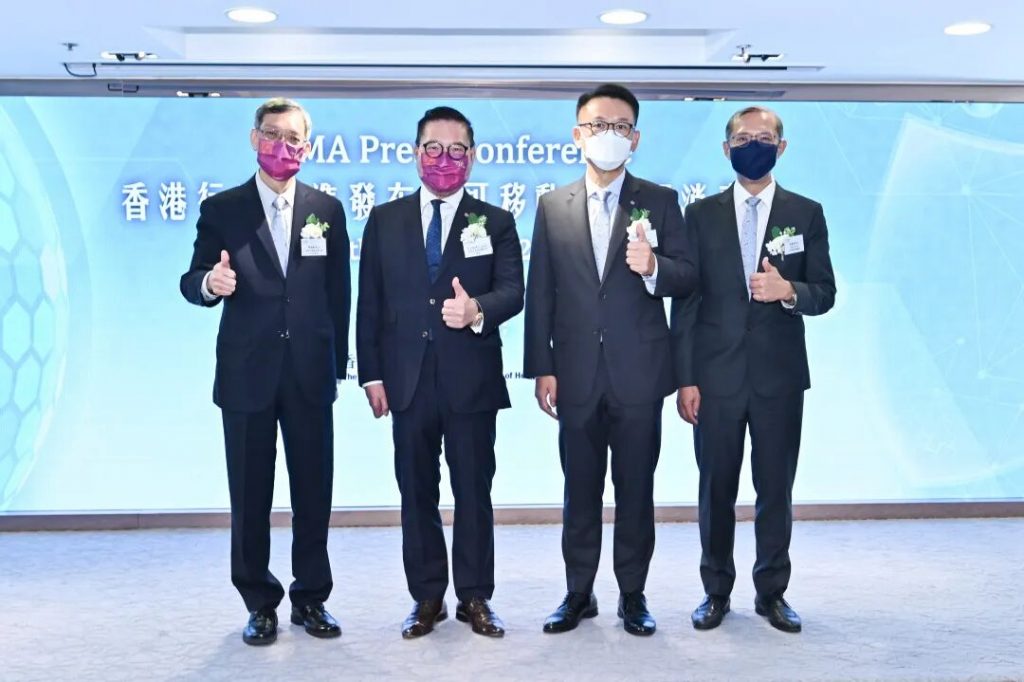
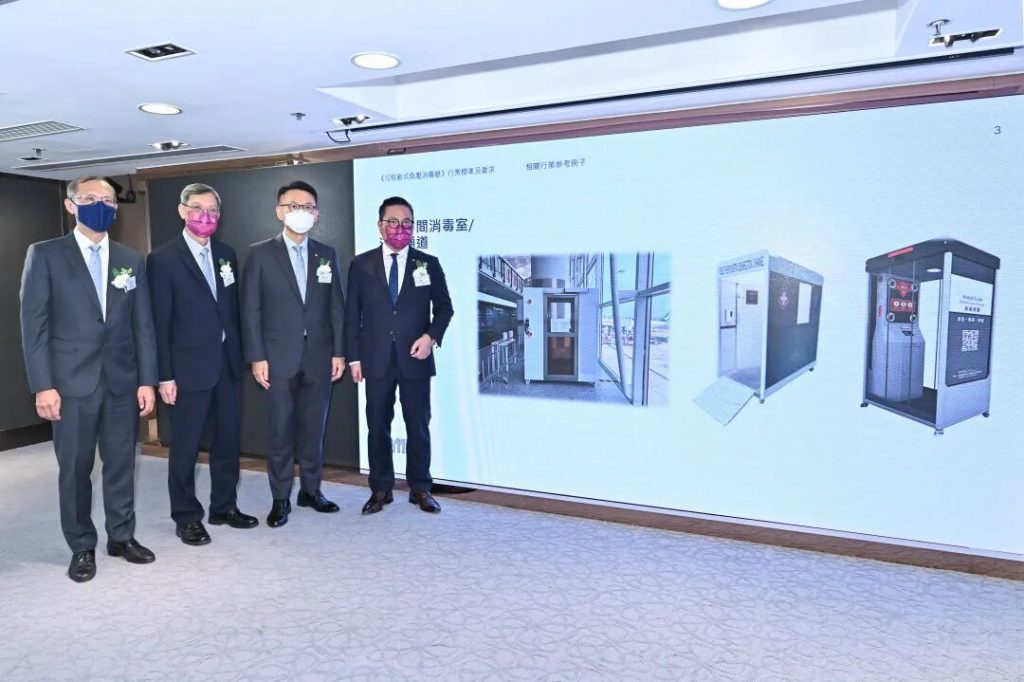
On September 9, 2022, the Hong Kong Chinese Manufacturers’ Association held an industry press conference and officially launched Hong Kong’s first industry standard for the “Mobile Negative Pressure Disinfection Chamber.” The introduction of this standard marks a significant step toward the standardization and professionalization of mobile epidemic prevention equipment in Hong Kong. The standard systematically defines technical parameters, safety structures, antibacterial performance testing methods, and operation and maintenance requirements for such equipment, providing clear and unified technical guidelines for design, production, testing, and user organizations.
This industry standard not only helps improve the overall quality and reliability of related equipment in Hong Kong but also strengthens the technical response capabilities during public health emergencies. By establishing a scientific evaluation system and safety regulations, it further promotes compliance of related products with international testing requirements, enhances public confidence in the products, and provides robust standardization support for the public health prevention and control system in Hong Kong and the Greater Bay Area.