








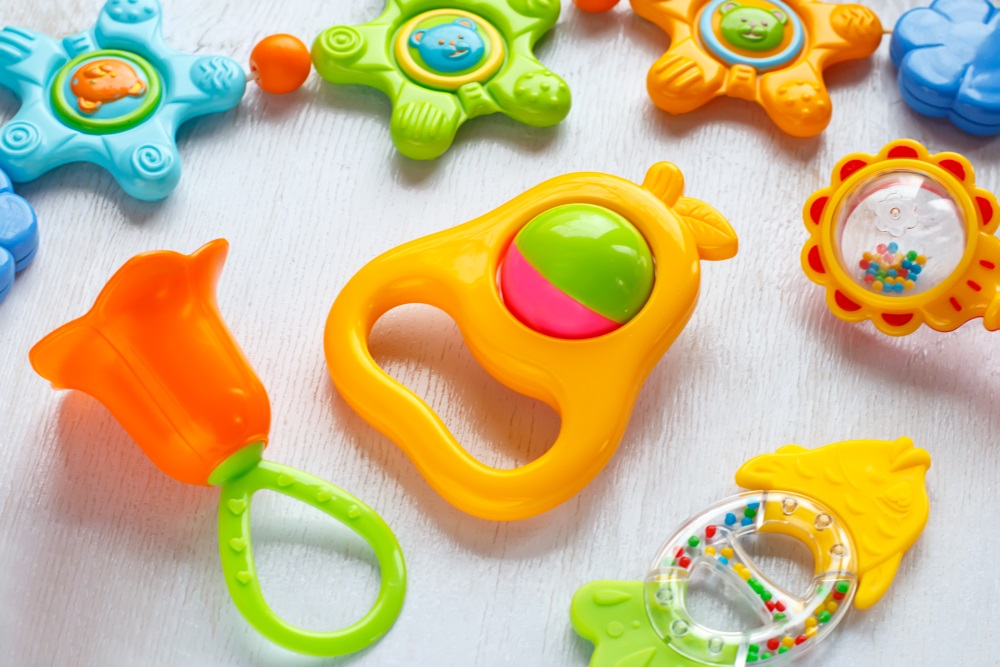
European Union has published commission regulation 2018/2005 to amend Annex XVII entry 51 by imposing an extra phthalate restriction (Diisobutyl phthalate). Besides, the scopes of phthalate ban (i.e. DEHP, DBP, BBP, DIBP) has been also extended from plasticized materials in toys and childcare articles to plasticized materials in articles.
Here is the comparison table between new regulation 2018/2005 to amend Annex XVII entry 51 and the same entry under the existing regulation.
| Phthalate Restriction | Regulation (EU) 2018/2005 amendingRegulation (EC) 1907/2006 | Regulation (EC) 1907/2006 |
| bis(2-ethylhexyl) phthalate (DEHP) | √ | √ |
| dibutyl phthalate (DBP) | √ | √ |
| benzyl butyl phthalate (BBP) | √ | √ |
| diisobutyl phthalate (DIBP) | √ | – |
| Phthalate Requirement | < 0.1% (individually or in any combination) | ≤ 0.1% (sum) |
| Restriction Scopes (plasticized material) | (i) Used as substances or in mixtures in toys and childcare articles | |
| (ii) Toys and childcare articles on the market | ||
| (iii) Articles on the market | – | |
| Effective Date | From 7 Jan 19 onwards Use as substances and mixtures in toys and child care articles From 7 July 2020 onwards Article, toys or childcare articles | In force |
The new regulation exempts certain categories of articles.
Please refer to the source: https://eur-lex.europa.eu/legal-content/EN/TXT/?uri=uriserv:OJ.L_.2018.322.01.0014.01.ENG&toc=OJ:L:2018:322:TOC

In April 2019, the European Committee for Standardization (CEN) issued the toy safety standard EN 71 Part 3: 2019, Migration of Certain Elements, which replaced the old standard EN 71 : Part 3 : 2013 + A3 : 2018. The old version of EN 71 Part 3 shall be withdrawn at the latest by October 2019.
Inside This Article
2 points you need to know :
1. Highlighted of the Changes
2. Revised clauses in New EN71 Part 3 : 2019 version
1、Highlighted of the Changes:
| 1. The limit value for Chromium VI of material category III will be changed from 0.2mg/kg to 0.053mg/kg. The effective day is 18 November 2019. 0.2mg/kg limit of Chromium VI will still be in used before 18 November 2019. 2. For the coating material, the requirement of particular sieving has been eliminated. The requirements of the relevant sieve (pre-Appendix C) have also been deleted. Dewaxing procedure has been changed from n-heptane for 6 hours to isooctane extraction for 60 minutes. 3. Test method of Chromium III and Chromium VI were changed from LC-ICP-MS to bio-inert LC-ICP-MS or IC- ICP-MS, which is capable of determining chromium VI at the limit values for all material categories. 4. The test method of Organotin was revised in Appendix G. The amount of organotin substances involved in this method was changed from 10 to 11 types. Form G.1 organotin component added Dimethyl Tin (DMT). |  |
2、Revised clauses in New EN 71 Part 3 : 2019 version:
| Clauses | Revised Content |
| 3 | New definitions of terms: samples and laboratory samples; delete the following definitions of terms: detection limits, limits of quantitation and other materials |
| 4 | The limit value for Chromium VI of material category III will be changed from 0.2mg/kg to 0.053mg/kg. The effective day is 18 November 2019. 0.2mg/kg limit of Chromium VI will still be in used before 18 November 2019. |
| 6 | Revise the reagents and equipment list and change n-heptane to isooctane, remove the sieve, and specify that some apparatus can only be used by plastic containers. |
| 7 | The old version of Chapter 7 were split into Chapters 7 and 8 for sample preparation and migration procedures, then the sample preparation statement is easier to understand For coated samples, the requirement for particular sieving was eliminated and the requirements for the relevant sieve (pre- Appendix C) have also been removed; Dewaxing procedure has been changed from n-heptane for 6 hours to isooctane extraction for 60 minutes. Drying time and temperature of the filter paper also changed dewaxing ; When the weight of the textile material is between 10 and 100 mg, the samples should be tested with adhering materials, this requirement had been removed. |
| 8 | More detailed procedures for checking the pH before and after migration has been introduced. |
| 9 | Added stability requirements and test apparatus for migration solutions of different elements (generic elements, Chromium VI, Organotin) |
| 10 | Change the calculation of Chromium III, Chromium III = total chromium – Chromium VI |
| 11 | Various test method validation were added, especially the correlation test within different laboratories, listing the data on performance of those test methods. |
| Ref. B | Test method validation information was added in Appendix B |
| Ref. C | Evaluation of reproducibility was added in Appendix B |
| Ref. D | Guidelines on particle size for different categories of materials was added in Annex D |
| Ref. E | Revise test methods for generic elements. |
| Ref. F | Test method of Chromium III and Chromium VI were changed from LC-ICP-MS to bio-inert LC-ICP-MS or IC-ICP-MS, which is capable of determining chromium VI at the limit values for all material categories. |
| Ref. G | The test method of Organotin was revised in Appendix G. The amount of organotin substances involved in this method was changed from 10 to 11 types. Form G.1 organotin component added Dimethyl Tin (DMT) |
| Ref. H | Some basic principles were revised and the relevant principles of sampling and dewaxing procedures were added. |
For enquiries (HK Office) :Mr. Joey Kwok
(852) 2690-8255/ 6059-9644
Email : joeykwok@cmatesting.org
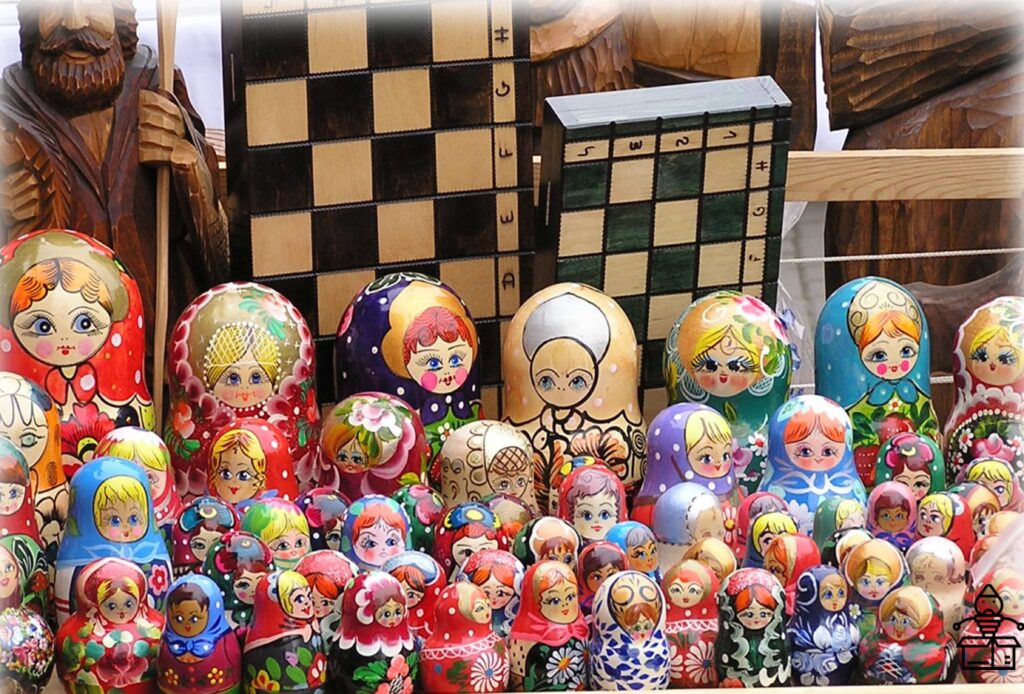
Russia is an important and newly developed market. However, it is not an easy task to simply step into Russia and promote your products with their well-developed national standards and requirements.
This article helps you to understand the basic steps of knowing how to entering Russian market.
Inside This Article
4 takeaways you can have :
- Technical Regulations for Toys
- Comply the Local Law
- Conformity Marking EAC
- Getting support from other professionals
| Stepping into a new market is always not an easy task. Russia is an important market that cannot be overlooked. However, its national standards and certification systems are so complex that often being obstacles for traders to hold on the market development in Russia. There are several technical regulations and certification systems currently in force and what requirements your products have to comply in order to pass through customs depend on the nature of your products. | 1. Technical Regulations for Toys and Products for Children and Adolescents For toys exporting to the Russian market, the technical Regulations CU TR 008/2011 regulates the safety of toys in the context of the Customs Union between Russia, Belarus and Kazakhstan by Decree No. 798 of 23.09.2011 of the Commission of the Customs Union was entered into force on 1 July 2012. Regarding products for children and adolescents like clothing, shoes, baby clothes, dishes, books, etc., except toys, technical Regulations CU TR 007/2011 on the safety of products for children and adolescents was adopted within the framework of the Customs Union between Russia, Belarus and Kazakhstan by Decree No. 797 of 23.09.2011 of the Commission of the Customs Union came back into force on 1 July 2012. |
| In practice, any products coming onto the Customs Union markets (sales outlets and commissioning sites) after customs clearance should include originals / certified copies of certificates / declarations of conformity. | 2. You have to comply the local laws Apart from meeting the above requirements, you, being the manufacturer / representative should also check through following points before launching the products into the market: • comply with basic health and safety requirements (Technical Regulations CU TR 019/2011 or TP TC 017/2011) • apply procedures for evaluation of conformity • obtain the certificate: declaration of conformity and make sure that the latter is included in products • make sure products bear the EAC mark |
 | 3. Conformity Marking EAC For those products which are certified to be compliant with the essential health and safety requirements of the Technical Regulations of the Custom Union, TR conformity marking shall also be affixed visibly on the products and/or the accompanying documents, providing access to the free displacement of the machine on the whole territory of the Custom Union. |
| We, CMA Testing, support you by: • obtaining certificates/declarations of conformity; • taking advice on product labeling, and on documents required for issuing certificates/declarations of conformity; • organizing and supporting on-site inspections at the point of production by the authorized experts; • testing and analyzing your products at the authorized laboratories; • developing specifications and reference systems for voluntary certification; • monitoring sector-specific regulations • monitoring regulations to pre-ensure that your products conform to all imposed requirements. • providing applicable regulatory documents for your products (translation and comments by our experts). | 4. Getting support from other professionals From time to time, national requirements may be updated and most of you may not beware of it. What you may need is professional advice to help your products meeting the Russian requirements efficiently and effectively. Supported by technical experts and advanced testing facilities, CMA testing meets the testing, and inspection needs of manufacturers, traders and buyers around the world, providing diversified services on toys, electric and electrical products, textiles & garments, materials, chemicals, food & food contact articles, furniture, cosmetics, pharmaceutical products, environmental and more. |
| Apart from testing and inspection services, more value-added services, such as product certification, product carbon footprint evaluations, standard and regulation updates, workshops and seminars and more are arranged regularly for our valuable customers and to support the industries. With prompt turnaround time and competitive rates, CMA Testing is approved by most global retail stores and buying offices and definitely your choice of reliable solution partner. Credit to: Nash Hovhannisyan, Certification manager, RST certification center For enquiries (HK Office) : Mr. Joey Kwok (852) 2690-8255/ 6059-9644 Email : joeykwok@cmatesting.org |  |
On-line shopping becomes the international trend in consumer product market. It is easier to browse your favorite products by different and beautiful ecommerce page if you are smart consumer. How
about if you are seller ? This article helps you to understand the basic steps of selling products in Amazon Japan.
Inside This Article
5 Steps you need to know :
- Register in Amazon
- Comply the Local Law
- Special Days Selling
- Professionals Support
- Local Taboo
| It is becoming more common for business to sell their product oversea via e-commerce, especially when consumers change their habit from shopping in physical shops to a virtual one. This makes that consumers can “window shop” or actually buy products anytime, anywhere and anyhow. Sellers, on the other hand, may save their cost on rental, wages or other operation overheads. However, selling product online does not mean you can skip all rules of game. Following are our tips we want to share with you before you can sell your product over Amazon Japan | 1. Register in Amazon This is the first step. If you already have an Amazon account and want to expend your business to Japan, you can use your existing credentials – you can use your existing entity and bank account. However, the name of your store shall not be the same as your previous one. However, you may simply affix “JP” in your existing store name to make a new one. Finally, Amazon will ask for seller verification. You need to update pdf format of your recent bank statement and a government issued ID. Then you can sell your product in Japan. |
| “You need to follow different laws…” | 2. You have to comply the local laws This is, of course, the basic requirement regardless of the country. Depends on the product type, you need to follow different laws. Electric products, for example, shall comply with the Electrical Appliance and Material Safety Act and it is your obligation to attach PSE Mark on the product; clothing, on the other hand, shall comply with The Household Goods Quality Labeling Act, which impose compulsory labelling requirement, and Act on Control of Household Products Containing Harmful Substances, which lays out restricted harmful substances in the product. Check relevant local laws before you place the product online. |
 | 3. Planning for the sale in special days Like sales in physical shops, different products get their own peak seasons. Understand the Japan holidays and buying habits in respective peak season can help you boost your sale. Some special days are universal, such as New Year (good for selling lucky bags in Japan), Valentina’s Day (Chocolate, gifts for men or baking supplies are normally in good sales), and Mother’s or Father’s Days. One the other hand, there are some special days specific to Japanese, such as Hinamatsuri (selling hina dolls, girls’ dresses,), cherry blossom season (snack, beverage, party goods) or Silver Week (selling travel goods). Plan your sales schedule ahead. |
| 4. Getting support from other professionals If you are a small size enterprise and cannot afford whole team of skillful staff on different disciplines, don’t worry. There are companies out there to offer different profession services, such as translation, shipping support or customer services in Japan. You may contact Amazon for some recommendations. Japan is quite unique and special market. Knowing their market character may help you expend your market there ! For enquiries (HK Office) : Mr. Joey Kwok (852) 2690-8255/ 6059-9644 Email : joeykwok@cmatesting.org | 5. Knowing local taboo Consider some Japanese taboos when design or sell your products online. The most well-known taboo is that Japanese does not like tattoo, as tattoo is always related to gangsters (also known as Yakuza, 極道). Avoiding selling tattoo stickers, especially those project image of Yakuza. If you want to include animals or plants in your product, consider pine tree, bamboo, plum blossom, ducks or tortoise. Do not use fox or badger as they project the image of “cunning” or “greedy”. They also don’t like cats with golden or silvery eyes. They feel frustration when they see such kind of cats. Most of Japanese believe in Shinto. They don’t like purple color as it represents sadness. They also hate green color as it represents unlucky. |

On 13 March 2019, The European Chemical Agency (ECHA) published proposals to identify 3 substances as Substances of Very High Concern (SVHC) and is now under public consultation which will be ended on 29 April 2019.
Below table lists out 3 newly proposed Substances of Very High Concern (SVHCs) with their SVHC properties:
| Substance Name | EC number | CAS Number | SVHC property |
| 2,3,3,3-tetrafluoro-2-(heptafluoropropoxy)propionic acid, its salts and its acyl halides (covering any of their individual isomers and combinations thereof) | — | — | Equivalent level of concern having probable serious effects on the environment (Article 57f)Equivalent level of concern having probable serious effects on human health (Article 57f) |
| 2-methoxyethyl acetate | 203-772-9 | 110-49-6 | Toxic for reproduction (Article 57c) |
| Tris(4-nonylphenyl, branched and linear) phosphite (TNPP) with ≥ 0.1% w/w of 4-nonylphenol, branched and linear (4-NP) | — | — | Endocrine disrupting properties (Article 57(f) – environment) |
Please refer to the ECHA website for more details: https://echa.europa.eu/substances-of-very-high-concern-identification
Possessing the latest equipment and a dynamic team of experts, CMA Testing offers you a comprehensive solution of all SVHC Screening services.
Apart from a wide range of testing services, CMA Testing also provide trustworthy inspection services and factory audit.

On 15 Jan 2019, The European Chemical Agency (ECHA) added 6 new substances as Substances of Very High Concern (SVHC) to the Candidate List. Therefore, there are total 197 SVHCs in candidate list.
Below table lists out 6 newly Substances of Very High Concern (SVHCs) with their SVHC properties:
| Substance Name | EC number | CAS Number | SVHC property |
| 2,2-bis(4′-hydroxyphenyl)-4-methylpentane | 401-720-1 | 6807-17-6 | Toxic for reproduction (Article 57c) |
| Benzo[k]fluoranthene | 205-916-6 | 207-08-9 | Carcinogenic (Article 57a)PBT (Article 57d)vPvB (Article 57e) |
| Fluoranthene | 205-912-4 | 206-44-0 | PBT (Article 57d)vPvB (Article 57e) |
| Phenanthrene | 201-581-5 | 85-01-8 | vPvB (Article 57e) |
| Pyrene | 204-927-3 | 129-00-0 | PBT (Article 57d)vPvB (Article 57e) |
| 1,7,7-trimethyl-3-(phenylmethylene)bicyclo[2.2.1]heptan-2-one | 239-139-9 | 15087-24-8 | Endocrine disrupting properties (Article 57(f) – environment) |
Please refer to the ECHA website for more details: https://www.echa.europa.eu/-/six-new-substances-added-to-the-candidate-list
Possessing the latest equipment and a dynamic team of experts, CMA Testing offers you a comprehensive solution of all SVHC Screening services.
Apart from a wide range of testing services, CMA Testing also provide trustworthy inspection services and factory audit.

| Clause | Scope | Description for the key changes in ST 2016 (2nd Edition): |
| 3.21 | Definition | Definition of “ball” will be changed |
| 7.1.1 | Marking | I)The marking requirement for “Intended age range” was amended• Indication structure, location and size of lettering of “Intended age range” are stipulated in Annex III.• Toys without indication of “Intended age range” shall be regarded as toys intended for children of all ages. |
| 7.1.1(2) | Annex III( Newly Added ) | Indication structure, location and size of lettering of “Intended age range” |
| i)Indication of “intended age range” shall be composed of the word “対象年齢” (intended age) and the intended age of children | ||
| Terminology use for “Intended age range” | ||
| i)“Intended age” shall be indicated in Arabic numerals.( Chinese characters are not allowed) | ||
| ii)The word “才”(age) shall be used to indicate the age in “Intended age range” The use of formal word”歳”is also acceptable. | ||
| iii)“Intended age” shall be indicated by the word “才”(age) or “月”(month), or combination of both; | ||
| Iv)When “Intended age” is indicated by using word “月”(month), it is allowed only up to “48ケ月”(48 months) | ||
| v)When “Intended age range” includes both ages of “upper limit” and “lower limit, the indication of the age for “lower limit” shall be fixed; the age for “upper limit” may be indicated with word”頃”.(Except for ride-on toys) | ||
| vi)The word “對象年齡”(intended age) may be omitted when there is not enough space on packaging | ||
| Vii)The word “年令”, the abbreviated character of ” 年齢”(age), may be used. | ||
| Location of indication for “Intended age range” | ||
| Note: The requirement of Annex III shall apply only to “Intended age range” indicated on the front surface of the packaging. | ||
| The size of lettering for “Intended age range” | ||
I) | ||
| II)When there are marks with messages other than “Intended age” near the indication for “Intended age range”, the size of “Intended age range” shall be equal or larger than these marks. | ||
| The color of indication for “Intended age range” | ||
| i) “Intended age range” shall be indicated with a frame or given prominence by contract against its background which shall be solid (monochromatic). |
CMA Testing is assisting your product in complying with latest updates. Apart from a wide range of testing services, CMA Testing also provide trustworthy inspection services and factory audit.


On 3 Oct 2018, Japan Toy Association issued an update on warning label requirement for ST2016 standard.
The update is applicable to playdough which is made of wheat. It is in responsive to the warning issued by US FDA that raw dough may be contaminated by toxin producing E. Coli. (more specific, Shiga toxin-producing E coli. O121). The new requirement has been effective on 3 October 2018.
The warning for playdough which is made of wheat should be shown as below::

Two highlights for the new warning :
- The playdough is not food. It may cause suffocation. Take extra care when it is made things in the form of food;
- Main ingredient is wheat. When children of wheat allergy, consult doctor before use.
Revision of Japan Toy Safety Standard (ST 2016 2nd Edition) will be effective on 1 January, 2019. Please stay tuned with us for regulation update.

On 27 Jun 2018, The European Chemical Agency (ECHA) added 8 new substances as Substances of Very High Concern (SVHC) to the Candidate List while another 2 substances, TMA and DCHP, are identified as SVHCs due to respiratory sensitising properties and toxic for reproduction and endocrine-disrupting properties respectively. Therefore, the total SVHC candidate list is updated from 181 to 191.
Below table lists out 10 newly Substances of Very High Concern (SVHCs) with their SVHC properties:
| Substance Name | EC number | CAS Number | SVHC property |
| Benzo[ghi]perylene | 205-883-8 | 191-24-2 | PBT (Article 57 d); vPvB Art.57(e) |
| Decamethylcyclopentasiloxane (D5) | 208-764-9 | 541-02-6 | PBT (Article 57d); vPvB (Article 57e) |
| Disodium octaborate | 234-541-0 | 12008-41-2 | Toxic for reproduction (Article 57c) |
| Dodecamethylcyclohexasiloxane (D6) | 208-762-8 | 540-97-6 | PBT (Article 57d) vPvB (Article 57e) |
| Ethylenediamine | 203-468-6 | 107-15-3 | Respiratory sensitising properties (Article 57(f) – human health) |
| Lead | 231-100-4 | 7439-92-1 | Toxic for reproduction (Article 57c) |
| Octamethylcyclotetrasiloxane (D4) | 209-136-7 | 556-67-2 | PBT (Article 57d) vPvB (Article 57e) |
| Terphenyl hydrogenated | 262-967-7 | 61788-32-7 | vPvB Art.57(e) |
| Dicyclohexyl phthalate (DCHP) | 201-545-9 | 84-61-7 | Toxic for reproduction (Article 57c)Endocrine disrupting properties (Article 57(f) – human health) |
| Benzene-1,2,4-tricarboxylic acid 1,2 anhydride (trimellitic anhydride) (TMA) | 209-008-0 | 552-30-7 | Respiratory sensitising properties (Article 57(f) – human health) |
Please refer to the ECHA website for more details:
https://echa.europa.eu/-/ten-new-substances-added-to-the-candidate-list
Possessing the latest equipment and a dynamic team of experts, CMA Testing offers you a comprehensive solution of all SVHC Screening services. Apart from a wide range of testing services, CMA Testing also provide trustworthy inspection services and factory audit.