










1. ASTM releases the new standard test methods for treadmill design and performance evaluation, ASTM F2106-25
On July 9, 2025, the American Society for Testing and Materials (ASTM) released the new standard test methods ASTM F2106-25 for evaluating design and performance characteristics of treadmills.The purpose of these test methods is to provide reliable and repeatable test methods for the evaluation of treadmills assembled and maintained according to the manufacturer’s specifications. Use of these test methods in conjunction with Specification F2115, Specification F2276, and Test Methods F2571 is intended to ensure appropriate performance and reliability of a treadmill and reduce the risk of serious injury from design deficiencies.
https://store.astm.org/f2106-25.html
2. ASTM releases the updated standard specification for treadmills ASTM F2115-25
On July 24, 2025, the American Society for Testing and Materials (ASTM) released the updated standard specification ASTM F2115-25 for treadmills. This standard specification covers the establishment of parameters for the design and manufacture of motorized treadmills.
https://store.astm.org/f2115-25.html
3. The EU amends the restrictions on perfluorooctanoic acid (PFOA) under the POPs Regulation
On July 14, 2025, Regulation (EU) 2025/1399 was published in the Official Journal of the European Union, amending Annex I of POPs Regulation (EU) 2019/1021 and updating the restrictions on perfluorooctanoic acid (PFOA) . The key revisions include:
- in point 3, the second sentence is deleted: “This exemption shall be reviewed and assessed by the Commission no later than 25 August 2023.”
- the following points 4a and 4b are inserted:
4a. For the purposes of this entry, Article 4(1), point (b), shall apply to concentrations of PFOA or any of its salts equal to or below 1 mg/kg (0,0001 % by weight) and to concentrations of any individual PFOA-related compound or combination of PFOA-related compounds equal to or below 10 mg/kg (0,001 % by weight) where they are present in firefighting foam for liquid fuel vapour suppression and liquid fuel fire (Class B fires) already installed in systems. This limit value shall apply until 3 August 2028.
4b. For the purposes of this entry, Article 4(1), point (b), shall apply to the sum of the concentration of PFOA, its salts and PFOA-related compounds equal to or below 10 mg/kg (0,001 % by weight) where they are present in fluorine-free fire-fighting foam and originate from fire-fighting equipment which has undergone cleaning in accordance with the best available techniques.
- in point 6, the date “4 July 2025” is replaced by “3 December 2025”;
- in point 10, the second sentence is deleted;
the following point 11 is added: Articles containing PFOA, its salts or PFOA-related compounds already in use in the Union before or on the date of expiry of the relevant exemption laid down in points 5 (a) to (d) may continue to be used’.
https://eur-lex.europa.eu/eli/reg_del/2025/1399/oj/eng
4. The EU amends the POPs Regulation to introduce restrictions on UV-328
On July 15, 2025, the Official Journal of the European Union published Regulation (EU) 2025/843, amending Annex I of the POPs Regulation (EU) 2019/1021 to introduce restrictions on UV-328. The main restriction requirement is that the concentrations of UV-328 equal to or below:
- 100 mg/kg (0,01 % by weight) from 4 August 2025;
- 10 mg/kg (0,001 % by weight) from 4 August 2027;
- 1 mg/kg (0,0001 % by weight) from 4 August 2029.
https://eur-lex.europa.eu/eli/reg_del/2025/843/oj/eng
5. The EU approve an amendment to the POPs Regulation to lower PBDEs limits
On July 24, 2025, the European Commission announced the adoption of the amendment to Regulation (EU) 2019/1021 on Persistent Organic Pollutants (POPs Regulation). The amendment adjusts the limits for polybrominated diphenyl ethers (PBDEs) in Annex I. The updated regulation is expected to be published soon in the Official Journal of the European Union.
The new limits are:
- Individual PBDEs (tetra-, penta-, hexa-, hepta- and decaBDE) in substances shall not exceed 10 mg/kg; the sum of the concentrations of PBDEs (tetra-, penta-, hexa-, hepta- and decaBDE) in mixtures and articles shall not exceed 10 mg/kg.
- Specific limits apply to products made from recycled materials, including mixtures, articles, toys, and children’s products.
- Electrical and electronic equipment under 2011/65/EU and food contact materials regulated by (EC) No 1935/2004 are exempt from the POPs Regulation.
6. The testing standards for formamide, chlorinated phosphorus flame retardants, and isothiazolinones in toy materials will come into full effect on August 31, 2025
On February 26, 2025, the European Committee for Standardization (CEN) released three standards: EN 71-15:2025 for the determination of formamide content in foam toy materials, EN 71-16:2025 for the determination Certain chlorinated phosphorus flame retardants (TCEP, TCPP, TDCP) in toy materials, and EN 71-17:2025 for the determination of Certain isothiazolinones (MIT, CIT, BIT) in aqueous toy materials. These three standards ensure toy materials meet the limits in Appendix C of Annex II to the Toy Safety Directive 2009/48/EC and will take effect on August 31, 2025.
7. EU plans to revise Cosmetics Regulation to restrict the use of multiple ingredients
On July 16, 2025, the European Commission submitted a notification to the World Trade Organization (WTO) under the reference number G/TBT/N/EU/1146, proposing to revise the EU Cosmetics Regulation (EC) No 1223/2009. This revision is based on the latest scientific assessment opinions of the Scientific Committee on Consumer Safety (SCCS) of the EU and will impose new restrictions and regulations on the use of multiple cosmetic ingredients, including benzyl salicylate, aluminium, DHHB, various hair dyes and preservatives, among other commonly used raw materials. The consultation period for the draft will last until September 14, 2025, and it is expected to be officially adopted and implemented in the first quarter of 2026.
https://technical-barriers-trade.ec.europa.eu/en/notification/37106
8. EU SCCS releases opinions on the draft safety assessment of tea tree oil cosmetics
On June 6, 2025, the Scientific Committee on Consumer Safety (SCCS) of the European Union released a draft opinion on the scientific assessment of tea tree oil (TTO) in cosmetics. The main contents are as follows:
The SCCS considers the use of Tea Tree Oil (TTO) as an anti-seborrheic and anti-microbial agent safe up to the maximum concentration of 2.0% in shampoo, 1.0% in shower gel, 1.0% in face wash and 0.1% in face cream.
This Opinion is only applicable to:
- TTO with chemical composition that conforms to the updated International Standard (ISO 4730:2017) in the intended final cosmetic products.
- The use of TTO in the intended dermally applied cosmetic products, and not in aerosolised or sprayable products that may give rise to inhalation exposure of the consumer.
The SCCS is therefore of the opinion that stability of TTO must be maintained in the final cosmetic products so that the components remain within the specifications of the updated ISO 4730:2017 standard.
This draft opinion is now open for public consultation until August 18, 2025.
9. ISO publishes the first safety standard for baby walker ISO 23645:2025
On July 7, 2025, the International Organization for Standardization (ISO) first published the safety standard ISO 23645:2025 for baby walker. This standard specifies safety requirements and test methods for baby walking frames into which a child is placed, and which are intended to be used from when the child is able to sit up unaided (around six months), until the child is able to walk independently or weighs more than 12 kg.
https://www.iso.org/standard/87525.html
10. AFIRM releases the 2025 Packaging RSL
Recently, the Apparel and Footwear International RSL Management Working Group (AFIRM) released the 2025 version of the Packaging Restricted Substances List (Packaging RSL). This is the 8th update of the Packaging RSL. The AFIRM Working Group was established in 2004 and is on a mission to reduce the use and impact of harmful substances in the apparel and footwear supply chains.
https://afirm-group.com/wp-content/uploads/2025/07/2025_AFIRM_Packaging_RSL_2025_0729.pdf
11. Australia implements regulatory restrictions on decabromodiphenyl ethane (DBDPE), mercury and mercury compounds
On June 25, 2025, Australian Department of Climate Change, Energy, the Environment and Water issued Industrial Chemicals Environmental Management (Register) Amendment (2025 Measures No. 1) Instrument 2025, adding decabromodiphenyl ethane (DBDPE), mercury and mercury compounds in Schedule 6 of Industrial Chemicals Environmental Management (Register) Instrument 2022.
https://www.legislation.gov.au/F2025L00749/asmade/text
12. China releases the draft revision of GB 9865 for public comment
On July 3, 2025, the National Center for Food Safety Risk Assessment released the draft revision of GB 9685, titled “National Food Safety Standard for the Use of Additives in Food Contact Materials and Articles” for public comment. The comment period ended on July 15, 2025. Compared to the current version (GB 9685-2016), the update includes two main changes:
- A ban on multiple phthalates and high-risk or obsolete additives;
- A reduction in the specific migration limit (SML) for bisphenol A from 0.6 mg/kg to 0.05 mg/kg.
https://www.cfsa.net.cn/spaqbz/bzgzdt/2025/15299.shtml
13. China releases the draft for public comment on the revision of the GB 4806.1 standard for food contact materials
On August 1, 2025, the National Health Commission and the State Administration for Market Regulation jointly issued the revised draft of GB4806.1 for public comment. This draft will replace two existing standards: GB 4806.1-2016, “National Food Safety Standard – General Safety Requirements for Food Contact Materials and Articles,” and GB 4806.13-2023, “National Food Safety Standard – Composite Materials and Articles for Food Contact.”
https://www.nhc.gov.cn/wjw/yjzj/202508/d225acc0b11e42afa7e59e7a54d7e9db.shtml
14. China issues the mandatory national standard for RoHS
On August 1, 2025, the Standardization Administration of China released the mandatory national standard GB 26572-2025, “Requirements for the Restriction of Hazardous Substances in Electrical and Electronic Products.” This standard will take effect on August 1, 2027, and fully replace the previous recommended standard GB/T 26572-2011. This change signifies that China’s RoHS has become a mandatory national standard, marking a significant step toward promoting green manufacturing and sustainable development in the electrical and electronic industry.
https://std.samr.gov.cn/gb/search/gbDetailed?id=3B49408EC36C0811E06397BE0A0A2D54
15. Seven mandatory national standards for toys and children’s products (draft for approval) are open to public comment
On August 1, 2025, the Ministry of Industry and Information Technology of the People’s Republic of China released the draft for approval and the compilation explanations of seven mandatory national standards, including GB 6675.1-202x ” Safety of toys -Part 1: Basic code”. The seven standards announced this time include the revision of four key toy standards and the formulation of three new standards for children’s products. This update of toy standards involves a large number of new requirements, especially in mechanical and physical performance aspects. In terms of chemistry, new limits have been set for formaldehyde, harmful aromatic amines, polycyclic aromatic hydrocarbons, migratory N-nitrosamines and their precursors, and formamide. For the first time, the migration of boron and other elements in slime has been regulated. In terms of hygiene, new microbial indicators for liquids in toys have been added. The requirements for toy labeling have also been revised simultaneously. The three newly formulated standards have, for the first time, included products such as children’s strollers, high chairs, and baby bathtubs and their stands within the scope of mandatory safety control.
https://www.miit.gov.cn/jgsj/kjs/jscx/bzgf/art/2025/art_9e1f746498d54de6a845fe75e0b98a06.html
Recall
EU rapid alert system for dangerous non-food products (Rapex): https://ec.europa.eu/safety-gate-alerts/screen/search?resetSearch=true
Canada Recall:https://recalls-rappels.canada.ca/en/search/site
Australian Recall:https://www.productsafety.gov.au/recalls
US CPSC Recall:https://www.cpsc.gov/Recalls
Recall case:
| Product category | Sample images | Notification submitted by | Reason for recall |
| Helmets | 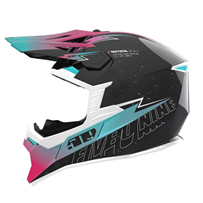 | US | The recalled helmets fail to provide sufficient protection in the event of a crash, posing a risk of head injury. |
| Chainsaws and Pole Saws |  | US Canada | The main switch on the recalled chainsaws and pole saws can fail, allowing the saws to continue to run even after the switch is released, posing a laceration hazard. |
| Party Supply Toys |  | US | The recalled party supply toys violate the mandatory standard for toys containing button cell batteries because the compartment that holds the batteries can be easily accessed and opened by children, posing a deadly ingestion hazard to children. When button cell or coin batteries are swallowed, the ingested batteries can cause serious injuries, internal chemical burns and death. |
| 8-inch pool drain covers |  | US | The recalled drain covers do not conform to the entrapment protection standards of the Virginia Graeme Baker Pool and Spa Safety Act (VGBA), posing an entrapment hazard to swimmers and bathers. |
| 64 oz Stainless Steel Insulated Water Bottles |  | US | The lid can forcefully eject, posing serious impact and laceration hazards, when a consumer attempts to open the capped bottles after food, carbonated beverages or perishable beverages, such as juice or milk, are stored inside over time. |
| Aftermarket Play Yard Mattresses |  | US | The aftermarket play yard mattresses violate the mandatory standard for crib mattresses, as the mattresses exceed thickness requirements and may not adequately fit certain play yards, posing a deadly entrapment hazard. Babies can suffocate in gaps between an undersized mattress, or extra padding, and side walls of a product, especially when the infant’s face becomes trapped against the side and the mattress, preventing the infant from breathing. |
| 15-Drawer Dressers |  | US | The recalled dressers are unstable if they are not anchored to the wall, posing serious tip-over and entrapment hazards that can result in injuries or death to children. The dressers violate the federal standard as required by the STURDY Act. |
| Dressers |  | US | The recalled dressers are unstable if they are not anchored to the wall, posing serious tip-over and entrapment hazards that can result in injuries or death to children. The dressers fail to meet the mandatory standard, as required by the STURDY Act. |
| Momentum Vida E+ E-Bikes |  | US | The fork steerer tube on the recalled bicycles can crack, break or separate during use, posing a fall hazard. |
| Kids 14- and 18-inch Bicycles |  | US | Multiple components of the children’s bicycles contain levels of lead that exceed the federal lead content ban, posing a lead poisoning hazard to children. In addition, the black paint on the bicycle pumps contains lead that exceeds the federal lead paint ban. Lead is toxic if ingested by young children and can cause adverse health issues. |
| 36-volt lithium-ion batteries used with VIVI E-bikes |  | US | The recalled lithium-ion batteries can overheat, posing fire and burn hazards. |
| E-bike |  | US | The e-bikes’ lithium-ion battery can overheat and ignite, posing serious fire and burn hazards to consumers. |
| Electric Scooters |  | US | The recalled scooters can overheat and ignite, posing a fire hazard and risk of serious injury and death. They were sold with unauthorized lithium-ion battery UL certification labels. |
| Electric Scooters |  | US | The weld line on the electric scooter can crack, causing the stem to break and posing fall and injury hazards. |
| Braided crib bumpers |  | US | The recalled crib bumpers violate the federal ban on crib bumpers because the padded crib bumpers can obstruct breathing, posing a risk of serious injury or death to infants from suffocation. Padded crib bumpers are banned by the Federal Safe Sleep for Babies Act. |
| Padded Cushioned Crib Bumpers |  | US | The recalled padded cushioned crib bumpers violate the federal crib bumper ban because they can obstruct an infant’s breathing, posing a suffocation hazard. This creates an unsafe sleeping environment for infants. Padded crib bumpers are banned by the Safe Sleep for Babies Act. |
| Retractable Safety Gates |  | US | The recalled gates violate the federal standard for expansion gates and expandable enclosures because a child’s torso can fit through the opening between the gate and the floor, posing a risk of serious injury or death due to entrapment hazard. |
| Retractable Safety Gates |  | US | The recalled gates violate the mandatory standard for expansion gates and expandable enclosures because a child’s torso can fit through the opening between the gate and the floor, posing a risk of serious injury or death due to entrapment. |
| Stitch Scented Highlighters (4-pack) |  | US | The scented highlighters, which resemble cups with straws, contain phthalates; a violation of the federal phthalates ban. Phthalates are toxic if ingested by young children and can cause adverse health effects. |
| Handheld Steamerss |  | US | The steamers can leak steam or spew hot boiling water, posing a risk of serious burn injury to users. |
| Magnetic Wireless Power Banks (IST-09991/W05 model only) |  | US | The lithium-ion battery in the recalled power banks can overheat and ignite while charging, posing fire and burn hazards to consumers. |
| Electronic Recliner and Swivel Gliders with USB port |  | US | The USB module in the recliner arm can overheat and spark, posing an overheating hazard. |
| LED Gloves |  | US | The recalled LED gloves violate the mandatory standard for toys containing coin batteries because the compartment that holds the batteries can be easily accessed and opened by children. Additionally, the spare coin batteries provided with the toys are not in child-resistant packaging and do not have the warnings required under Reese’s Law. When button cell or coin batteries are swallowed, the ingested batteries can cause serious injuries, internal chemical burns and death. |
| Light-Up Slap Ruler Bracelets |  | US | The battery compartment of the recalled light-up ruler bracelets can be opened easily by children allowing access to the button cell batteries, violating the battery-operated toys requirements under the mandatory standard for toys. If a child swallows a button cell or coin battery, it can cause serious injuries, internal chemical burns or death. |
| Minifridges, models EFMIS129, EFMIS137, EFMIS149 and EFMIS175, limited to the serial numbers listed below. |  | US | The minifridges’internal electrical components can short circuit and ignite the surrounding plastic housing, posing fire and burn hazards. |
| Smart Home Fragrance Diffusers with detachable covers |  | US | The magnets on the inside cover can detach, posing an ingestion hazard to children. When high-powered magnets are swallowed, the ingested magnets can attract each other, or other metal objects, and become lodged in the digestive system. This can result in perforations, twisting and/or blockage of the intestines, infection, blood poisoning and death.. |
| Rechargeable Electric Bug Zapper Racket, Fly Swatter, and Mosquito Swatter for Indoor and Outdoor use |  | US | The rechargeable battery in the Electric Bug Zapper Racket, Fly Swatter, and Mosquito Swatter can catch fire when used for extended periods of time. |
| Toy trumpet SR/02436/25 |  | Austria | The sound pressure level produced by the toy is too high (measured value up to 97.5 dB). This could lead to permanent or partial hearing loss. The product does not comply with the requirements of the Toy Safety Directive nor with the European standard EN 71-1. |
| Water mat SR/02395/25 |  | United Kingdom in respect of Northern Ireland | The plastic of the packaging is too thin. If a child plays with it, the plastic can cover the mouth and nose, causing the child to suffocate. The product does not comply with the requirements of the Toy Safety Directive nor with the European standard EN 71-1. |
| Soft toy SR/02458/25 |  | Austria | Small parts can easily detach (the eyes of the toy). As a consequence, a small child may put them in the mouth and choke on them. The product does not comply with the requirements of the Toy Safety Directive nor with the European standard EN 71-1. |
| Watercolours SR/02464/25 |  | France | The migration of lead from the paint is too high (measured value up to 5.5 mg/kg). The product does not comply with the requirements of the Toy Safety Directive nor with the European standard EN 71-3. |
| Fancy-dress costume SR/02387/25 |  | France | The migration of chromium VI from the toy is too high (measured value: 0.26 mg/kg). The product does not comply with the requirements of the Toy Safety Directive nor with the European standard EN 71-3. |
| Toy harmonica SR/02409/25 |  | Austria | The sound pressure level and the peak sound pressure level produced by the toy are too high (measured value up to 110dB). This could lead to permanent or partial hearing loss The product does not comply with the requirements of the Toy Safety Directive nor with European standard EN 71-1. |
| Playmat SR/02475/25 |  | United Kingdom in respect of Northern Ireland | The detachable toys include fabric loops sewn into the side of one of the seams. The loops are large enough that a young child can easily insert their finger into them and twist, causing him to get trapped. The fibrous stuffing material of the star toy is easily accessible due to the weakness of certain seams. A small child may put the filling material in the mouth and choke. The product does not comply with the requirements of the Toy Safety Directive nor with European standard EN 71-1. |
| Plastic doll set SR/02461/25 |  | Czechia | The plastic material of the product has an excessive concentration of bis(2-ethylhexyl) phthalate (DEHP) (measured value up to 42.6% by weight). The product does not comply with the REACH Regulation. |
| Battery-operated toy rabbit SR/02394/25 |  | Luxembourg | Small parts can easily detach (the eyes of the rabbit). As a consequence, a small child may put them in the mouth and choke on them. The product does not comply with the requirements of the Toy Safety Directive nor with the European standards EN 71-1 and EN 62115. |
| Playmat SR/02626/25 |  | Slovakia | The product has small parts (the eyes of the turtle, lion, fish, seahorse, penguin and horse) that can easily detach. A small child may put them in the mouth and choke. The product does not comply with the requirements of the Toy Safety Directive nor with European standard EN 71-1. |
| Board game SR/02593/25 |  | Board game | The product consists of small parts. Small children may put them in their mouth and choke. The product does not comply with the requirements of the Toy Safety Directive nor with European standard EN 71-1. |
| Toy slime set SR/02610/25 |  | Germany | The migration of boron from the toy slime is too high (measured value: 3240 mg/kg) The product does not comply with the requirements of the Toy Safety Directive nor with the European standard EN 71-3. |
| Toy rings SR/02652/25 |  | France | The plastic material of the product has an excessive concentration of diisobutyl phthalate (DIBP) and dibutyl phthalate (DBP) (measured values: 2.25 % and 1.05 % by weight, respectively). The product does not comply with the REACH Regulation. |
| Key ring with toy SR/02642/25 |  | Spain | The toy has small parts (keychain) that can easily detach. A child may put it in the mouth and choke. The product does not comply with the requirements of the Toy Safety Directive nor with European standard EN 71-1. |
| Toy military set SR/02627/25 |  | Slovakia | The product has small parts that can easily detach (suction cups and projectiles). A small child may put them in the mouth and choke. The product does not comply with the requirements of the Toy Safety Directive nor with European standard EN 71-1. |
| Plastic doll SR/02544/25 |  | Lithuania | The plastic material of the toy has an excessive amount of bis(2-ethylhexyl) phthalate (DEHP) (measured value: 2.52% by weight). The product does not comply with the REACH Regulation. |
| Toy slime SR/02709/25 |  | Croatia | The migration of boron from the toy slime is too high (measured value: 3180 mg/kg). The product does not comply with the requirements of the Toy Safety Directive nor with European standard EN 71-3. |
| Toy slime kit SR/02716/25 |  | Germany | The migration of boron from the toy slime is too high (measured value: 3260 mg/kg). The product does not comply with the requirements of the Toy Safety Directive nor with European standard EN 71-3. |
| Toy car SR/02755/25 |  | United Kingdom in respect of Northern Ireland | The toy can easily break producing small parts. Small children may put them in their mouth and choke. The product does not comply with the requirements of the Toy Safety Directive nor with European standard EN 71-1. |
| Remote-controlled toy car SR/02754/25 |  | United Kingdom in respect of Northern Ireland | The product’s USB charging cable contains an excessive amount of of bis(2-ethylhexyl) phthalate (DEHP), diisobutyl phthalate (DIBP) and dibutyl phthalate (DBP) (measured values up to 4.6%, 0.053% and 0.74% by weight, respectively). The product does not comply with the REACH Regulation nor with the requirements of the Toy Safety Directive. |
| Musical toy SR/02723/25 |  | Lithuania | The product has small parts (small balls and butterflies) that can easily detach. Small children may put them in their mouth and choke. The product does not comply with the requirements of the Toy Safety Directive nor with European standard EN 71-1. |
| Stress ball toy SR/02769/25 |  | Austria | The product has small parts that can easily detach. A small child may put them in their mouth and choke. The product does not comply with the requirements of the Toy Safety Directive nor with European standard EN 71-1. |
| Toy bear SR/02832/25 |  | Austria | The product has small parts (the bear’s head, legs and arms) that can easily detach. Small children may put them in their mouth and choke. The product does not comply with the requirements of the Toy Safety Directive nor with European standard EN 71-1. |
| Toy scooter OR/00114/25 |  | Poland | The diameter of the front wheels of the scooter is too small (measured value: 116.59 mm), which can lead the scooter’s wheel to become stuck on an uneven surface and the child falling, suffering injuries. The product does not comply with the requirements of the Toy Safety Directive nor with European standard EN 71-1. |
| Jewellery set SR/02416/25 |  | United Kingdom in respect of Northern Ireland | The products have an excessive concentration of cadmium (measured value up to 27.15%). The product does not comply with the REACH Regulation. |
| Necklace set SR/02453/25 |  | Sweden | The product has an excessive concentration of cadmium (measured value up to 37 % by weight). The product does not comply with the REACH Regulation. |
| Ring SR/02460/25 |  | Sweden | The product has an excessive concentration of cadmium (measured value up to 78% by weight). The product does not comply with the REACH Regulation. |
| Heated jacket SR/02390/25 |  | United Kingdom in respect of Northern Ireland | The lithium-ion battery pack is poorly constructed and does not provide sufficient protection to prevent against thermal runaway, leading to the risk of fire. Additionally, the power supply plug pins are too close to the edge of the plug face, exposing the user to live parts, leading to electric shock. The product does not comply with the requirements of the Low Voltage Directive. |
| Toiletry bag SR/02469/25 |  | Sweden | The plastic material of the product has an excessive concentration of bis(2-ethylhexyl) phthalate (DEHP), cadmium and short chain chlorinated paraffins (SCCPs) (measured value: up to 17.2%, 0.076% and 1.15% by weight, respectively) The product does not comply with the REACH Regulation nor with the Persistent Organic Pollutants (POP) Regulation. |
| Plastic sandals SR/02472/25 |  | Sweden | The plastic material of the product has an excessive concentration of lead, bis(2-ethylhexyl) phthalate (DEHP) and dibutyl phthalate (DBP) (measured values: 13%, 11.7% and 9.2% by weight, respectively). The product does not comply with the REACH Regulation. |
| Children’s jacket SR/02543/25 |  | France | Small parts can easily detach (zipper pull). A small child may put them in the mouth and choke on them. The product does not comply with the General Product Safety Regulation nor with the European standard EN 71-1. |
| Children’s cardigan SR/02682/25 |  | Belgium | The product has long functional cords with free ends in the neck area which can become trapped during various activities of a child, leading to strangulation or injuries. The product does not comply with the General Product Safety Regulation nor with the European standard EN 14682. |
| Gloves SR/02449/2 |  | The Netherlands | The leather in the product contains chromium VI (measured value: 17 mg/kg). The product does not comply with the REACH Regulation. |
| Fishing bait SR/02466/25 |  | Sweden | The plastic material of the product has an excessive concentration of bis(2-ethylhexyl) phthalate (DEHP) (measured values up to: 60% by weight). The product does not comply with the REACH Regulation. |
| Fishing bait SR/02463/25 |  | Sweden | The plastic material of the product has an excessive concentration of bis(2-ethylhexyl) phthalate (DEHP) (measured value: 31% by weight). The product does not comply with the REACH Regulation. |
| Floating board SR/02681/25 |  | United Kingdom in respect of Northern Ireland | The product’s canopy could cause it to lift off the water if struck by a gust of wind. The child could fall from the product and be injured by impact or drown in the water. The product does not comply with the General Product Safety Regulation. |
| Inflatable swim seat SR/02673/25 |  | United Kingdom in respect of Northern Ireland | The product may resemble a toy; however, there is a risk of drowning if children play with it unsupervised. Floating seats with leg openings must be used under constant adult supervision and must not have any play elements or overwater structures. The product does not comply with the General Product Safety Regulation. |
| Motorcycle part / Brake shoe SR/02764/25 |  | Ireland | The brake shoe contains asbestos fibres. Asbestos causes cancer. The product does not comply with the REACH Regulation. |
| Charger SR/02471/25 |  | United Kingdom in respect of Northern Ireland | The earthing protection is inadequate and the product’s insulation is inappropriate, leaving live parts accessible. The user could touch the accessible live parts and receive an electric shock. This product does not comply with the requirements of the Low Voltage Directive. |
| Hair styler SR/02462/25 |  | United Kingdom in respect of Northern Ireland | The fuse within the plug has insufficient granular filler and is too small. This can lead to the plug overheating and/or exploding, causing a fire. This product does not comply with the requirements of the Low Voltage Directive. |
| Lighting chain SR/02398/25 |  | Slovakia | Due to the insufficient mechanical strength of the product, access to live parts is possible. Moreover, the product has an insufficient nominal cross-section of the conductors and does not meet the declared requirements for protection against moisture. This may result in the user receiving an electric shock. The product does not comply with the requirements of the Low Voltage Directive nor the European standards EN 60598-1 and EN 60598-2-20. |
| Lighting chain SR/02397/25 |  | Slovakia | Due to the insufficient mechanical strength of the product, access to live parts is possible. Moreover, the product has an insufficient nominal cross-section of the conductors, it allows single-pole plug insertion, has insufficient cable length between plug and the first socket and also does not meet the declared requirements for protection against moisture. This may result in the user receiving an electric shock. The product does not comply with the requirements of the Low Voltage Directive nor the European standards EN 60598-1 and EN 60598-2-20. |
| Lighting chain SR/02439/25 |  | Slovakia | Due to the insufficient mechanical strength of the product, access to live parts is possible. Moreover, the product has an insufficient nominal cross-section of the conductors, it allows single-pole plug insertion, has insufficient cable length between plug and the first socket and also does not meet the declared requirements for protection against moisture. This may result in an electric shock. The product does not comply with the requirements of the Low Voltage Directive and the European standards EN 60598-1 and EN 60598-2-20 |
| Children’s lamp SR/02445/25 |  | Sweden | The solders in the product have an excessive concentration of lead. (measured value up to 58.2% by weight). The product does not comply with the requirements of RoHS 2 Directive. |
| Toy camera SR/02444/25 |  | Sweden | The solders in the product have an excessive concentration of lead (measured value up to 19.1% by weight). The product does not comply with the requirements of RoHS 2 Directive. |
| Power adaptor SR/02646/25 |  | United Kingdom in respect of Northern Ireland | The mains plug dimensions of the product are inadequate. The user could receive an electric shock from accessible live parts. The product does not comply with the requirements of the Low Voltage Directive. |
| Wall socket SR/02809/25 |  | United Kingdom in respect of Northern Ireland | The breakdown isolation between the input and output circuits and the creepage and clearance distances between circuits of the wall socket are insufficient. Moreover there is no overcurrent protection device fitted to the USB input circuit. This can lead to overheating of the wall socket and cause a fire. The product does not comply with the requirements of the Low Voltage Directive, nor with the European standard EN 62368-1. |
| Air purifier OR/00112/25 |  | Ireland | Moisture or contaminants may affect the door interlock microswitch, causing electrical arcing and overheating, which may result in electric shock or fires. The product does not comply with the requirements of the Low Voltage Directive. |
| Lighting chain SR/02616/25 |  | Hungary | The product is improperly designed and not adequately protected against electric shock. The swinging socket enables a one-pole connection. As a result, the user could touch accessible live parts, which may cause an electric shock. The product does not comply with the requirements of the Low Voltage Directive nor with the European standard EN 60598. |
| Air purifier SR/02537/25 |  | Sweden | The solders in the product have an excessive concentration of lead (measured value: 69% by weight). Lead poses a risk to the environment. The product does not comply with the requirements of RoHS 2 Directive. |
| Foot polisher SR/02581/25 |  | Sweden | The solders in the product have an excessive concentration of lead. (measured value up to 72.7% by weight). Moreover, the plastic material of the product has an excessive concentration of bis(2-ethylhexyl) phthalate (DEHP) (measured value up to 1.21% by weight). Additionally, the product has an excessive concentration of short chain chlorinated paraffins (SCCPs) (measured value up to 0.61 % by weight). The product does not comply with the requirements of RoHS 2 Directive nor with POP Regulation. |
| LED head lamp SR/02592/25 |  | Sweden | The product has an excessive concentration of short chain chlorinated paraffins (SCCPs) (measured value up to 2.66% by weight). The product does not comply with POP Regulation. |
| Digital thermometer SR/02743/25 |  | Sweden | The solders in the product have an excessive concentration of lead (measured value up to 66% by weight). The product does not comply with the requirements of RoHS 2 Directive. |
