









Health Canada launched the Children’s Jewellery Regulations (SOR/2018-82) on 2 May 2018. It will repeal SOR/2016-168 and become effective on 2 November 2018.
In the meantime, Health Canada also published the Consumer Products Containing Lead (Contact with Mouth) Regulations (SOR/2018-83) to repeal the SOR/2010-273. The effective date is also 2 November 2018.
| The highlights of the Regulations (SOR/2018-82) are listed below: |
| 1. Lead content cannot exceed 90 mg/kg; |
| 2. Cadmium cannot exceed 130 mg/kg if the jewellery item is small enough to be totally enclosed in the small parts cylinder when a force of not more than 4.45 N is applied |

Sources: Department of Justice Canada
(SOR/2018-82): http://laws-lois.justice.gc.ca/eng/regulations/SOR-2018-82/page-1.html
(SOR/2018-83): http://laws-lois.justice.gc.ca/eng/regulations/SOR-2018-83/page-1.html
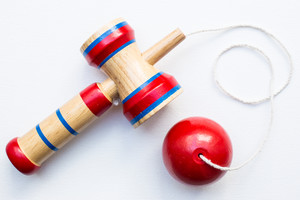
ISO standard 8124-1 “Part 1: Safety aspects related to mechanical and physical properties” has been updated and published in March 2018, so as to align with European EN71 and US ASTM F963 amendments.
The followings are the highlights of the updated ISO 8124-1:2018 standards:
- Amended the definition of cords, elastic, fixed loop, tangled loop, noose, electrical cable, cord with the potential to tangle, large and bulky toy, paper, pompom, A-weighted equivalent sound pressure level, maximum A-weighted equivalent sound pressure level, pull or push toy;
- Added the definitions of paperboard and steady state sound;
- Deleted the definitions of continuous sound and impulsive sound;
- Added the fibrous filling material and limited the exemption from elastics to elastic fabric in the exemption list of small part requirement;
- Exempted the paperboard from foreseeable abuse testing;
- Clarified the warning requirements of toys for children 36 months and over but under 72 months;
- Modified the arrow of energy density requirements;
- Modified the cord requirements and methods which align to EN 71-1 and added the requirement of yo-yo balls, straps, sledges and toboggans with cord for pulling;
- Modified the c-weighted requirements for close-to-the-ear toys;
- Modified the tip over test method and definition of large and bulky toys;
- Added the requirement of jaw entrapment in handles and steer of wheels which align to ASTM F963
Sources: ISO: https://www.iso.org/obp/ui/#iso:std:iso:8124:-1:ed-5:v1:en

In February 2018, the European Commission (EC) proposed to amend Annex XVII of REACH directive by adding new entry to restrict the presence of 33 chemicals in clothing, footwear and textile products.
Below tables show those newly restricted chemicals and their respective limits:
| No. | Categories | Chemicals | Limits | |
| 1 | Extractable Heavy elements | Cadmium and its compounds | 1 mg/kg (expressed as each metal that can be extracted from the material) | |
| 2 | Chromium VI compounds | |||
| 3 | Arsenic compounds | |||
| 4 | Lead and its compounds | |||
| 5 | PolycyclicAromaticHydrocarbons | Benz[a]anthracene | 1 mg/kg each | |
| 6 | Benz [e] acephenanthrylene | |||
| 7 | Benzo [a] pyrene;Benzo [def] chrysene | |||
| 8 | Benzo [e] pyrene | |||
| 9 | Benzo [j] fluoranthene | |||
| 10 | Benzo [k] fluoranthene | |||
| 11 | Chrysene | |||
| 12 | Dibenz [a,h] anthracene | |||
| 13 | Chlorotoluenes | a, a, a, 4-tetrachlorotoluene;p-chlorobenzotrichloride | 1 mg/kg each | |
| 14 | a, a, a, -trichlorotoluene;benzotrichloride | |||
| 15 | a-chlorotoluene; benzyl chloride | |||
| 16 | Formaldehyde | Formaldehyde | 75 mg/kg | |
| 17 | Phthalates | 1,2-benzenedicarboxylic acid;di-C 6-8-branched alkylesters,C 7-rich | 1000 mg/kg individually or in combination with other phthalates in this entry or in other entries of Annex XVII | |
| 18 | Bis(2-methoxyethyl) phthalate | |||
| 19 | Diisopentylphthalate | |||
| 20 | Di-n-pentyl phthalate (DPP) | |||
| 21 | Di-n-hexyl phthalate (DnHP) | |||
| 22 | Solvents | Benzene | 5 mg/kg | |
| 23 | N-methyl-2-pyrrolidone; 1-methyl-2-pyrrolidone (NMP) | 3000 mg/kg each | ||
| 24 | N,N-dimethylacetamide(DMAC) | |||
| 25 | N,N-dimethylformamide;dimethyl formamide (DMF) | |||
| 26 | Dyestuffs | 1,4,5,8-tetraaminoanthraquinone; C.I. Disperse Blue 1 | 50 mg/kg each | |
| 27 | Benzenamine, 4,4′-(4-iminocyclohexa-2,5-dienylidenemethylene) dianilinehydrochloride; C.I. Basic Red 9 | |||
| 28 | [4-[4,4′-bis(dimethylamino) benzhydrylidene]cyclohexa-2,5-dien-1-ylidene] dimethylammoniumchloride; C.I. Basic Violet 3with ≥ 0,1 % of Michler’sketone (EC no. 202-027-5) | |||
| 29 | Others | 4-chloro-o-toluidinium chloride | 30 mg/kg each | |
| 30 | 2-Naphthylammoniumacetate | |||
| 31 | 4-methoxy-m-phenylenediammonium sulphate; 2,4-diaminoanisole sulphate | |||
| 32 | 2,4,5-trimethylaniline hydrochloride | |||
| 33 | Quinoline | 50 mg/kg |
Several articles are exempted from the requirements:
- Clothing, related accessories or footwear, or parts of clothing, related accessories or footwear, made exclusively of natural leather, fur or hide.
- Non-textile fasteners and non-textile decorative attachments.
- Second-hand clothing, related accessories, textiles other than clothing or footwear.
- Personal protective equipment and medical devices within the scope of Regulation (EU) 2016/425 and Regulation (EU) 2017/745 respectively.
- Disposable textiles, which are textiles that are designed to be used only once or for a limited time and are not intended for subsequent use for the same or a similar purpose.

On 10 July 2017, the European Chemical Agency (ECHA) confirmed to add the new substance PFHxS as Substances of Very High Concern (SVHC) candidate list and update the properties of BPA and 4 phthalates. From now on, there are totally 174 SVHCs on the candidate list.
Below table shows the NEWLY updated Substance of Very High Concern (SVHCs) and five already-existed SVHCs with its updated properties:
| Substance Name | EC number | CAS Number | SVHC property |
| Perfluorohexane-1-sulphonic acid and its salts (PFHxS) (NEWLY ADDED) | – | – | vPvB (Article 57 e) |
| 4,4’-isopropylidenediphenol (bisphenol A; BPA) | 201-245-8 | 80-05-7 | Endocrine disrupting properties (Article 57(f) – human health) (UPDATED) |
| Benzyl butyl phthalate (BBP) | 201-622-7 | 85-68-7 | Endocrine disrupting properties (Article 57(f) – human health) (UPDATED) |
| Bis(2-ethylhexyl) phthalate (DEHP) | 204-211-0 | 117-81-7 | Endocrine disrupting properties (Article 57(f) – human health) (UPDATED) |
| Dibutyl phthalate (DBP) | 201-557-4 | 84-74-2 | Endocrine disrupting properties (Article 57(f) – human health) (UPDATED) |
| Diisobutyl phthalate (DIBP) | 201-553-2 | 84-69-5 | Endocrine disrupting properties (Article 57(f) – human health) (UPDATED) |
Please refer to the ECHA website for more details:
https://echa.europa.eu/-/one-new-substance-added-to-the-candidate-list
Possessing the latest equipment and a dynamic team of experts, CMA Testing offers you a comprehensive solution of SVHC Screening services to ensure your products are safe.
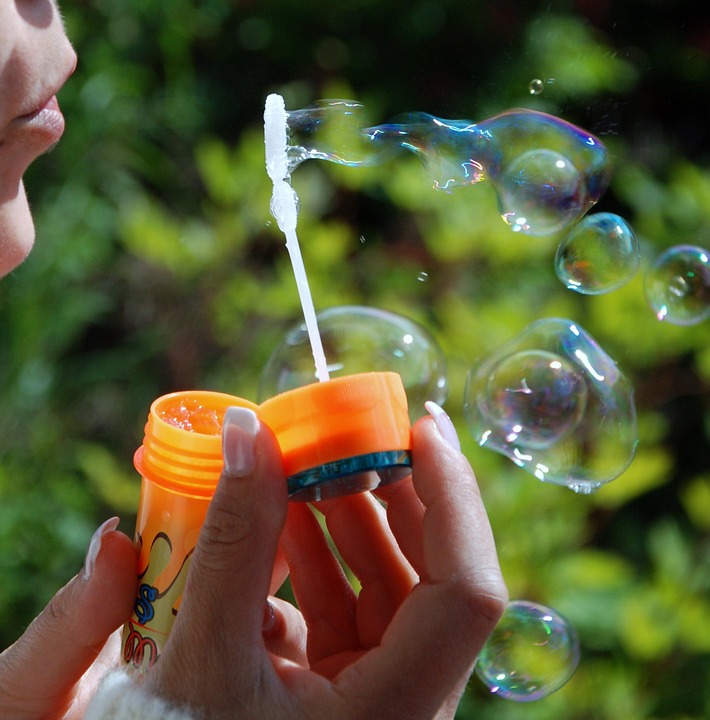
On 3 May 2017, European Commission (EC) newly added a migration limit as well as a content limit for phenol in specific toys by amending the Appendix C of Annex II, which lists requirements for toys used by children under 36 months or toys intended to be placed in the mouth, to Toy Safety Directive 2009/48/EC. The restriction will become effective on 4 November 2018.
The new restriction is aimed to protect the children against risks caused by hazardous chemical substances in toys. Phenol is classified by Regulation (EC) No. 1272/2008 as mutagenic category 2. It is used as a monomer for phenolic resin in the manufacture of resin-bonded wood for toys. The degradation of phenolic antioxidants in polymers can also be a further source of phenol in toys. Phenol is also used as preservative in water-based liquid toys such as bubble-blowing products or water-based liquid inks.
Following are the summary about the migration limit and content limit of Phenol in toy materials:
| Substance | CAS No. | Requirement |
| Phenol | 108-95-2 | – 5 mg/l (migration limit) in polymeric materials in accordance with the methods laid down in EN 71-10:2005 and EN 71-11:2005.- 10 mg/kg (content limit) as a preservative in accordance with the methods laid down in EN 71-10:2005 and EN 71-11:2005. |
Source: Official Journal of the European Union: http://eur-lex.europa.eu/legal-content/EN/TXT/PDF/?uri=CELEX:32017L0774&from=EN
CMA Testing assists your product in complying with latest updates. Apart from a wide range of testing services, CMA Testing also provide trustworthy inspection services and factory audit.

Prepare for Changes
In February 2017, European Committee for Standardization (CEN) published a new 2017 version of European standard methods ENISO 14362:2017 part 1 and part 3 for determining the restricted aromatic amines derived from reductive cleavage of azo colorants in textiles with direct and prolonged contact with human skin or oral cavity. The standards are expected to be granted the status of national standard at the latest by August 2017.
2017 Version
EN ISO 14362-1:2017
EN ISO 14362-3:2017

On January 14, 2017, the Government of Canada published a Notice under Section 71 of the Canadian Environmental Protection Act, 1999 (CEPA, 1999) and two mandatory surveys are required to submit to have the risk management and minimize the harm to the environment or human health posed by chemicals.
Therefore, suppliers or manufacturers should provide information of 81 chemicals that are toxic or proposed to be toxic under the Canadian Environmental Protection Act, 1999.
To comply with the regulatory requirements by the Government of Canada, finding a reliable third-party laboratory to perform tests on product or manufactured items imported to Canada.
| Notices | Scope of Coverage | Submission |
| Summer 2017 Notice | 4 parts – 31 substances | 28-Jun-17 |
| Fall 2017 Notice# | 5 parts – 50 substances | 27-Sep-17 |
#Food packaging intended for salesable food and beverage as well as items intended to release the substance during conditions of use are required for Fall 2017 Notice only
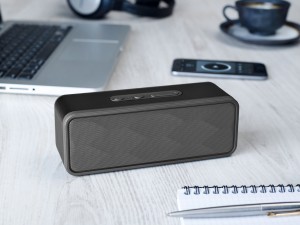
The Radio Equipment Directive (RED) 2014/53/EU which was published in 2014 becomes effective and replaces the Radio and Telecommunications Terminal Equipment (R&TTE) Directive 1999/5/EC on 12 June 2016. Starting from 13 June 2016, all European member states shall adopt the new RED and from 13 June 2017 all radio equipment imported to EU SHALL COMPLY the new RED.
Attention: Receive only radio equipment intended to be used solely for the reception of sound and TV broadcasting services such as Television, AM/FM radio and Satellite broadcast receiver whi
ch are not included in the scope of R&TTE directive before are newly added to that of RED. Therefore, Television, TV receivers, AM/FM Radio and satellite Broadcast receiver SHALL COMPLY RED rather than EMC Directive before.
CMA Testing possess a dynamic team of professional with state of the art testing equipment. To ensure your product safe and comply with the latest regulation, we provide the Electrical safety test, EMC test and RF test for your audio and video product with radio function. Please contact us immediately!