








Background
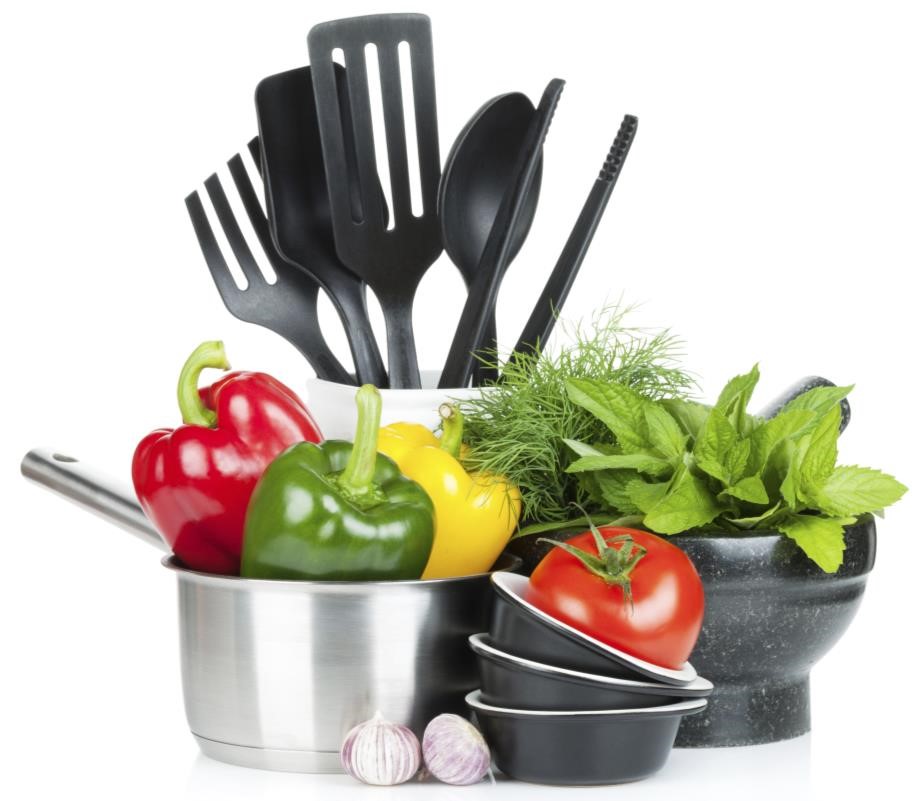
Consumer Council has conducted tests on the nylon wok spatula on the market recently. The test results showed some products failed regulation standards in terms of impurity migration. Some products were even deformed after being heated. What kind of material is nylon? What are the usages of nylon? And what are nylon’s safety requirements in Europe and US markets?
Inside This Article 2 Points you need to Know:
1. What is nylon?
2. Nylon regulations?
1. What is nylon?
Under plastic classification, nylon belongs to the polyamide family. It was originally developed and used by DuPont Chemical in the 1930s. After nylon material was commercialized, it becomes one of the commonly used materials for kitchenware, due to nylon’s abrasion resistance and mechanical strength under high temperature. There are many types of nylon materials, but not all nylons are suitable for food contact materials. In fact, many countries (such as Europe, the United States and Japan) have implemented a positive list system for food contact plastics, which means that only plastics that meet specific requirements are allowed to be used as food contact materials. It is no exception for nylon materials.
2. Regulations of Nylon food contact materials
In the United States, nylon materials are regulated by Federal Law 21 CFR 177.1500, which stipulates the required density, melting point, acid resistance, and overall migration (i.e. impurity migrated into food during designed use) for different food simulants. Take nylon 6 and nylon 66, which are commonly used in the manufacture of kitchen utensils, as examples, the minimum required melting points are 200°C and 246°C respectively, and they shall also be able to resist boiling strong acids for up to one hour.
As for Europe, food contact plastics are regulated by EU Directive 10/2011, which is a bit different from the requirements of the US FDA. EU Directive 10/2011 does not specify requirements of individual plastic, but instead regulates the overall migration , plasticizers, monomers, primary aromatic amines and heavy metals for all food contact plastics. For food contact nylon, since Caprolactam and Hexamethylene Diamine are commonly used as monomers, it is recommended to test for these two monomers and overall migration to ensure that the product meets the requirements of European regulations. In addition, the risk of nylon kitchen utensils containing primary aromatic amines is higher than that of other chemicals. Taking year 2019-2020 as an example, the European Union’s Rapid Alert System for Food and Feed (RASF) reported 21 recall cases involving nylon kitchen utensils, and all but one of them were due to primary aromatic amine.
If manufacturers want their products to meet the food safety requirements of various countries, the most straightforward way is to send the products for testing.
Author : CMA Testing Harris Wan

2020年4月28日厚生勞動省告示第195,196號發布,根據其《食品衛生法》等部分修訂內容,日本食品接觸產品的管理將引入正面清單制度,只允許將經過安全評估的物質用於食品器、容器和包裝。
此前,日本基本允許各類物質用於器具、容器和包裝,僅對限制使用的物質加以規定。而依據2020年第195號公告新增的第18(3)條,用於器具、容器和包裝中的“合成樹脂材質”,其生產原料(基礎聚合物及添加劑等)僅可以使用標準規範中已明確允許的物質(正面清單)。相關的清單已在修訂的《食品、添加劑等規格標準》中給出,可參考文末相關連結。
此外,第18(3)中還規定,當生產原料不包含在正面清單中時,如果其在器具、容器和包裝中「不直接接觸食品」且在食品中的遷移量不超過0.01 mg/kg ,那麼該原料可以使用。
且“正面清單”目前所規範的材質為“合成樹脂材質”,包括其他材質或混合材質中的合成樹脂層或合成樹脂塗層。其中「合成樹脂材質」主要包括熱塑性塑膠、熱固性塑膠及熱塑性彈性體;而橡膠等,視為“熱固性彈性體”,不在合成樹脂範圍內。
另外,基於根據《食品衛生法》第50-2和50-3條的新增內容,MHLM將制定必要的良好生產規範(GMP)指南。並且,原料生產商、產品製造商、經銷商、進口商等有義務向下游提供必要的信息,以說明所使用物質符合「正面清單」要求。
以上新修訂的《食品衛生法》已於2020年6月1日起正式生效。但修訂案也規定了過渡期時間:2020年6月1日-2025年5月31日。在為期5年的過渡期間,企業仍可出售2020年6月1日前生產的產品。
CMA Testing獲得日本厚生勞動省 (MHLW) 認可可進行有關日本食品衛生法 (JFSL) 的測試,並擁有多年相關測試的經驗。針對日本食品接觸產品的正面清單,CMA Testing已推出產品材料確認服務,幫助您的產品符合最新日本要求和進口規定,詳情請諮詢銷售。
正面清單:https://www.mhlw.go.jp/content/11130500/000625496.pdf

為應對新型傳染病的變化,有效的抗疫措施能起到防護作用,而符合標準的口罩及防護物品更顯得尤為重要。
口罩
根據消費者委員會的《齊心抗疫》專頁,消費者可參考美國標準ASTM F2100,台灣標準CNS 14774或歐洲標準 EN14683為選擇準則。ASTM因應口罩材料把防護級別分為1至 3級(級別大, 防護性能更好),其中效用要求有 細菌過濾效率 (Bacterial Filtration Efficiency – BFE)、顆粒過濾效率 (Particle Filtration Efficiency – PFE) 、抗合成血液滲透 (Resistance to penetration by synthetic blood) 等測試作評估。因應病毒威脅, 病毒過濾效率(Viral Filtration Efficiency – VFE) 參考ASTM F2101方法進行測試,以提供口罩對病毒過濾之評估參考。
| 表現參數 | 第一級别 | 第二級别 | 第三級别 |
| 對細菌的過濾效率, % | ≥95 | ≥98 | ≥98 |
| 呼吸時的壓力差a, mm H2O/ cm2 | <4.0 | <5.0 | <5.0 |
| 對微粒b的過濾效率, % | ≥95 | ≥98 | ≥98 |
| 抗模擬血液穿透效能c, mm Hg | 80 | 120 | 160 |
a量度對配戴者呼吸造成的阻力,數值愈大,對呼及造成的阻力愈大
b測試用的微粒大少為0.1微米,一微米為一百萬份之一米
c數值愈高代表抗血液穿透力愈高
註:所有口罩必需達美國16 CFR Part 1610一級抗燃燒能力
更多口罩測試咨詢涵蓋:
| 口罩測試 | 口罩標準 |
| 中國 | YY0469YY0969GB2626 |
| 美國 | ASTM F2100及FDA註冊 |
| 歐洲 | EN149EN14683及CE認證 |
酒精搓手液
一般酒精搓手液以酒精為消毒殺菌主要成份,因此酒精濃度 (Alcohol Content – w/w%) 會影響消毒效果。按世界衛生組織指引,濃度在60% 至 80% 的酒精溶液最為有效消毒。另外,可以循殺滅細菌能力 (Disinfection Ability) 來評估其有效程度。
| 酒精搓手液測試 | 標準 |
| 酒精濃度 | In house test method |
| 殺滅細菌能力 | GB 15979 (3 種細菌) |

Helsinki, 17 February 2020 – The prototype allows companies to get familiar with the database and test how to submit their SCIP notifications. Users can submit test data and provide feedback to ECHA to help us further improve the final version, which will be launched later in 2020. All submitted test data will be deleted before the launch.
As of 5 January 2021, companies placing articles on the EU market will need to submit SCIP notifications to ECHA if the articles they place on the EU market contain substances of very high concern (SVHCs) in concentrations above 0.1 % weight by weight. Companies will be able to submit data already in late 2020 when the final database is launched. The aim is to promote the substitution of hazardous chemicals and transition towards a safer circular economy.
Companies will need to submit:
- information to identify the article;
- the name, concentration range and location of the SVHC in the article; and
- other information on its safe use.
Further information
SCIP is the database for information on Substances of Concern In articles as such or in complex objects (Products) established under the Waste Framework Directive (WFD).
The SCIP database ensures that the information on articles containing Candidate List substances is available throughout the whole lifecycle of products and materials, including at the waste stage. The information in the database is then made available to waste operators and consumers.
Resource: https://echa.europa.eu/-/substances-of-concern-in-products-database-try-out-the-prototy-1
On 16 Jan 2020, The European Chemical Agency (ECHA) added 4 new substances as Substances of Very High Concern (SVHC) to the Candidate List. Therefore, there are total 205 SVHCs in candidate list.
Below table lists out 4 new Substances of Very High Concern (SVHCs) with their SVHC properties:
| Substance Name | EC number | CAS Number | SVHC property |
| 2-benzyl-2-dimethylamino-4′-morpholinobutyrophenone | 404-360-3 | 119313-12-1 | Toxic for reproduction (Article 57c) |
| 2-methyl-1-(4-methylthiophenyl)-2-morpholinopropan-1-one | 400-600-6 | 71868-10-5 | Toxic for reproduction (Article 57c) |
| Diisohexyl phthalate | 276-090-2 | 71850-09-4 | Toxic for reproduction (Article 57c) |
| Perfluorobutane sulfonic acid (PFBS) and its salts | / | / | Equivalent level of concern having probable serious effects on the environment (Article 57f)Equivalent level of concern having probable serious effects on human health (Article 57f) |
Please refer to the ECHA website for more details: https://www.echa.europa.eu/substances-of-very-high-concern-identification
Possessing the latest equipment and a dynamic team of experts, CMA Testing offers you a comprehensive solution of all SVHC Screening services.
In addition to testing services on a wide range of consumer products, CMA Testing also provide inspection and factory audit services. Please contact us!

European Commission published a revised Toy Safety Directive (EU) 2018/725 related to adopt lower limit value for chromium VI in category III (scraped-off toy material) and the amendment will come to effective on 18 November 2019.
The following table is the summary of the amendment parts:
| Element | mg/kg in dry, brittle, powder-like or pliable toy material | mg/kg in liquid or sticky toy material | mg/kg in scraped-off toy material |
| Previous Cr(VI) limit | 0.02 | 0.005 | 0.2 |
| Revised Cr(VI) limit | 0.02 | 0.005 | 0.053 |
Source:
OJEU: https://eur-lex.europa.eu/legal-content/EN/TXT/PDF/?uri=CELEX:32018L0725&from=EN
The European Committee for Standardization is also reviewing the EN71-3 test method to improve the detection of chromium VI and expected to be available soon.

1 Jan 2019:
- Revision of Japan Toy Safety Standard – ST 2016 (2nd Edition) became effective.
11 Jan 2019:
- The amendments to the Toys Regulations (Magnetic Toys) SOR/2018-138 in the Canada Gazette will be effective on 11 Jan, 2019
22 Jul 2019:
- Four new Restricted Substances (Phthalates) will be added to new RoHS 2.0 requirements under RoHS Directive (EU) 2015/63 amendment to Directive 2011/65/EU on 22 Jul 2019.
18 Nov 2019:
- Chromium VI limit in Scraped-off Toy Materials will be tightened under the revised Toy Safety Directive (EU) 2018/725 and come to effective on 18 Nov 2019.

According to the requirement of “The Management measures of Limiting the Use of Hazardous Substances in Electrical and Electronic Products”, the State Administration for Market Regulation (SAMR) and the Ministry of Industry and Information Technology (MIIT) have formulated new directive – Implementation Arrangements for the Conformity Assessment System for the Restriction of Hazardous Substances in Electrical Appliances and Electronic Products. Suppliers of any electrical appliances and electronic products listed in “The Standard Management Catalogue of Limiting the Use of Hazardous Substances in Electrical and Electronic Products” (first batch) manufactured / imported after 1 November 2019 have the obligation to complete a conformity assessment.
Electrical and Electronic Product Categories listed in the Standard Achieving Management Catalogue:
- Refrigerators
- Air conditioners
- Washing machines
- Electric water heaters
- Printers
- Copiers
- Fax machines
- TVs
- Monitors
- Micro-computers
- Handheld phones for mobile communication
- Telephone sets
Restricted hazardous substances found in Electrical and Electronic Products are listed in the Standard Achieving Management Catalogue:
- Lead and lead compounds
- Mercury and mercury compounds
- Cadmium and cadmium compounds
- Chromium VI compounds
- Polybrominated biphenyls (PBB)
- Polybrominated diphenyl ethers (PBDE)
- Other hazardous substances under National Regulation
Suppliers of any electrical appliances and electronic products listed in “The Standard Management Catalogue” should complete the conformity assessment for the Restricted Use of Hazardous Substances in Electrical and Electronic Products.
How can CMA Testing supports you?
• Ensures electrical and electronic products complying with the standard requirement and technical specifications for the use of relevant hazardous substances;
• Provides solutions to fulfill the standard requirement for the use of hazardous substances;
• Offers pilot testing services to customers so as to ensure the raw materials complying with the standard, result in improved product quality without unnecessary and recurring costs.
On 16 July 2019, The European Chemical Agency (ECHA) added 4 new substances as Substances of Very High Concern (SVHC) to the Candidate List. Therefore, there are total 201 SVHCs in candidate list.
Below table lists out 4 new Substances of Very High Concern (SVHCs) with their SVHC properties:
| Substance Name | EC number | CAS Number | SVHC property |
| 2,3,3,3-tetrafluoro-2-(heptafluoropropoxy)propionic acid, its salts and its acyl halides (covering any of their individual isomers and combinations thereof) | – | – | Equivalent level of concern having probable serious effects on the environment (Article 57f)Equivalent level of concern having probable serious effects on human health (Article 57f) |
| 2-methoxyethyl acetate | 203-772-9 | 110-49-6 | Toxic for reproduction (Article 57c) |
| Tris(4-nonylphenyl, branched and linear) phosphite (TNPP) with ≥ 0.1% w/w of 4-nonylphenol, branched and linear (4-NP) | – | – | Endocrine disrupting properties (Article 57(f) – environment) |
| 4-tert-butylphenol* | 202-679-0 | 98-54-4 | Endocrine disrupting properties (Article 57(f) – environment) |
*This substance was proposed as SVHCs in 2016. It is added to the SVHCs Candidate list this time and identified as an SVHC by the European Commission due to its endocrine-disrupting properties.
Please refer to the ECHA website for more details: https://www.echa.europa.eu/-/four-new-substances-added-to-the-candidate-list